
Cornstarch is the dependable all-rounder: it thickens sauces, gravies and pie fillings, and it dusts fried food with a crisp, golden coat. Potato starch is the finer, silkier specialist: it thickens at a lower temperature, leaves sauces glossy and clear, and gives a thin, delicate crunch on fried chicken and tofu. Swap them one for one in most recipes, then adjust the timing. That is the short version, and the details below are what separate a good home dish from one that tastes like it came out of a restaurant kitchen.
This guide walks through how the two starches behave, how flour fits in, which one to reach for when you fry, and how to substitute without ruining dinner. It is the same kind of technique knowledge behind the restaurant-inspired dishes we curate at Pekin the Chef, where a glossy stir-fry sauce or a shatteringly crisp coating often comes down to one pantry choice.
TL;DR
- Cornstarch and potato starch can usually replace each other 1:1 in soups, sauces and gravies, according to Healthline.
- Potato starch gelatinizes at a lower temperature and is best stirred in near the end of cooking; cornstarch holds up better in long-simmered dishes.
- Flour is not pure starch, so you need roughly twice as much of it as cornstarch to thicken the same amount of liquid.
- For frying, cornstarch is the easy everyday choice, while potato starch makes a thinner, lighter crust that stays crisp under sticky glazes.
- Both starches are naturally free of wheat gluten, but flour is not.
Table of Contents
- What each one actually is
- Potato starch vs cornstarch at a glance
- Thickening: where each one shines
- Cornstarch vs flour: how much do you need?
- Starch for frying: crunch, color and staying power
- Substituting one for the other
- Common mistakes with starch
- Our take: pick by the job, not by the label
- Find the dishes that put this to work
- FAQ
- Sources
What each one actually is
Both cornstarch and potato starch are pure starch: the fine white powder left after the starch has been separated from the rest of the plant. Cornstarch comes from corn kernels. Potato starch comes from potatoes, and if you want a sense of the vegetable behind it, here are the potato calories and macros for a medium potato.
That difference in source matters in the pot. Cornstarch is a grain starch, and wheat flour is too. Potato starch is a root starch with larger granules, which swell and thicken at lower temperatures and tend to give translucent, glossy sauces with a silkier feel. Grain starches make sauces that look more opaque and matte, and can carry a faint cereal note.
Two terms worth knowing:
- Gelatinization is the moment starch granules absorb liquid, swell and thicken the sauce. Each starch does this at its own temperature.
- Slurry is starch stirred into a little cold water before it goes into the pot. It prevents lumps, and you will see it in nearly every recipe on this page.
Potato starch vs cornstarch at a glance
| Cornstarch | Potato starch | |
|---|---|---|
| Source | Corn | Potatoes |
| Sauce look | Opaque, matte | Translucent, glossy |
| Heat behavior | Gelatinizes at a higher temperature; suits longer simmering | Gelatinizes at a lower temperature; add near the end |
| Mouthfeel | Smooth, slightly heavier | Silky, light |
| Fried coating | Crisp, golden, widely available | Thin, light, very crisp |
| Acidic sauces | Can struggle | Generally more forgiving |
| Freezing | Can turn spongy when thawed | Better suited to dishes you plan to freeze |
The row on freezing and the notes on long cooking come from Bob's Red Mill's comparison, which says potato starch suits dishes that are not cooked long, and that cornstarch is the better pick for long-cooked dishes like pasta sauce but should not be used in recipes meant for the freezer.
Thickening: where each one shines
For soups, gravies, pie fillings and puddings, the two starches are interchangeable. What changes is when and how you add them.
Cornstarch: the steady performer
Cornstarch does its main job, thickening, in puddings, gravies, sauces and fruit compotes, according to the American Society of Baking. It is a reliable choice for a sauce that needs to simmer a few minutes while flavors come together.
Two habits keep it tasting clean. Mix it into a cold slurry first, and cook it long enough that the raw taste disappears. Bob's Red Mill notes that cornstarch is neutral in flavor, but can leave a chalky, starchy note if it is undercooked, and that it does not work well with acidic ingredients.
Potato starch: the finisher
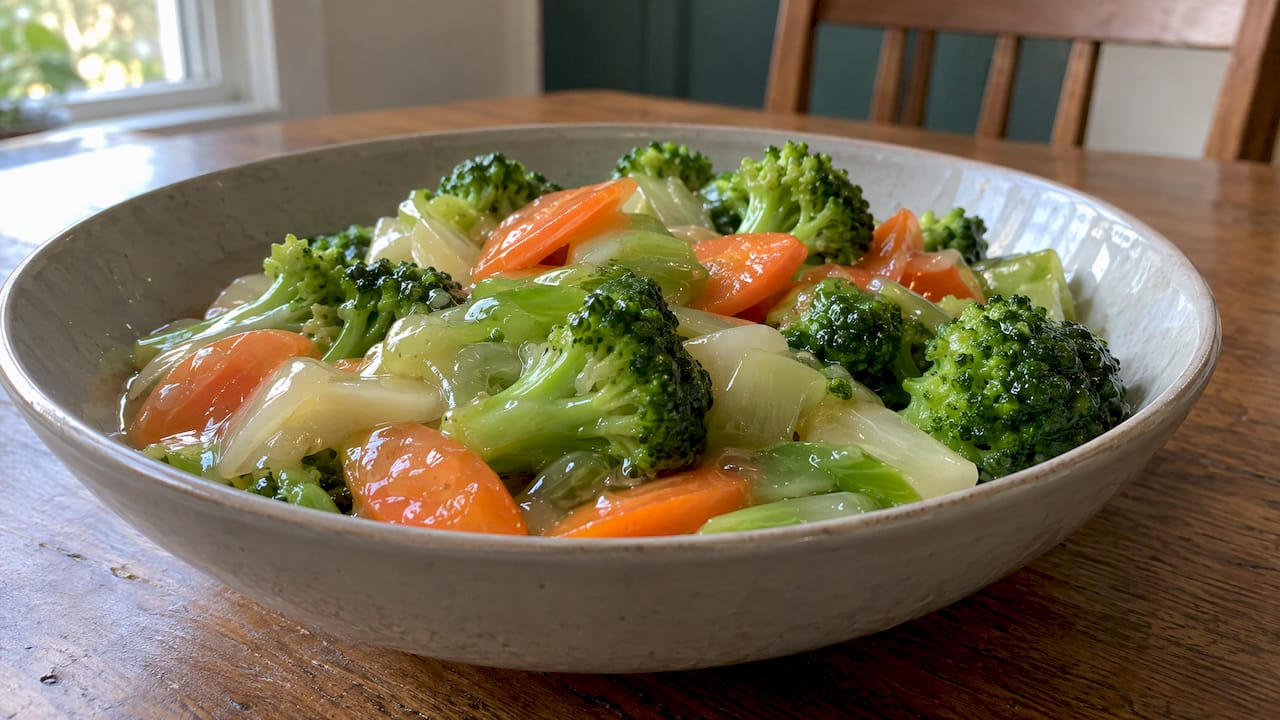
Because potato starch thickens at a lower temperature, it works fast, and it can lose its power if you boil it hard for a long time. Stir your slurry in at the end, let the sauce come just to a gentle bubble, and take it off the heat. You get a clear, glossy finish that looks beautiful over steamed vegetables, noodles and rice dishes.
If you are working on a curry that came out too thin, our guide on how to thicken curry walks through the fixes, including where a starch slurry fits. For pan sauces built on browned bits and reduction, the pan sauce technique shows when you need starch and when reduction alone does the job.
Cornstarch vs flour: how much do you need?
This is the second most common starch question, and the answer is a matter of purity. Cornstarch is pure starch. All-purpose flour contains starch plus gluten protein, so it has less thickening power. University of Illinois Extension explains that 1 tablespoon of cornstarch thickens 1 cup of liquid, while the same job takes 2 tablespoons of flour.
So when a recipe calls for flour and you want to use cornstarch, use half as much: ½ tablespoon of cornstarch for every 1 tablespoon of flour.
A worked example. A gravy recipe asks for 4 tablespoons of flour to thicken 2 cups of liquid. Swap in 2 tablespoons of cornstarch, whisked into a few tablespoons of cold water, and stir it in as the gravy simmers.
The finished texture differs too:
- Flour gives an opaque, slightly rustic sauce with a toasty, cooked-grain flavor, especially when you cook it in butter first as a roux.
- Cornstarch gives a cleaner flavor and a smoother, more translucent finish, which is why so many Chinese-American restaurant sauces rely on it.
- Potato starch gives the glossiest, silkiest result of the three.
Flour also carries gluten. Cornstarch is gluten-free, and potato starch is naturally gluten-free as well, which is why both turn up in gluten-free cooking. If you are cooking for someone with celiac disease, check that the package is labeled gluten-free, since cross-contact can happen in processing.
Starch for frying: crunch, color and staying power
This is where home cooks notice the biggest gap between a decent result and a restaurant one. Starch in a fried coating draws moisture out of the surface and builds a thin, brittle shell, rather than the thicker, breadier crust you get from flour alone.
Cornstarch is the everyday option. It browns evenly, crisps well, and you almost certainly already own it. A common approach for fried chicken or shrimp is to blend it with flour, which gives a crunchy shell that still has some body.
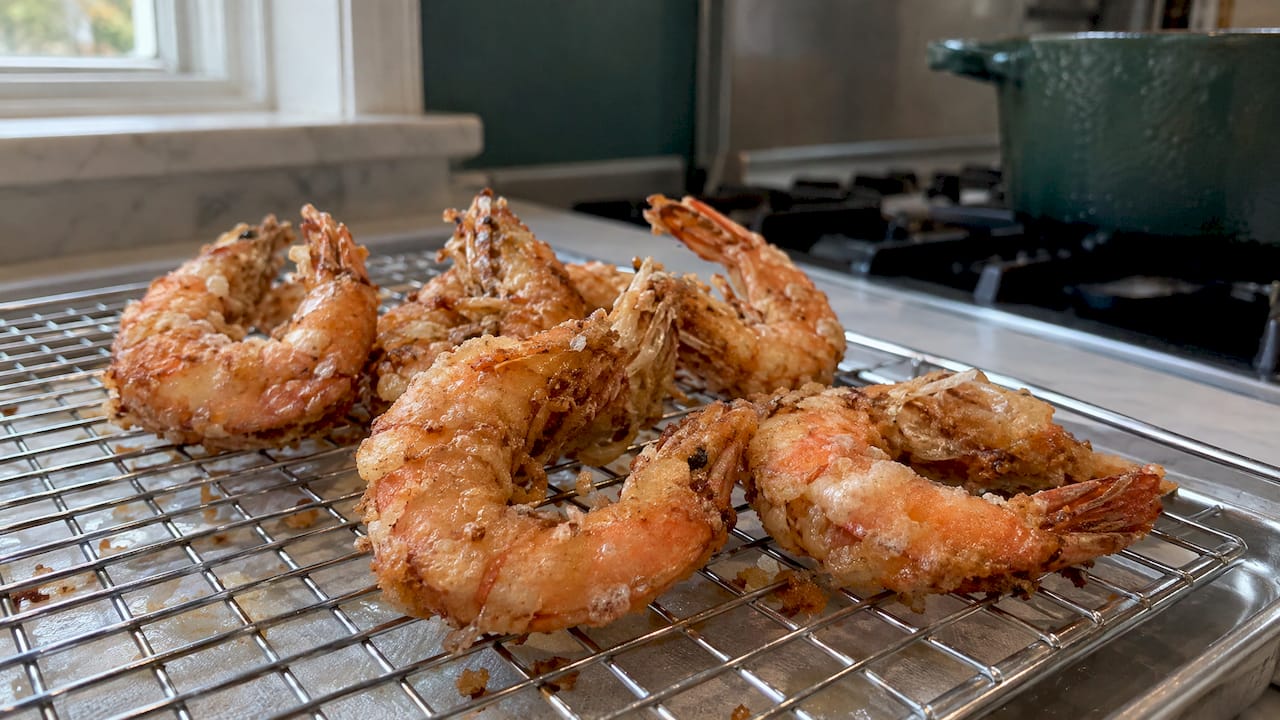
Potato starch tends to give a lighter, thinner, glassier crust. That makes it a favorite for Korean fried chicken, crispy tofu and bite-size pieces that get tossed in a sticky glaze, because the crust stays crunchy instead of going soft right away. This is general kitchen practice rather than a hard rule, so expect small differences in color and crunch between brands and between batches.
A simple way to choose
- Want a classic, golden, crunchy coating with minimal fuss? Use cornstarch, alone or half-and-half with flour.
- Want a thin, light crust that survives a glaze? Use potato starch.
- Want a thicker, craggy crust? Use flour or a flour blend, and consider panko versus regular breadcrumbs for the outer layer.
Frying tips that apply to both
- Pat the food dry before coating, because surface water turns starch into paste.
- Coat just before frying, so the starch does not absorb moisture and clump.
- Shake off the excess, since a heavy layer turns gummy instead of crisp.
- Fry in small batches so the oil temperature does not drop.
- Rest fried pieces on a rack, not on paper towels, to keep the underside crisp.
A good dish for practicing coatings is potatoes: our 13 Gypsies crispy potatoes recipe shows what a restaurant kitchen does to get a crunchy exterior.
Substituting one for the other
In soups, sauces, gravies and baked goods, Healthline says cornstarch can replace potato starch 1:1, giving a tender texture, though it does not handle very high temperatures as well. The reverse swap works the same way by volume. Here is how to adjust:
| You have | Recipe calls for | Ratio | What to change |
|---|---|---|---|
| Cornstarch | Potato starch | 1:1 | Cook a little longer so the starch taste fades |
| Potato starch | Cornstarch | 1:1 | Add at the end, and do not boil hard |
| Cornstarch | All-purpose flour | ½ tablespoon per 1 tablespoon | Use a cold slurry |
| Flour | Cornstarch | About 2 tablespoons per 1 tablespoon | Cook out the raw flour taste |
When you are out of every starch, check what else you have on hand. Some swaps are pantry-friendly: for example, the buttermilk substitute guide shows the same kind of thinking for a different ingredient, and our oyster sauce substitute article covers a sauce many stir-fries lean on.
Common mistakes with starch
- Dumping dry starch straight into hot liquid. It clumps instantly. Always make a slurry first.
- Adding the slurry and walking away. Stir while it comes up to a gentle bubble so it thickens evenly.
- Overcooking potato starch. A long, hard boil can thin the sauce back out.
- Undercooking cornstarch. You may taste a chalky edge; a minute or two more of simmering helps.
- Judging thickness too early. Sauces keep thickening as they cool, so stop slightly looser than you want.
If your sauce is split instead of thin, starch is not the fix. The guide to emulsifying pasta sauce explains how restaurants bring fat and water together.
Rhys
Our take: pick by the job, not by the label
Cooking at home is mostly about small decisions, and the starch in your pantry is one of the smallest and the most revealing. A dish that comes out silky in a restaurant and a little cloudy at home is often a difference of one ingredient and one timing choice.
That is the idea behind Pekin the Chef. Our recipes are inspired by real restaurant dishes and are shaped by feedback from home cooks, so the details that matter, like which thickener, when to add it and how long to cook it, get tested in real kitchens and not just on paper.
Our advice is simple. Keep cornstarch as your everyday starch. Add potato starch when you want a glossy finish or an extra-light crunch. Learn the slurry, learn the timing, and the rest follows.
Rhys
Find the dishes that put this to work
Reading about starches is useful, but cooking with them is how the difference clicks. Pekin the Chef collects restaurant-inspired recipes, searchable by restaurant, dish or cuisine, each with feedback from other home cooks, so you can see how a crisp coating or a glossy sauce turned out for people cooking in kitchens like yours.

Browse the full collection at Pekin the Chef, or start with a restaurant recipe page such as Aki Asian Hotpot Restaurant's chicken recipe.
FAQ
Can I use potato starch instead of cornstarch?
Yes, in most soups, sauces, gravies and pie fillings you can swap them 1:1. Add potato starch near the end of cooking and avoid a long, hard boil, because it thickens at a lower temperature than cornstarch.
Does cornstarch have a taste?
Cornstarch is neutral in flavor, but it can taste chalky or starchy if it is not cooked long enough. Mix it into a cold slurry, then simmer the sauce for a minute or two until the raw taste is gone.
Is potato starch gluten-free?
Potato starch is naturally free of wheat gluten, unlike all-purpose flour. For celiac disease or a strict gluten-free diet, choose a package labeled gluten-free, and ask your doctor or dietitian about your own needs.
Which is better for frying, cornstarch or potato starch?
Cornstarch is the easy, golden, all-purpose choice, and it blends well with flour. Potato starch gives a thinner, lighter crust that tends to stay crisp under sticky glazes, so it suits Korean-style fried chicken and tofu.
How much cornstarch replaces flour?
Use half as much cornstarch as flour. For each tablespoon of flour in the recipe, use ½ tablespoon of cornstarch, mixed into a cold slurry before it goes into the pot.
Sources
- Potato Starch Substitutes: Alternatives and Recipe Ideas, Healthline
- Cornstarch vs. Potato Starch: Which One's Better, Bob's Red Mill
- All About Starches, Bob's Red Mill
- Corn Starch, American Society of Baking
- For a good gravy, you need a thickening agent, University of Illinois Extension
- What's the Difference of Flour, Cornstarch, Potato Starch
- Potato Calories and Macros