
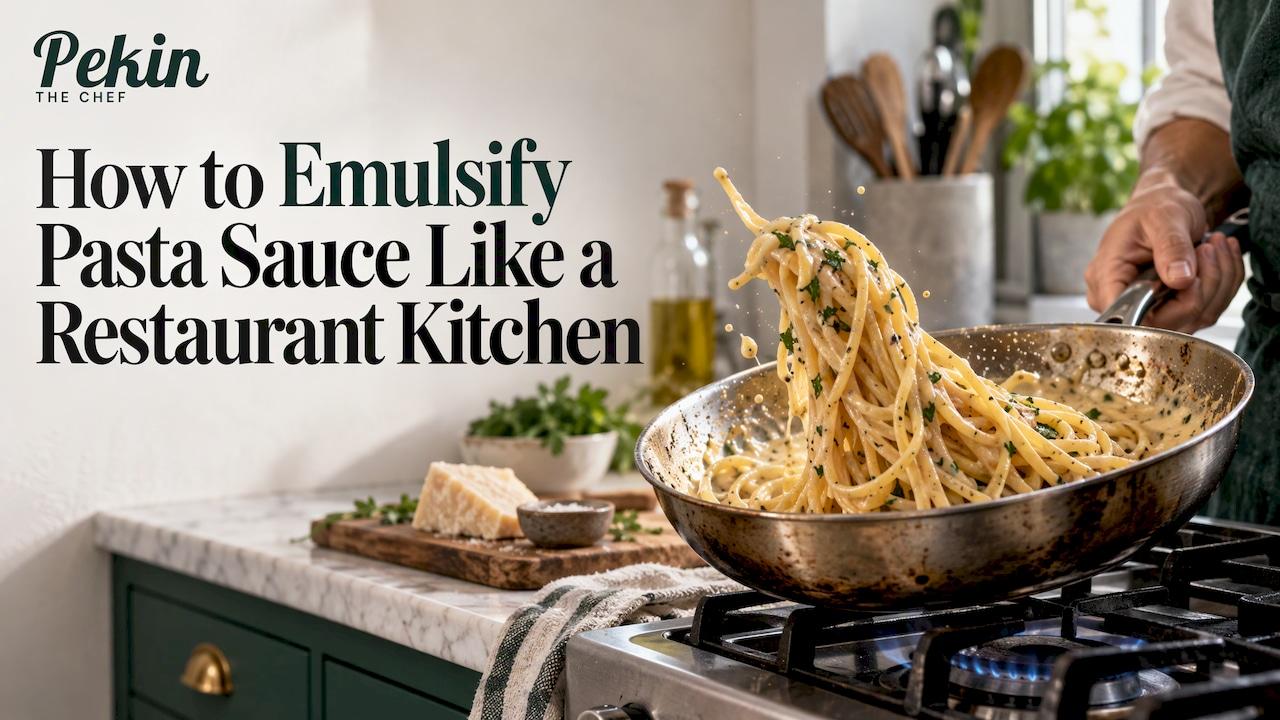
To emulsify pasta sauce, finish the pasta in the pan, not on the plate. Move slightly undercooked pasta into your sauce, add a splash of starchy cooking water, and toss or stir over steady heat until the fat and water come together into a glossy, clinging coat. That moment, when a sauce turns from slick and separate to silky and unified, is what makes restaurant pasta taste so effortless.
Below, we walk through the technique step by step, explain why it works, show how it changes from one sauce to the next, and cover what to do when the sauce splits or you have no pasta water at all.
TL;DR
- Starch from the cooking water is the natural binder: it helps fat and water blend and helps the sauce cling to the pasta.
- Finish the pasta in the sauce pan over heat, adding water a splash at a time, and stop when the sauce looks glossy.
- Oil- and butter-based sauces need the technique most, while tomato and cream sauces benefit from a smaller splash.
- Cheese sauces break when overheated, so add cheese off the heat or at a low temperature.
- No pasta water? A little extra fat, a gentle heat and constant motion still get you a smooth sauce.
Table of Contents
- What an emulsified pasta sauce actually is
- The pasta water method, step by step
- How much pasta water, and when to add it
- Fat is the other half of the equation
- Oil- and butter-based sauces: where pasta water matters most
- Tomato and cream sauces: a lighter touch
- Cheese: the delicate part
- How to emulsify pasta sauce without pasta water
- Fixing a sauce that will not come together
- Our perspective
- Put it into practice with restaurant-inspired recipes
- FAQ
- Sources
What an emulsified pasta sauce actually is
An emulsion is simply a stable blend of two things that normally refuse to mix, in this case fat (olive oil, butter, rendered pork, cheese) and water (pasta water, wine, tomato juices). Left alone they separate, and you get a puddle of oil under a thin, watery liquid at the bottom of the bowl. Emulsified, the same ingredients become one creamy, cohesive sauce that coats every strand.
The quiet hero is starch. According to Barilla's pasta kitchen tips, pasta releases a small amount of starch while it cooks, and adding that water to the sauce helps the sauce cling to the pasta and form a good emulsion. Think of the starch as a chaperone between oil and water: it thickens the liquid slightly and keeps the droplets of fat suspended instead of pooling.
The visible signs of success are easy to learn:
- The sauce looks glossy rather than greasy or watery.
- It moves in a loose, creamy ribbon when you tilt the pan.
- It clings to the pasta, and little is left behind on the plate once you serve.
The pasta water method, step by step
This is the core technique behind aglio e olio, cacio e pepe, carbonara-style sauces and countless restaurant specials. Once you can do it with a few ingredients, you can do it with anything.
1. Cook the pasta in well-salted water, and pull it early
Use a pot with enough room for the pasta to move, and salt the water generously so the pasta is seasoned from within. Start tasting a couple of minutes before the package time. You want the pasta slightly firm in the center, because it will finish cooking in the sauce and drink in flavor as it does.
2. Set the sauce up in a wide pan
A wide skillet or sauté pan gives you surface area, which makes tossing easier and lets the liquid reduce evenly. Have your sauce base ready and warm: garlic softened in olive oil, a tomato sauce at a gentle simmer, or butter melted with pepper.
3. Save the water before you drain
Before the colander touches the pot, scoop out a mug or a measuring cup of the cloudy cooking water. Cloudy is good. It is the starchy liquid you want, and it is the first thing most people pour down the drain.
4. Move the pasta straight into the sauce
Lift the pasta with tongs or a spider, or drain it quickly, and put it directly into the pan. A little water clinging to it is welcome. Add a splash of the reserved cooking water, then turn the heat to medium.
5. Toss, stir and shake over heat
This is where the emulsion forms. Keep everything moving: toss with tongs, swirl the pan, stir with a wooden spoon. The motion breaks the fat into tiny droplets, the heat reduces the liquid, and the starch holds it all together. After a minute or so the sauce will thicken and turn glossy.
6. Adjust, then finish
If the sauce looks tight or sticky, add another splash of water. If it looks thin, keep tossing a little longer so it reduces. Add cheese, fresh herbs or a last drizzle of good olive oil at the end, taste for salt, and serve at once. An emulsified sauce is at its best in the first minutes after it comes together.
How much pasta water, and when to add it
Here is the honest answer: it depends on the pasta, the pan and the sauce, so treat any measurement as a starting point and let the sauce tell you the rest. Our own rule of thumb is to begin with a few tablespoons for a standard pound of pasta, toss for a few moments, and add more only when the sauce looks thick or clumpy.
Some habits that help:
- Add water gradually. It is easy to thin a sauce and harder to rescue one that is flooded. A splash, a toss, then look.
- Add it after the pasta is in the pan. The starch and the pasta's own surface starch work together as you toss.
- Keep the heat on. Without heat, the liquid will not reduce and the emulsion will not tighten.
- Keep extra water on hand until you plate. The pasta keeps absorbing liquid, so a sauce that looks perfect in the pan can tighten by the time it reaches the table.
- Mind the salt. Pasta water is already seasoned, and it concentrates as it reduces, so taste before adding more salt.
A useful visual: the sauce should flow like heavy cream when you tilt the pan, never like soup, never like paste.
Fat is the other half of the equation
Starch needs something to bind, and that something is fat. Each fat gives the finished sauce a different character.
| Fat | What it brings | Classic use |
|---|---|---|
| Olive oil | Fruity, peppery, light body | Aglio e olio, pesto, vegetable sauces |
| Butter | Richness, sweetness, a rounded finish | Simple butter and cheese pastas, pan sauces |
| Rendered pork fat | Savory depth | Carbonara-style and amatriciana-style sauces |
| Cheese | Salt, body, thickening proteins | Cacio e pepe, cream and cheese sauces |
| Cream | Softness, forgiveness under heat | Gorgonzola and vodka-style sauces |
A restaurant trick worth borrowing: finish with a small knob of cold butter or a spoonful of olive oil at the very end, with the pan off or barely on the heat, and toss vigorously. The extra fat gets pulled into the starchy liquid and gives the sauce a satiny shine.
Oil- and butter-based sauces: where pasta water matters most
If you want to see the technique at its most dramatic, cook aglio e olio. It has almost nothing in it: olive oil, garlic, chile, pasta. Without starchy water it can read as oily spaghetti with bits on top. With it, the oil turns into a light, glossy coating that carries the garlic into every bite.
Barilla notes that the benefit of pasta water is most evident with butter and olive oil sauces, where the starch and added moisture create a creamy emulsion that coats the pasta. Because these sauces have so few ingredients, the pasta itself matters too. Traditional bronze-style and handmade shapes with a rougher surface hold sauce well, and something like Greek handmade traditional pasta shows how texture and starch play into a sauce that clings instead of slides.
For a good aglio e olio:
- Warm sliced garlic gently in olive oil until fragrant, never browned.
- Add chile flakes if you like heat.
- Add a ladle of pasta water to the pan before the pasta goes in, so the oil and water begin to marry.
- Add the undercooked spaghetti, toss over medium heat until the liquid reduces and turns glossy.
- Finish with parsley and a little fresh oil off the heat.
The same logic applies to pesto. Heat will dull fresh basil and can make the oil split, so loosen the pesto in a bowl with a spoonful or two of warm pasta water, then toss in the drained pasta. Our pesto penne from 3rd Shift Kitchen is a good place to practice this move.
Tomato and cream sauces: a lighter touch
Tomato sauces already contain water, so they need less help. Barilla points out that for tomato-based and creamy sauces pasta water is less essential, but still helpful for marrying the flavors and keeping the pasta from drying out. In practice, a few spoonfuls is plenty. The goal is to bind the sauce to the pasta, so each piece is dressed rather than sitting in a pool.
Heartier sauces such as ragù benefit in the same way. A slow-cooked meat sauce is rich in fat and collagen, and tossing it with pasta and a splash of starchy water for the last minute brings everything together. If you would like to see how restaurant kitchens approach it, look at the tagliatelle al ragù toscano from Acqua al 2 or the ziti with chef's beef ragù and pecorino from 107 State.
Cream-based sauces are the most forgiving, because cream is already an emulsion. A recipe such as the gorgonzola cream sauce from Adriatic Restaurant gains body from the cheese, so a splash of pasta water simply loosens it and helps it coat the pasta. For a tomato-and-cream sauce with a little heat and sausage, the rigatoni alla vodka with cacio e pepe from Acqua Di' Mare shows how a restaurant balances fat, acidity and starch in one pan.

Cheese: the delicate part
Cheese adds richness, but it is the most temperamental ingredient in the pan. Add it over fierce heat and the proteins tighten, squeeze out their fat and form stringy clumps, leaving a grainy sauce with a layer of oil.

Researchers at the Institute of Science and Technology Austria studied exactly this problem, work that earned the 2025 Ig Nobel Prize. They found that cheese proteins denature and clump above about 65 degrees Celsius, which is roughly 149°F, and that starch in pasta water is meant to help but is rarely enough alone. Their fix was to stir a small amount of starch (2 to 3 percent of the cheese's weight) into water until it turned clear and thickened, then blend that gel with the cheese at low temperature so the starch binds to the proteins and prevents lumps.
You do not need a laboratory to use the lesson. Translate it to the stove:
- Take the pan off the heat or reduce it to its lowest setting before the cheese goes in.
- Grate the cheese finely so it melts quickly and evenly.
- Add it in handfuls, tossing between each, rather than all at once.
- Use warm, starchy liquid, not boiling, to loosen it.
- Whisk or toss steadily so the cheese is dispersed before it can clump.
For cacio e pepe, many cooks also make a thick paste of cheese and a little warm pasta water in a bowl first, then add the pasta and toss. The paste is already smooth, so it slides into a creamy sauce rather than seizing.
How to emulsify pasta sauce without pasta water
Sometimes you realize too late that the pot has gone down the sink. The sauce can still be saved. You need liquid, a bit of starch or body, fat, and motion.
- Use hot tap water or stock, with a little extra fat. Add a few tablespoons of hot water (or unsalted stock) to the pan with a spoonful of butter or olive oil, then toss hard over heat. It will be less silky than starchy water, but the motion and fat will pull it together.
- Use a binder. A small spoonful of Dijon mustard or a drizzle of honey can help hold oil and liquid together in a vinaigrette-style sauce, and works in a pinch for a simple olive oil pasta.
- Lean on cream or cheese. A splash of cream or a handful of finely grated hard cheese adds body and thickens the sauce.
- Mash a little of what is already there. A ladle of the sauce with some softened garlic, beans or roasted vegetables blended in gives you a thicker base that clings.
- Plan ahead next time. Cooking pasta in a smaller volume of water gives you a more concentrated, starchier liquid, but it is easy to over-salt, so season carefully.
Keep your expectations realistic: nothing matches the way starchy pasta water works with fat, so the habit of saving a cupful before draining is worth building.
Fixing a sauce that will not come together
Most emulsion problems have a clear cause and a quick remedy.
The sauce looks oily and thin
There is too much fat, too little starch, or not enough movement. Add a splash of hot pasta water and toss or stir vigorously over medium heat for a minute. If the pan is too cool, the liquid will not combine, so give it some heat.
The sauce looks gluey or clumpy
The sauce has either reduced too far or the starch has over-thickened. Loosen it with a tablespoon or two of hot water, tossing until it becomes smooth again.
The cheese has clumped or turned grainy
The pan was too hot. Remove it from the heat, add a splash of warm water or cream, and whisk or toss firmly. Often the sauce relaxes. If it does not, a small amount of cold liquid with a vigorous whisk can sometimes bring it back together. Next time, add the cheese off the heat.
The sauce has split in the pan
Take the pan off the heat, add a spoonful of warm water, and whisk or toss until it smooths out. Then put it back on low heat and stir until it is glossy.
The sauce is too acidic
Tomato sauces can taste sharp. A bit of butter or olive oil rounds off the acidity, and a pinch of sugar can help in small amounts. Simmering tomatoes gently also softens their edge, and finishing the pasta in the sauce with a splash of starchy water mellows it further.
Our perspective
Every restaurant recipe we gather has a moment the printed page rarely captures: the last minute in the pan, when pasta, sauce and cooking water become something greater than their parts. It is the difference between a dish that tastes good and one that tastes like a night out.
We see it again and again in the recipes our community cooks and rates. Home cooks who follow a restaurant-inspired recipe and then take the extra step of finishing the pasta in the sauce, with a ladle of starchy water, consistently describe results that taste closer to the original. The feedback is what makes our collection useful: someone has already stood at the same stove, hit the same snags, and told you what worked.
So treat the pasta water as an ingredient, not a by-product. Save it, add it slowly, keep the pan moving, and trust your eyes as much as the clock. Once you can read a glossy sauce, every recipe on our site becomes a little more forgiving, and a little more delicious.
Rhys
Put it into practice with restaurant-inspired recipes
The fastest way to learn what an emulsified sauce looks like is to cook a few. Pek in the Chef gathers recipes inspired by popular dishes from real restaurants, each one shared with feedback from other home cooks, so you can see how the dish turned out for people in kitchens like yours. You can search by restaurant, dish, cuisine, meal type or prep time.

A few good starting points: the pasta del giorno from acquafarina, the gnocchi al pomodoro for a lighter tomato finish, or the kid's penne marinara from Adriatic Restaurant for a simple weeknight practice run. For more Italian-leaning ideas, browse the Adriatico Trattoria Italiana recipes, or explore the whole collection at Pek in the Chef. Many recipes also point to the tools and ingredients that make them easier, such as a wide skillet and a good ladle.
FAQ
Why does pasta water help make a silky sauce?
Pasta releases starch as it cooks, and that starch in the water helps the sauce thicken and cling to the pasta. It also helps fat and water blend instead of separating, which gives you a smooth, glossy texture. Barilla explains this in its pasta water tips.
When should I add the pasta water?
Add it once the undercooked pasta is in the pan with the sauce, a splash at a time, while tossing over medium heat. Adding it gradually lets you judge the texture and stop when the sauce looks glossy. Keep a little extra nearby until you serve, because the pasta keeps absorbing liquid.
How do I fix a sauce that will not emulsify?
First check the heat: the pan needs to be warm enough to reduce the liquid, but cheese needs gentler temperatures. Add a splash of hot starchy water and toss or whisk vigorously. If cheese has clumped, take the pan off the heat and loosen it with warm liquid, since research shows cheese proteins clump when overheated.
Can I emulsify pasta sauce without pasta water?
Yes, though the result is slightly less silky. Use hot water or stock with a spoonful of butter or olive oil, and toss hard over heat. A little cream, finely grated cheese or a small spoonful of mustard can add body and help hold the sauce together.
Do tomato sauces need pasta water?
Less than oil- or butter-based sauces, but a small splash still helps. It melds the sauce and pasta together and keeps the dish from drying out, according to Barilla.
Sources
- Barilla: How to Use Pasta Water and Pasta Water Cooking Tips
- ISTA: 2025 Ig Nobel Prize for Perfect Pasta Sauce