
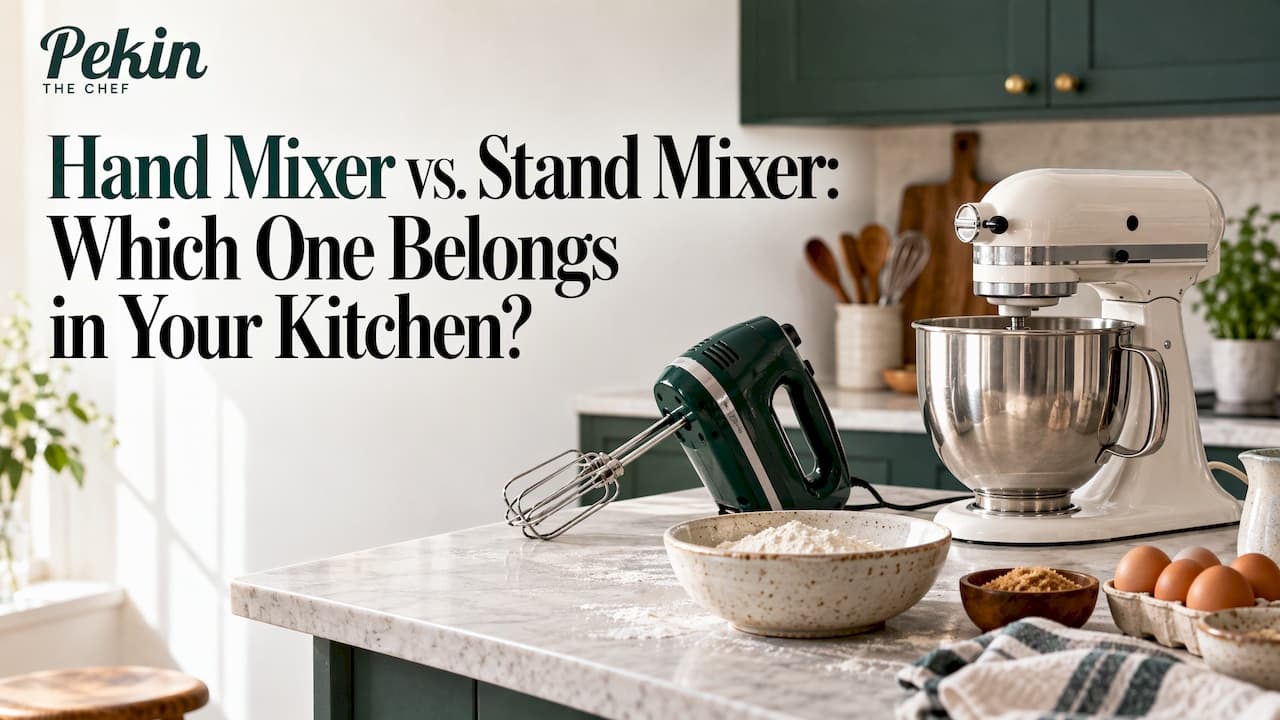
If you bake bread, double batches of cookie dough or whip stiff frosting every week, buy a stand mixer. If you cook for a small household, bake now and then, or have little counter or cabinet space, a hand mixer will do almost everything you need for a fraction of the price. Most home cooks fall clearly on one side once they look honestly at how they cook, and the rest of this guide helps you see which side that is.
We build our recipe collection around dishes inspired by real restaurants, from skillet cookies to hand-pulled pasta sauces to layered cakes, so we hear the same question constantly: do I need the big machine on the counter, or will the small one in the drawer be enough? Here is the plain answer, with the numbers and the kitchen logic behind it.
TL;DR
- A hand mixer is the better value for whipped cream, egg whites, cake batter and most cookie dough, and it stores in a drawer or cabinet.
- A stand mixer earns its space with bread dough, large batches, stiff frostings and long mixing times, and it frees your hands while it works.
- Price is the biggest gap: tested hand mixers run from under $20 to over $160, while stand mixers run from about $50 to $1,000.
- A hand mixer can stand in for a stand mixer on most recipes except bread dough, which you can knead by hand.
- Decide by what you bake most, how much room you have, and whether your hands and wrists tolerate heavy equipment.
Table of Contents
- The core difference in one minute
- Side-by-side comparison
- What a hand mixer does best
- What a stand mixer does best
- What each one costs
- Can a hand mixer replace a stand mixer?
- Which one should you buy?
- Quick answers to common recipe questions
- Tips for getting the best from either machine
- Our perspective
- Cook the restaurant dishes you love
- FAQ
- Sources
The core difference in one minute
A hand mixer is a motor with two beaters that you hold and move through the bowl. A stand mixer is a heavier motor on a base, with a fixed bowl and an attachment that travels around it while you do something else. Everything else follows from that: the weight, the price, the power, the storage, and the kind of work each handles gracefully.
With a hand mixer, you are the arm of the machine. You tilt the bowl, sweep the beaters through the batter and decide when it is done. With a stand mixer, you load the bowl, set a speed and walk away to chop nuts, melt chocolate or wash a pan. For a three-minute task, that freedom hardly matters. For a ten-minute meringue or a long knead, it changes the whole afternoon.
Side-by-side comparison
| Factor | Hand mixer | Stand mixer |
|---|---|---|
| Typical use | Whipping cream, egg whites, light batters, small batches | Bread dough, large batches, stiff frostings, long mixing |
| Hands-free | No, you hold it | Yes, once the bowl is loaded |
| Storage | Drawer or cabinet, often with a case | Counter space, or lifted from a cabinet each time |
| Setup time | Plug in and go | Lock the head, fit the bowl and attachment |
| Bread dough | Struggles | Handles it well |
| Extra attachments | Limited | Pasta makers and meat grinders are popular add-ons |
| Price range | Under $20 to over $160 in tested models | About $50 to $1,000 in tested models |
The price row comes from Consumer Reports' mixer buying guide, which also notes that stand mixers are heavier, take counter space, and handle thick batters and bread dough better, while hand mixers are easy to store and best for lighter tasks.
What a hand mixer does best
Think of the hand mixer as the quick, agile cook in the kitchen. It is out of the drawer and running in the time it takes to find an outlet, and it washes up in a minute. For the everyday work of a home kitchen, that convenience counts for a lot.
Whipped cream, egg whites and light batters
Whipping cream, beating egg whites and mixing small-batch batters are the classic hand mixer jobs. Hand mixers suit whipping cream, beating egg whites and small-batch batters, and there is a bonus: with small amounts, you can tilt the bowl and reach every corner. A stand mixer's attachment may not reach a small quantity of egg whites or cream at all, so you end up scraping and starting over.
If you like to finish a drink at home with a silky topping, the same logic applies. Our guide to cold foam at home without a frother shows ratios that work, and a hand mixer is one of the tools that gets you there without any special gear.
Cakes and cookies
A hand mixer can make cake batter and cookie dough with no trouble. The adjustment is time. According to Food & Wine's comparison, a hand mixer may take 25% to 50% longer to cream and aerate butter and sugar, and a stiff cookie dough may need extra stirring and folding by hand near the end. That is a modest trade for a tool that costs far less.
Try it on a recipe where the mixing is gentle and the payoff is high, such as the lemon snacking cake inspired by 2 Feet Brewing, or the cake recipe inspired by 44 Canteen. Both reward careful creaming and a light hand, and both are comfortable territory for a hand mixer.
Small kitchens and sore wrists
Space and physical comfort are real reasons to choose a hand mixer, not consolation prizes. America's Test Kitchen points out that hand mixers suit cooks with limited space and those with physical limitations such as arthritis, who may find heavy equipment hard to manage. Many hand mixers also come with storage cases for the attachments and retractable cords, which keeps a small kitchen tidy.
One small feature worth looking for: slow-start settings on hand mixers help prevent ingredients from splattering when you first switch on. Anyone who has dusted the kitchen in flour knows why.
What a stand mixer does best
The stand mixer is the steady, patient partner. It does not tire, it does not drift off center, and it keeps the same speed at minute twelve as at minute one. That consistency is the point.
Bread, pizza dough and heavy batches
Stand mixers are more powerful and versatile than hand mixers, which makes them the natural choice for heavy doughs, large batches and long mixing times. Bread dough is the clearest case. Hand mixers typically come with wire beaters, and although some include dough hooks, they generally struggle with bread dough. If you want to understand why a machine suits kneading so well, this explanation of kneading bread dough with a stand mixer walks through the setup.

If you bake restaurant-style breads regularly, the hot soft baked pretzel recipe inspired by Against The Grain Food is the sort of project where a dough hook and a patient motor pay off, though you can always knead by hand with a little time and a floured counter.
Big batches and stiff frostings
Holiday cookie marathons, double-layer cakes, thick buttercream and stiff batters are all easier with a stand mixer. The bowl holds more, the motor does not strain, and you can add ingredients one at a time with both hands free. If you are making dessert for a crowd, try the baked chocolate chip cookie skillet inspired by 99 Restaurants or the cookie recipe inspired by Abby Singer's Bistro at double quantity and see how much easier it feels with the machine doing the work.
Attachments that grow with you
Most stand mixers come with a whisk, a paddle and a dough hook, and pasta makers and meat grinders are popular additional attachments. For cooks who enjoy fresh pasta, that versatility turns one purchase into several tools. It is a good fit if you love recreating dishes such as the Rotolo ai Funghi inspired by acquafarina, where fresh pasta is the star.
What each one costs
Price is where the two part ways most sharply. Consumer Reports found hand mixers in its tests from under $20 to over $160 and stand mixers from about $50 to $1,000. Serious Eats reports that stand mixer prices start in the $300s and climb into the $700s for the models it considers worth recommending. Prices shift over time, so check current listings before you decide.
The useful way to think about cost is cost per use. A hand mixer you reach for twice a month for whipped cream and brownies is cheap and busy. A stand mixer you use twice a year for holiday cookies is expensive and idle. A stand mixer you use every weekend for sandwich bread and pizza dough can be the best money in your kitchen.
Can a hand mixer replace a stand mixer?
For most recipes, yes. A hand mixer can make cake batter, cookie dough and whipped cream, and the one real exception is bread dough, which is better kneaded by hand if you lack a stand mixer. Serious Eats puts the choice simply: a stand mixer if you have the space and budget, and a hand mixer for basic tasks.
The limits show up in three places:
- Time. Creaming butter and sugar takes longer, so plan for it.
- Stiff mixtures. Thick cookie dough and heavy batters strain a lightweight motor, and you will fold in the last additions by hand.
- Attention. You cannot walk away. If a recipe asks for ten minutes of beating, your hand holds the mixer for ten minutes.
None of these is a deal breaker, and each is solved by patience or by a short rest between stages.
Which one should you buy?
Walk through these questions in order. The first honest "yes" usually settles it.
- Do you bake bread, pizza dough or bagels more than once a month? Choose a stand mixer.
- Do you regularly make double batches, thick frostings or dough for a crowd? Choose a stand mixer.
- Is cabinet or counter space tight, or does heavy equipment bother your hands, wrists or shoulders? Choose a hand mixer.
- Do you mostly whip cream, beat eggs and make cakes, brownies and cookies in modest amounts? Choose a hand mixer.
- Are you not sure yet? Start with a hand mixer. It is inexpensive, and if you outgrow it, you will know exactly what you want from the next purchase.
Many serious bakers end up with both, using the hand mixer for quick jobs and the stand mixer for the long ones. If you have a stand mixer and rarely touch it because it is heavy and slow to set up, that is a perfectly sensible reason to keep a hand mixer within easy reach.
Quick answers to common recipe questions
People often ask about specific dishes, so here is a short run through the usual suspects.
- Whipped cream and meringue: a hand mixer is ideal for small amounts, and a stand mixer is easier for large quantities.
- Cake batter: either works. The hand mixer needs a little more time to cream butter and sugar.
- Cookie dough: either works for standard batches. Stiff doughs with lots of add-ins are easier on a stand mixer.
- Bread dough: use a stand mixer, or knead by hand.
- Mashed potatoes: a hand mixer can mash right in the pot on low speed, as long as the pot is safe for metal beaters. Keep the speed low and stop as soon as the texture is smooth, because overmixing can turn potatoes gluey.
Tips for getting the best from either machine
Start with room-temperature butter and eggs for cakes and cookies. Cold butter fights the beaters and lengthens the creaming time, which already runs long on a hand mixer.
Begin on low speed and build up. This keeps flour and sugar in the bowl, and the slow-start feature on many hand mixers does this for you.
Use a deep, stable bowl with a hand mixer. A heavy ceramic or metal bowl that does not slide around makes the work much easier. Set it on a damp towel if it moves.
Scrape the bowl, even with a stand mixer. The attachment leaves a thin ring of unmixed batter at the bottom and sides, and a quick scrape midway ensures an even result.

Stop when the recipe says stop. Overbeaten batter turns tough and overwhipped cream turns grainy. A hand mixer lets you watch closely, which is an advantage.
Our perspective
We cook from restaurant-inspired recipes all day, and the tools matter less than the habit of reading a recipe for what it truly asks of you. A skillet cookie, a lemon cake or a pitcher of cold foam asks for aeration and a gentle hand, and a good hand mixer delivers that beautifully.
The picture changes when a dish asks for long kneading, a double batch or hands-free time. That is where a stand mixer becomes a quiet kitchen partner, and where our community of home cooks tells us, again and again in their ratings and comments, that the investment changed how often they bake.
Our advice is to match the machine to the recipes you already love. Browse the dishes you want to recreate, note how many call for dough hooks, stiff frostings or big batches, and let that list make the decision. The best mixer is the one you will actually take out and use.
Rhys
Cook the restaurant dishes you love
Once your mixer is chosen, the fun begins. Pek in the Chef collects recipes inspired by popular restaurant dishes, each shaped by feedback from other home cooks, and you can search by restaurant, dish, cuisine, meal type or prep time. Start with the full collection on Pek in the Chef, or explore a single kitchen's menu, such as the 8th Street Cafe recipes.

Some of our recipes link to kitchen tools and ingredients through affiliate links, so you can see what other cooks use when you are ready to equip your kitchen.
FAQ
Is it better to use a hand mixer instead of a stand mixer?
It depends on what you make. A hand mixer is better for small batches, quick jobs, tight storage and tighter budgets. A stand mixer is better for bread dough, big batches and long mixing times. If you bake mostly cakes, cookies and whipped toppings, a hand mixer is usually enough.
What are the downsides of using a stand mixer?
The practical ones are weight, price and space. A stand mixer is heavy, it either occupies counter space or must be lifted from a cabinet, and it costs considerably more than a hand mixer. Small amounts of ingredients can also slip below the reach of the attachment. These are easy to manage if you bake often enough to keep it within arm's reach.
Is it okay to use a hand mixer for mashed potatoes?
Yes. Use low speed, mash right in the pot if it is metal-safe, and stop as soon as the potatoes look smooth. A hand mixer gives a creamy texture, though you may find a few small lumps. Add warm butter and milk gradually for the best result.
Can you do everything with a hand mixer?
Nearly everything except heavy bread dough. Cake batter, cookie dough and whipped cream are all within its range, although creaming can take longer and stiff doughs may need finishing by hand. For bread, plan to knead by hand.
Sources
- Best Mixer Buying Guide, Consumer Reports
- 3 Reasons to Choose a Hand Mixer Over a Stand Mixer, Consumer Reports
- Stand Mixer vs. Hand Mixer: What's the Difference?, Food & Wine
- Stand Mixers vs. Hand Mixers: What's the Difference?, Serious Eats
- The Best Hand Mixers, America's Test Kitchen