
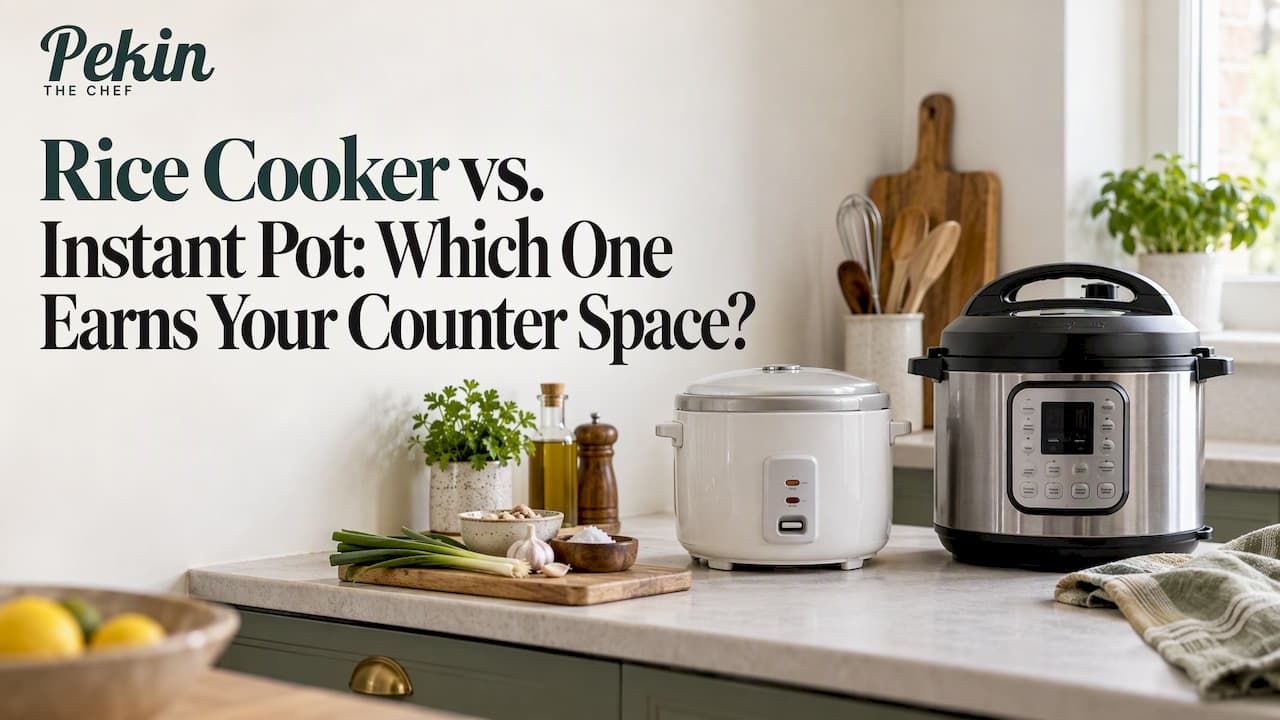
If rice shows up on your table several nights a week, a dedicated rice cooker is the better tool: it turns out fluffier, more separate grains with almost no attention. If rice is just one of many things you cook and you want a single machine for soups, braises, beans and weeknight shortcuts, the Instant Pot is the more versatile buy, and it makes perfectly good rice once you learn its quirks. Below, we walk through how each machine actually cooks, where each one shines, and how to decide without regretting the purchase.
TL;DR
- Rice every week, texture matters: choose a rice cooker. Reviewers who tested both found the dedicated cooker gave better, more consistent white rice.
- One appliance for everything: choose an Instant Pot. It pressure cooks, slow cooks, steams and sautés, so it replaces several pots.
- Speed is not the same as time saved: pressure cooking is quick at the pot, but the pot needs time to come up to pressure and release it.
- Never overfill: keep an Instant Pot to half full for rice, since rice expands.
- Own both if you cook a lot: each does one job better than the other, and neither is expensive to keep around.
Table of Contents
- How the Two Machines Actually Cook
- Rice Quality: Where the Dedicated Cooker Wins
- Speed: Faster Than It Looks, and Not Always
- Versatility: The Instant Pot's Home Turf
- Which Dishes Suit Which Machine
- Getting Great Rice From Either Machine
- Safety and One Common Misconception
- Cost, Space and Energy
- Our Perspective
- Cook Restaurant Favorites With Whichever Machine You Choose
- Which One Should You Buy?
- FAQ
- Sources
How the Two Machines Actually Cook
It helps to picture what is happening inside each pot, because nearly every difference in texture and flexibility follows from it.
A rice cooker is a simple, elegant device. You add rice and water, press a button, and a heating plate brings the water to a boil. Once the grains have absorbed the liquid, the temperature in the pot climbs past the boiling point, a sensor notices, and the machine switches to a warming mode. Nothing needs stirring and nothing needs timing. The rice steams gently at ordinary atmospheric pressure, which is why the grains stay distinct and delicately springy.
An Instant Pot belongs to a different family: the electric pressure cooker, or multicooker. With the lid locked, steam has nowhere to go, so pressure builds and the internal temperature rises to roughly 250°F rather than the 212°F of boiling water. That heat tenderizes tough cuts and cooks dried beans in a fraction of the usual time. For rice, it also means more moisture is trapped, and the result can lean denser or wetter if the water and release method are not dialed in.
So one machine is a specialist with a single, finely tuned trick. The other is a generalist that can do rice competently.

Rice Quality: Where the Dedicated Cooker Wins
This is the question most readers come with, and the honest answer is that the rice cooker produces better rice, particularly white jasmine, basmati and short-grain sushi-style rice.

A reviewer at Tom's Guide, a self-described rice lover, cooked white rice in both and found the dedicated cooker gave better, more flavorful results every time. Even with a higher-end Instant Pot, results were closer but still fell short, and several other Instant Pot models gave inconsistent, less fluffy grains. That matches what many home cooks report: the Instant Pot can make a good pot of rice, but a rice cooker makes the same good pot every single time.
There is a sensory reason for this. Steam at ordinary pressure coaxes starch out of each grain slowly, so the surface sets while the center turns tender. Under pressure, the grains cook fast and hold more water, so the texture can feel plump and a little sticky. Neither is wrong. Plenty of weeknight dishes, like a rice pilaf under a saucy braise, are happy with a softer grain. But if you are chasing the clean, separate, faintly fragrant bowl you get at a good neighborhood restaurant, the rice cooker is the more dependable route.
The extras a rice cooker handles quietly
- A keep-warm mode that holds rice for hours without drying it out or scorching the bottom.
- No monitoring. Walk away, set the table, come back to finished rice.
- Consistent results across batches, which matters when you feed a family every night.
- Easy handling of brown rice and mixed grains on the right setting, if your model has one.
Speed: Faster Than It Looks, and Not Always
Pressure cooking sounds like the obvious winner on time. On the cooking clock it is: white rice on high pressure needs about six minutes, against roughly 20 for a rice cooker.
But the cooking clock is not the whole story. A typical Instant Pot recipe uses 4 minutes at high pressure followed by a 10-minute natural release, and the pot also needs several minutes to heat up and build pressure before the countdown even starts. That puts a batch at around 20 minutes from start to finish, which is close to what a rice cooker takes while asking nothing of you.
So the real advantage of the Instant Pot is not rice speed. It is that the same machine can then cook your stew in 35 minutes instead of three hours.
| Rice cooker | Instant Pot | |
|---|---|---|
| Best at | White, brown and sushi rice, plus grains | Soups, stews, braises, beans, one-pot meals |
| Rice texture | Fluffy, separate grains | Good when tuned, can run dense or wet |
| Hands-on effort | Press one button | Pick mode, set time, choose a release method |
| Keep-warm hold | Excellent, built for it | Available, but less forgiving for rice |
| Versatility | Limited: rice, grains, some steaming | Pressure cook, slow cook, steam, sauté and more |
| Counter footprint | Compact | Larger, but replaces several pots |
| Learning curve | Almost none | Moderate |
Versatility: The Instant Pot's Home Turf
Here the picture flips. A rice cooker, however well made, is built around rice and grains. The Instant Pot is a kitchen workhorse. According to Utah State University Extension, electric pressure cookers go beyond pressure cooking to handle sautéing, slow cooking, steaming, cooking rice and even making yogurt. Montana State University Extension notes that the appliance took off in 2010 when pressure cooking, slow cooking and rice cooking were combined in one unit, and that modern models have added many safety features.
That means one pot can sear short ribs, pressure them to tenderness, and reduce the sauce, all without a second pan. It is the kind of machine that makes a Tuesday-night braise realistic.
It is also a natural fit for restaurant-style soups and shellfish, where steam is the point. If you want a place to start, our take on 10 Acres Bistro's tomato soup comes together nicely in a multicooker, and the mussel and clam steamer from the same kitchen is the kind of fragrant, brothy dish a steam-friendly pot loves.
Which Dishes Suit Which Machine
Matching the recipe to the appliance is the quickest way to decide.
Reach for the rice cooker when:
- Rice is the star: steamed jasmine beside a stir-fry, sushi rice, rice for curry.
- You are making a grain side for a restaurant-style plate, like our wild rice recipe inspired by 12th Street Tavern or the wild rice salad inspired by 131 MAIN, where texture is everything.
- You want dinner to cook while your attention is somewhere else.
Reach for the Instant Pot when:
- You want tender braised meats, chili, or a pot of beans without soaking overnight.
- You are cooking a one-pot meal where rice cooks with its sauce, such as a risotto or a pilaf.
- You want slow-cooker convenience on days you leave the house.
Planning meals around one appliance also makes the rest of the week easier. This guide to one-pot dinners that busy families actually enjoy is a helpful companion if you are weighing a multicooker for a household with different appetites, and these tips on staying organized while you cook help whichever machine you pick pay off in a smoother kitchen routine.
Getting Great Rice From Either Machine
Technique matters more than most buyers expect. A chef quoted by Real Simple stresses that knowing your own cooker and rinsing the grain shape the result as much as the machine itself. Here is how to get the best from each.
In a rice cooker
- Measure with the cup that came in the box. Aroma notes that these cups are smaller than a standard US cup, so mixing them up throws off your ratio.
- Rinse until the water runs fairly clear. This removes surface starch, which is what makes grains clump.
- Follow the water line inside the pot or the manufacturer's ratio, then adjust by a few tablespoons next time based on whether you prefer firmer or softer rice.
- Let it rest a few minutes after the machine clicks to warm, then fluff with a paddle.
Brown rice usually needs more water than white because of its bran layer, and many models have a setting for it.
In an Instant Pot
- Rinse the rice, just as you would for a rice cooker.
- Start with a 1:1 rice-to-water ratio, a common starting point for pressure cooker white rice, then nudge the water up slightly if your batch comes out too firm.
- Cook on high pressure for about 4 minutes, then let the pressure release naturally for 10 minutes before releasing what is left.
- Fluff at once so steam escapes and the bottom layer does not compact.
- Respect the fill line. Montana State University Extension advises never filling the pot beyond two-thirds, and only to half for foods that expand, like rice.
Treat those times as a starting point rather than gospel. Models, rice varieties and even the age of the rice change the outcome, so make one test batch and write down what worked.
Safety and One Common Misconception
Both appliances are safe for everyday cooking when used as directed. The Instant Pot's main practical risk for beginners is overfilling, which can cause spills and blocked steam release, so keep to those fill lines.
One caution deserves its own mention for anyone who likes preserving the harvest. Electric pressure cookers are not pressure canners. Utah State University Extension states that they cannot safely be used for home canning, so if you want to can low-acid foods such as vegetables, meat or soups, follow tested guidance from your local extension office and use a proper pressure canner. That is a different question from cooking dinner, where the Instant Pot is perfectly fine.
Cost, Space and Energy
You do not need a premium model of either. A basic rice cooker is a small, inexpensive appliance that stores easily on a shelf or in a cabinet. A multicooker costs more and takes up more room, but it can retire a slow cooker, a steamer and sometimes a stockpot, which is a fair trade in a small kitchen.
Energy is a quiet bonus for both. Researchers have studied how much energy domestic rice cooking uses with different cooker types, and Montana State's extension team describes multicookers as a safe, energy-efficient way to use moist-heat cooking. Either way, you are using far less energy than heating an oven or a stovetop burner for an hour.
Our Perspective
We build recipes around restaurant dishes, and we have noticed that the plate rarely fails because of the appliance. It fails because the cook did not know how the appliance behaves. A rinsed grain, the right measuring cup and a bit of patience at the end will beat an expensive machine used carelessly.
That said, we do have a view. If your dinners lean toward Asian-style rice bowls, curries, and anything where the rice sits proudly on the plate, buy the rice cooker first. It is the quiet kitchen hero, and it makes the supporting cast of the meal look better. If your cooking is more about stews, braises, soups and beans, buy the Instant Pot first, and accept that rice will be good, not extraordinary, until you have found your ratio and release time.
And if you cook a lot, own both. Together they take care of rice and a hundred other things on a busy night, and each costs less than a single round of takeout for a family. Our community's ratings and comments are the best proof: cooks who try our recipes tell us what worked in their pot, and those notes shape what we recommend.
— Rhys
Cook Restaurant Favorites With Whichever Machine You Choose
Once you have your appliance, the fun part begins. Pekin the Chef collects recipes inspired by popular dishes from restaurants, each shaped by feedback from other home cooks, and you can search by restaurant, dish, cuisine, meal type or prep time. Start by browsing a kitchen like 10 Acres Bistro or 131 MAIN Restaurant, then pick the dish that suits the pot on your counter.
Which One Should You Buy?
Use this quick decision guide.
- Rice at least three or four times a week, and you care about texture: rice cooker.
- You already own a slow cooker and a stockpot, and have limited space: Instant Pot can replace both while still handling rice.
- A family of mixed tastes: Instant Pot for variety, with a small rice cooker added if rice is a staple.
- Beginner who wants the simplest possible path to good rice: rice cooker.
- Cook who loves tinkering and one-pot dinners: Instant Pot.
If you already have an Instant Pot and rice is only an occasional side, keep using it and invest the effort in your ratio. If you find yourself frustrated by wet or dense rice, that is the signal a dedicated cooker will pay for itself.
FAQ
Can an Instant Pot replace a rice cooker?
For most households, yes, with a small compromise. Its rice is good, especially once you find your ratio and release time, but reviewers consistently find a dedicated cooker produces fluffier, more consistent rice. If rice is an occasional side, the Instant Pot is enough.
Is pressure cooker rice different from rice cooker rice?
Yes. Pressure cooking reaches a higher temperature and holds in more moisture, so the grains can come out denser or wetter. A rice cooker steams at ordinary pressure and tends to give lighter, more separate grains.
What is the water ratio for rice in each machine?
In an Instant Pot, a 1:1 ratio of rice to water is a common starting point for white rice. In a rice cooker, follow the water lines in the pot or your manual, since cup sizes and ratios vary by model, and adjust slightly to your taste.
Is a rice cooker worth it if I already have an Instant Pot?
It is worth it if you eat rice often or are unhappy with the texture you are getting. It is also a small, inexpensive appliance that frees your multicooker for stews and braises while the rice cooks on its own.
Can I fill the Instant Pot to the top with rice and water?
No. Extension guidance says never to fill it more than two-thirds full, and only to half full for expanding foods like rice, so steam can build properly and the pot does not spill.
Sources
- Rice cooker vs Instant Pot: which is better? (Tom's Guide)
- Electric Pressure Cookers: What You Need to Know (Utah State University Extension)
- Meals in Minutes (Montana State University Extension)
- How to Use a Rice Cooker, According to a Chef (Real Simple)
- Rice & Grain Cooker FAQs (Aroma Housewares)
- Pressure Cooker White Rice (DadCooksDinner)
- Instant Pot Rice: How to Cook Fluffy White Rice (Kelvin's Kitchen)
- Energy conservation in domestic rice cooking (ScienceDirect)