
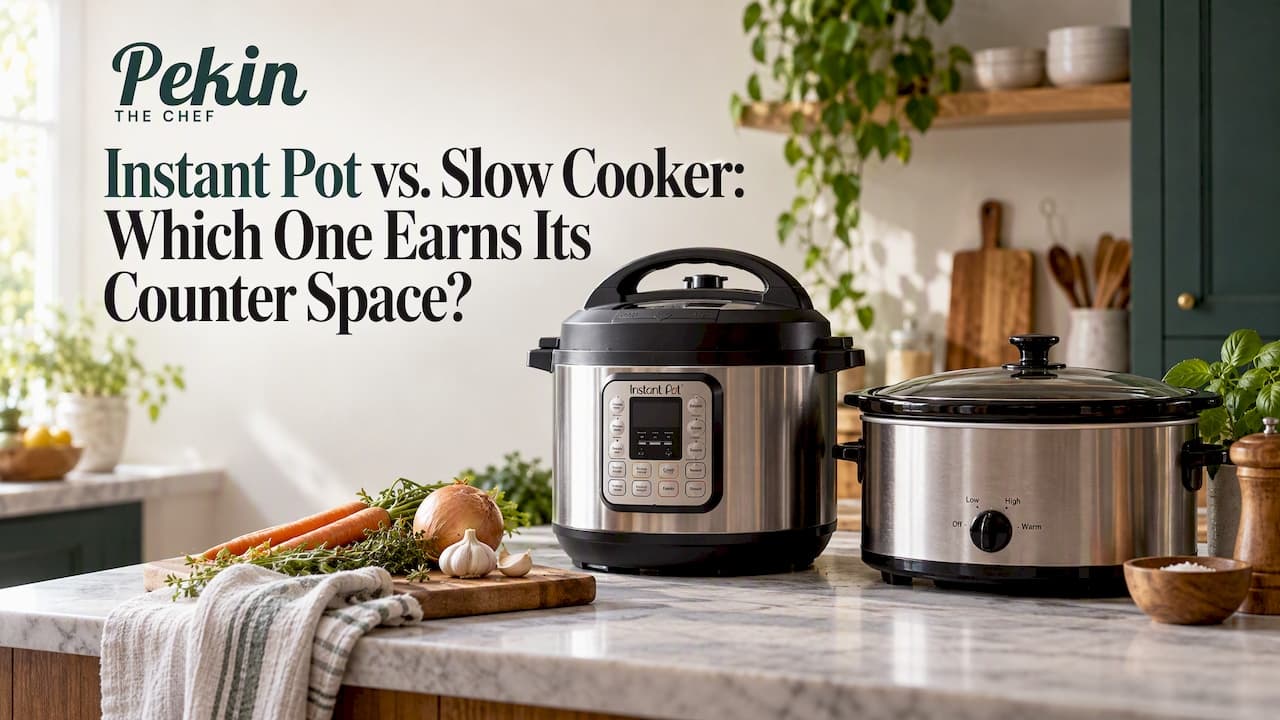
If dinner has to be on the table in under an hour, an electric pressure cooker such as the Instant Pot is the better tool. If you want to load a pot at 8 a.m. and walk through the door to a finished meal at 6 p.m., a slow cooker is still the simpler, more forgiving choice. Both turn tough, inexpensive cuts into something tender and deeply savory, but they get there by very different roads, and that difference shapes everything from texture to how much attention you pay.
This guide walks through how each machine works, where each shines, how to convert recipes between them, what the safety rules say, and how to decide if you only have room for one.
TL;DR
- A pressure cooker works fast: sealed steam raises the temperature, and cooking time can drop by up to two-thirds. A slow cooker works low and long, often six to eight hours.
- The slow cooker wins on simplicity and true walk-away cooking. The pressure cooker wins on speed, versatility and last-minute dinners.
- An Instant Pot can slow cook, but it behaves a little differently from a dedicated slow cooker, with less evaporation and sometimes longer times.
- Many slow cooker recipes convert to pressure cooking: about 25 to 30 minutes replaces an 8-hour low or 4-hour high meat recipe, with added liquid and vegetables handled carefully.
- If you cook a lot of rice, beans and weeknight stews, start with the multicooker. If your days are long and your meals are simmered, start with the slow cooker.
Table of Contents
- How the two machines actually work
- Instant Pot vs. Crock-Pot: sorting out the names
- Speed, texture and flavor, side by side
- Can an Instant Pot work as a slow cooker?
- When to choose the slow cooker
- When to choose the Instant Pot or another multicooker
- Converting a slow cooker recipe for the pressure cooker
- Safety basics for both appliances
- What the pros do
- Our perspective
- Put it to work with a restaurant-inspired recipe
- A quick buying guide
- FAQ
- Sources
How the two machines actually work
It helps to stop thinking of these as rivals and start thinking of them as two answers to different questions.
A slow cooker is the old-fashioned, patient one. It is a lidded ceramic or stoneware insert surrounded by a metal housing that gently heats the bottom and sides of the pot. The food stays in a moist environment at low temperature for hours. According to the USDA, slow cookers generally cook between 170° and 280°F, and that gentle heat is what lets leaner, less expensive cuts of meat soften without shrinking as much.
An electric pressure cooker, the category the Instant Pot belongs to, is a different animal. It uses high-pressure steam in a sealed container. Because the trapped steam raises the boiling point of water, the food cooks in a hotter chamber than an open pot can ever reach. Wirecutter reports that this can cut cooking time by up to two-thirds, and it gives the example of a whole chicken braised in about 40 minutes.

Most modern multicookers fold in extra functions: sauté, steam, rice, yogurt, and often a slow-cook setting. That last one is where the confusion starts, and we will come back to it.
Instant Pot vs. Crock-Pot: sorting out the names
Part of the search traffic for this topic is really a vocabulary problem. "Crock-Pot" has become shorthand for any slow cooker, much like people say "Kleenex" for tissue. "Instant Pot" has done the same for electric pressure cookers and multicookers. So when someone asks about an Instant Pot versus a Crock-Pot, the practical question is the one this article answers: pressure cooking versus slow cooking.
The useful distinctions are these:
- Slow cooker: low heat, long time, no pressure, usually a handful of simple buttons.
- Electric pressure cooker: sealed, pressurized, fast, with a lock-on lid and a release valve.
- Multicooker: the umbrella term for an appliance that combines several functions, usually including pressure cooking, and sometimes sold without it. Consumer Reports notes that the pressure-capable models it tested generally run about $70 to $250, while multicookers without pressure capability run about $50 to $600. Those are ranges for the models tested, not a price tag for every machine on the shelf, and standalone slow cookers are often cheaper than either.
Speed, texture and flavor, side by side
The table below summarizes the differences cooks notice most.
| Slow cooker | Electric pressure cooker / multicooker | |
|---|---|---|
| Typical time for a braise or stew | Six to eight hours is common | Often a fraction of that, up to two-thirds shorter |
| How it cooks | Low, moist, steady heat | Sealed, high-pressure steam |
| Texture | Soft and tender, sometimes less browning and reduction | Very tender beans and meats, concentrated flavor |
| Evaporation | More, so sauces thicken somewhat | Very little, so liquid can stay thin |
| Effort | Load, set, leave | Sauté, seal, set, then release pressure |
| Learning curve | Minimal | Moderate: valves, release methods, liquid minimums |
| Best for | All-day cooking, serving at gatherings | Fast dinners, beans, rice, stock, one-pot meals |
Wirecutter's summary is that pressure cooking tends to make beans and meats very tender while retaining concentrated flavor, while slow cooking is simpler and convenient for starting a meal before you leave home, though it may produce less browning, reduction and tenderness.
We would add a sensory note from years of watching home cooks recreate restaurant plates. A slow cooker gives you a dish that tastes mellow and melded, where the aromatics have had all day to soften into the sauce. A pressure cooker gives you a dish that tastes bright and concentrated, because nothing escapes. Neither is wrong. They simply suit different dishes.
The browning question
Restaurant flavor depends heavily on browning, and neither appliance does it perfectly on its own. A slow cooker never browns anything, so serious cooks sear meat in a skillet first. Most multicookers have a sauté function, which means you can brown and pressure cook in the same pot, saving a pan. That one-pot convenience is a real point in the multicooker's favor, and if you are weighing your cookware too, our look at ceramic versus nonstick pans covers what belongs on the stove for that sear.
Can an Instant Pot work as a slow cooker?
Yes, with caveats. Consumer Reports tested the question and found that the Instant Pot's slow-cooker function and a standalone Crock-Pot both produced tender, delicious pulled pork, though the Instant Pot took a bit longer.
Two things are worth knowing before you rely on it:
- Less evaporation. The AP notes that the Instant Pot's tight seal allows less evaporation than a traditional slow cooker, which can leave more liquid in the pot and reduce sauce thickening. If you slow cook in a multicooker, consider using a little less liquid than the recipe calls for, or simmer the sauce on the sauté setting at the end.
- Timing differences. Some cooks find their multicooker's slow-cook mode runs slower than the dedicated appliance they are used to. Check on the first batch, and keep a thermometer handy for meat.
If you mostly want a slow cooker for the occasional chili, the multicooker's setting will do. If you slow cook several times a week, or want to feed a crowd from a buffet-style pot, a dedicated unit earns its place.
When to choose the slow cooker
Wirecutter recommends a slow cooker for one-pot meals prepared while you are away: pot roast, chili, braised meats, stews, soups, oatmeal and dishes for buffets. The pattern is consistent. These are foods that tolerate, and even improve with, hours of gentle heat.
The other advantage is simplicity. The AP describes the slow cooker as more intuitive for most cooks, with fewer functions and buttons and less room for misuse. There is no pressure to release, no valve to seat, no minimum liquid to calculate. For a first-time cook, or a household where several people will use the appliance, that matters.
A slow cooker is the right call when:
- you are gone from home for eight to ten hours and want dinner ready on arrival;
- you are hosting and need to keep a dish warm on the counter;
- you cook mostly braises, soups and pulled meats;
- you want the lowest-effort option and the lowest price.
If you love the idea of that slow, cozy method and want to see how restaurants approach it, our community-tested overnight braised short rib and slow roasted chicken recipes are good places to practice the patience that low and slow rewards.
When to choose the Instant Pot or another multicooker
The pressure cooker's superpower is turning "I forgot to plan dinner" into a braise. Wirecutter lists fast one-pot meals such as pot roast, braised chicken, vegetables, stew, chili, rice, pasta, beans and stock as the natural territory of the electric pressure cooker. Dried beans that normally need an overnight soak and a long simmer become a weeknight project. Homemade stock stops being a weekend commitment.
An electric pressure cooker makes the most sense when:
- you decide what to cook late in the day;
- you cook beans, grains or stock regularly;
- you want one appliance to sauté, pressure cook, steam and cook rice;
- counter and cabinet space are tight and you want to replace more than one gadget.
If rice is a big part of your routine, it is worth reading our comparison of a rice cooker versus an Instant Pot, since a multicooker can replace a rice cooker for some households but not all.
One limit to respect: pressure cooking is not ideal for everything. Delicate foods, anything you want crisp, and recipes that depend on slow reduction do better elsewhere. Always read your model's manual for foods that should not be pressure cooked, such as items that foam heavily or that can clog the valve, and for the minimum amount of liquid it needs.
Converting a slow cooker recipe for the pressure cooker
This is the most practical skill in the whole debate, because it lets you keep your favorite recipes whichever machine you own. Colorado State University Extension suggests that a meat-based dish taking 8 hours on low or 4 hours on high in a slow cooker needs about 25 to 30 minutes in an electric pressure cooker. Use that as a starting point, then adjust for the cut and size of the meat.
A reliable approach:
- Cook the slow ingredients first. CSU Extension advises cooking meat, broth, grains and beans first, then adding vegetables later so they do not turn to mush.
- Check the liquid. The same guidance says 1 to 2 cups of liquid is standard, though the amount varies by cooker. Your manual sets the minimum.
- Brown first. Use the sauté function for the meat and aromatics, then deglaze so nothing sticks to the bottom.
- Thicken at the end. Because the sealed pot loses so little liquid, reduce the sauce on sauté or stir in a slurry after cooking.
- Taste and adjust. Pressure cooking concentrates flavor but can mute fresh herbs, so add those at the end.
Going the other way, from pressure cooker to slow cooker, follows the reverse logic: use a bit less liquid than the pressure recipe, brown on the stove, and plan for hours rather than minutes.
Safety basics for both appliances
Both machines are safe when used as intended, and the rules are not complicated.
For slow cookers, the USDA says to keep perishable food refrigerated until you start, and thaw meat and poultry before it goes in, because a slow cooker can take several hours to reach a bacteria-killing temperature. Starting with frozen meat extends that risky window. The agency also recommends moisture-rich dishes such as chili, soup or stew. Follow the same page for fill levels and holding temperatures.
For pressure cookers, follow your manufacturer's instructions on lid locking, valve position, minimum liquid and safe release methods. If you have a food-safety question about a specific dish, the USDA's Meat and Poultry Hotline and your appliance manufacturer are the people to ask, not a recipe comment section.
What the pros do
A frequent question is whether professional chefs use slow cookers at all. Some do, and for a surprising range of dishes. A BuzzFeed Tasty feature asked five chefs for their favorite slow-cooker recipes, and the answers ranged from comforting sliders to crispy pork and even dessert, including an Indian carrot pudding. The takeaway is not that restaurant kitchens run on slow cookers, since professional kitchens rely on ovens, braising pans and heavy-duty equipment. It is that chefs value the same thing home cooks do: long, gentle heat that builds flavor while their attention is elsewhere.
That is also the spirit behind the recipes we collect. Restaurant dishes get their depth from time, technique and good browning. A home appliance, used thoughtfully, can borrow most of that.
Our perspective
We get asked this question constantly, and our honest answer is that the machine matters less than the match between the machine and your week. We have watched home cooks buy a multicooker, use it for rice and nothing else, and we have watched others pull a forgotten slow cooker out of the cupboard and rediscover the best pulled pork of their lives.
Here is how we think about it:
- If your problem is time at dinner, buy the pressure cooker. It rescues weeknights.
- If your problem is time during the day, buy the slow cooker. It cooks while you are out.
- If your problem is flavor, the answer is the same either way: brown your food first, season in layers, and finish the sauce at the end. A restaurant sauce is almost never served straight from the pot, and yours should not be either.
- If your problem is space, a multicooker covers the most ground, as long as you accept that its slow-cook mode is a competent stand-in rather than a perfect copy.
Our recipes are vetted by home cooks who leave ratings and feedback, so when a method works in a real kitchen, or needs a tweak, you will usually find out in the comments. That feedback is how we learned that sauces often need finishing on the stove and that liquid is the most common thing to adjust when switching appliances.
— Rhys
Put it to work with a restaurant-inspired recipe
The best way to decide between the two is to cook one dish you love in your own kitchen. Pick a braise, a chili or a pulled meat, and try it the slow way one week and the fast way the next. Our collection is searchable by restaurant, dish, cuisine, meal type and prep time, so you can find something that suits either appliance, such as the loaded brisket baked potato if you have leftover smoked or slow-cooked beef to use up.

Browse the full collection of community-rated recipes at Pek in the Chef, and read the comments before you cook: the notes from other home cooks on timing and liquid are often the difference between good and great.
A quick buying guide
If you are standing in the appliance aisle, or scrolling a retailer's page, use these questions:
- How many hours are you usually away? Eight or more points to a slow cooker.
- How often do you decide dinner after 5 p.m.? Often points to a multicooker.
- Do you cook rice, beans or stock weekly? That also points to a multicooker.
- Do you feed a crowd or bring dishes to gatherings? A large slow cooker is hard to beat for serving.
- How comfortable are you with new gadgets? The slow cooker has the gentler learning curve.
- What is your budget? Consumer Reports' figures show a wide range, so compare features and not just the price.
If you cannot decide, a multicooker with a slow-cook setting covers the widest ground. If you already own one appliance, the other is optional until a particular recipe makes you want it.
FAQ
Will my Instant Pot work as a slow cooker?
Yes, if your model has a slow-cook setting. In Consumer Reports' testing, the Instant Pot's slow-cook function produced tender pulled pork much like a standalone slow cooker, though it took a little longer. Because the sealed lid allows less evaporation, you may want to use less liquid or reduce the sauce at the end.
Can I pressure cook instead of slow cook?
Often you can. Colorado State University Extension suggests roughly 25 to 30 minutes in an electric pressure cooker for a meat dish that takes 8 hours on low or 4 on high. Cook meat, broth, grains and beans first, add vegetables later, and check your manual for liquid requirements.
Do professional chefs use slow cookers?
Some do, particularly for hands-off braises, pulled meats and even desserts, as a feature of five chefs' favorite slow-cooker recipes showed. Most restaurant kitchens depend on ovens and stovetop braising, but the principle of long, gentle heat is the same.
Is a slow cooker easier than an Instant Pot?
For most people, yes. The AP describes the slow cooker as more intuitive, with fewer functions and buttons and less chance of misuse. A multicooker takes a little practice with release methods and liquid, but it pays you back in speed and versatility.
What should not be cooked in a pressure cooker?
Check your manufacturer's manual first, since it lists foods to avoid. As a general rule, anything you want crisp, delicate foods that overcook in minutes, and dishes that foam heavily or could block the valve need extra care or a different method.
Sources
- Should I Get a Pressure Cooker, a Slow Cooker, or a Rice Cooker? (Wirecutter)
- Instant Pot vs Crock-Pot: Which One Is Better? (Gear Patrol)
- Can the Instant Pot Replace 7 Other Appliances? (Consumer Reports)
- Best Multi-Cooker Buying Guide (Consumer Reports)
- Slow cooker or Instant Pot? (AP News)
- How to Convert Slow Cooker Recipes for Electric Pressure Cooking (CSU Extension)
- Slow Cookers and Food Safety (USDA FSIS)
- How chefs use their slow cookers (BuzzFeed Tasty)