
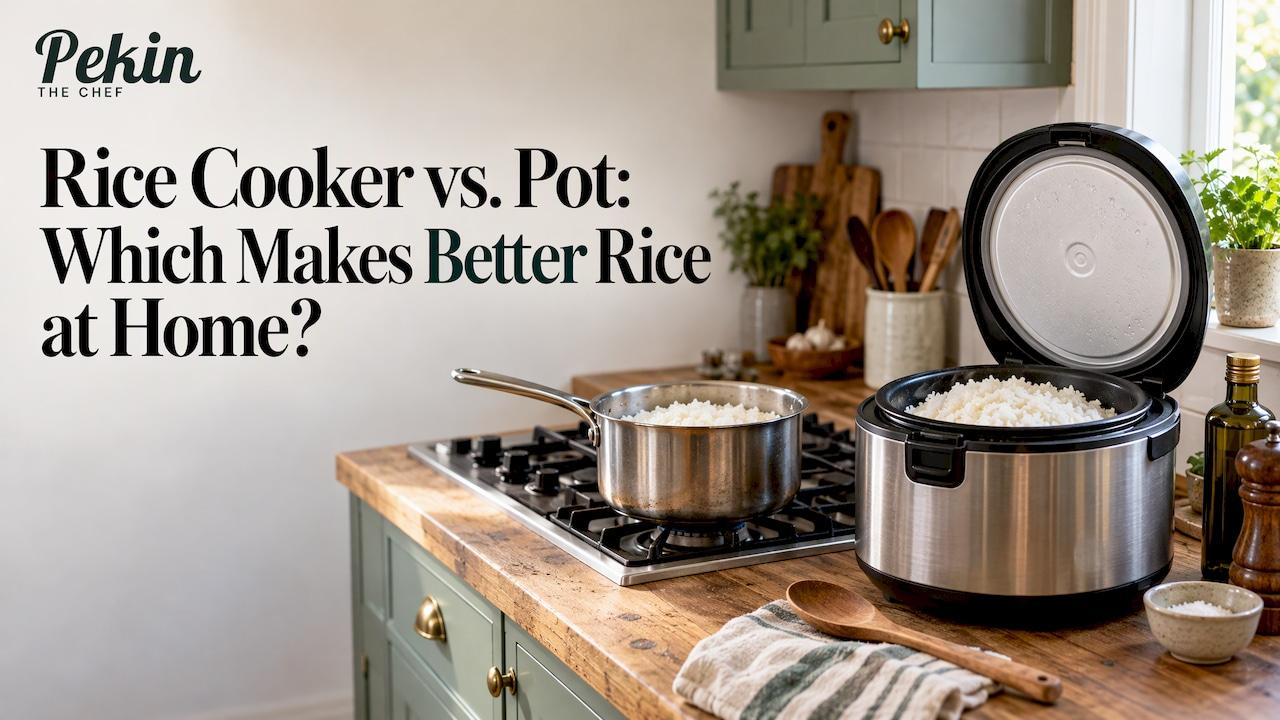
A rice cooker is the better choice if you cook rice often and want the same fluffy result every time with no watching. A good pot is the better choice if you cook rice occasionally, want firmer, more separate grains, or have little cabinet space. Both can produce restaurant-quality rice. The difference is how much skill, attention and counter space each one asks of you.
Rice is the quiet foundation of so many restaurant plates, from a glossy poke bowl to a smoky Mexican side. Getting it right at home is often what separates a good copycat dinner from a great one. Here is how the two methods really compare, when each one earns its place, and how to cook rice well whichever you own.
TL;DR
- A rice cooker removes the variables (burner level, lid fit, kitchen humidity) and makes consistent rice at the press of a button, which is why Consumer Reports credits it with reliable results.
- A pot gives gentler cooking and firmer, more separate grains, and it costs nothing if you already own one, but it takes practice and some attention.
- Speed is close: white rice takes about 18 to 20 minutes in a cooker and about 18 minutes simmering on the stove, per The Manual.
- Cookers range from budget to premium, so the worth-it question depends on how often rice lands on your table and how many people you feed.
Table of Contents
- What actually happens in each method
- Taste and texture: how the rice differs
- Time and attention
- What a rice cooker costs, and whether it is worth it
- Versatility, space and cleanup
- How to cook rice well in either one
- Our perspective
- Cook the rice dishes you love
- FAQ
- Sources
What actually happens in each method
Rice cooks by absorbing water and heat until the starch softens. Both methods rely on that same simple principle, and the real difference is who controls the heat.
Inside a rice cooker
A basic cooker heats the rice and water at full power until the water reaches boiling, around 212°F. Once the water is absorbed, the temperature climbs past boiling, which trips the thermostat. Some models then drop into a warming mode near 150°F, while simpler ones switch off completely. USA Rice describes the same idea: the cooker stops on its own when it senses the change in temperature and moisture that signals fully cooked rice, and it keeps the rice warm afterward.
In other words, the machine reads the rice for you. You measure, you press a button, and you walk away.
On the stovetop
The pot puts you in charge. Consumer Reports notes that stovetop results depend on the burner's level, the pot's insulation, the lid seal and even kitchen humidity. A cooker sidesteps all of that with a sealed vessel and a precisely controlled heat source.
That is not a flaw so much as a craft. Once you learn your own burner and your own pot, the method becomes second nature, and many cooks prefer the feel of it.
Taste and texture: how the rice differs
This is the heart of the question, and the honest answer is that it depends on what kind of grain you love.
Rice cooker rice tends toward evenly cooked, tender, well-defined grains. A Wirecutter reviewer who tested a premium cooker said it reliably produced restaurant-quality rice, the kind he had never managed in a pot, with grains that were never mushy or soggy. That is one reviewer's experience with one high-end model, but it captures what many people notice: the cooker is forgiving.

Stovetop rice has its own appeal. According to the USA Rice foodservice playbook, simmering on the stove is gentler on the rice and gives firmer, more separate grains. If you want a pilaf with distinct kernels, or the slightly toothsome bite that suits fried rice, that gentleness is a real advantage.
A few things shape the outcome in either case:
- Rice type. In Consumer Reports testing, every cooker made white rice that scored at or near the top, while brown rice varied more in taste, texture and cooking time.
- Water ratio. Too much water makes a gluey pot, too little leaves hard centers.
- Rinsing. Rinsing white rice washes off surface starch, which helps the grains stay separate.
- Resting. Letting the rice sit covered for about 10 minutes after cooking lets moisture even out.
For creamy, soft-textured rice dishes where starch is the point, such as rice pudding, the technique matters more than the appliance. This guide to creamy rice texture technique shows how much the method shapes the final bite.
Time and attention
People assume a cooker is faster. Mostly it is not. It is simply less demanding.
| Rice cooker | Stovetop pot | |
|---|---|---|
| White rice | About 18 to 20 minutes | About 18 minutes of simmering |
| Brown rice | Up to 45 minutes | About 30 minutes |
| Rest time | About 10 minutes | About 10 minutes |
| Attention needed | Almost none, it shuts itself off | Heat control, no lid lifting |
| Keeps warm afterward | Often yes | No |
Those figures come from The Manual. Cookers with quick-cook settings or premium programs can differ. The Wirecutter reviewer found the quick setting on his premium cooker took under 30 minutes, which is longer than the stove, but he judged the ease and consistency worth it. The Guardian's U.S. test found its tested high-end cooker took 54 minutes on the regular setting, so a slower cycle is part of how some models make their grains.
What the cooker does save is your attention. You do not hover, you do not adjust the flame, and you do not worry about scorching. The USA Rice playbook lists scorching and burning as real risks on the stove if the liquid is off or the heat runs too high.
What a rice cooker costs, and whether it is worth it
The price range is wide. In its July 2025 U.S. test, The Guardian listed a GreenLife budget cooker at $39.87, a multicooker at $82.99, a mid-range model at $129.99, and premium models at $368.74 and $499.99. Prices move, so treat these as a snapshot of the range, not a current quote.

Size matters too. Wirecutter noted that a 10-cup cooker listed at $280 suits large families, while that size is less convenient for one or two people. The Guardian found the $39.87 compact model suitable for a single person or a couple wanting something easy to stow.
A simple way to decide
A cooker is likely worth it if:
- Rice shows up on your table at least a few times a week.
- You want to start dinner and not think about the grain at all.
- You cook rice for a household and want it held warm until everyone sits down.
- You have been frustrated by pots that scorch, boil over or turn out gummy.
A pot is likely enough if:
- You cook rice only now and then.
- Cabinet and counter space are tight.
- You like firm, separate grains and enjoy the hands-on rhythm.
- You often cook large batches that outgrow a small cooker.
There is no wrong answer here. The best appliance is the one that gets used, and a pot you trust beats a cooker that lives in a cabinet.
Versatility, space and cleanup
A pot wins on flexibility. The same saucepan that makes rice also sautés aromatics, simmers sauces and boils vegetables. It also washes in the sink with no special care. If you are weighing cookware generally, our guides to Dutch ovens and stockpots and to ceramic versus nonstick pans help you decide what belongs on your stove.
A cooker is a single-minded appliance, though many modern ones add settings for porridge, steaming or brown rice. It needs counter or shelf space and an inner pot that should be cleaned gently so the coating lasts. If you are tempted by a multi-purpose machine, rice cooker vs. Instant Pot covers that trade-off in detail. One data point worth knowing: Consumer Reports found that even its lowest-rated rice cookers made better rice than a multi-cooker.
The pressure-cooker route is a different animal again. It can be quicker, but it is a separate decision from the simple cooker-versus-pot choice.
How to cook rice well in either one
In a rice cooker
- Measure the rice and rinse it if you like.
- Add water according to the cooker's own instructions, since the inner pot often has fill lines.
- Close the lid and select the right setting, such as white or brown, if your model has one.
- Let it finish, then rest the rice about 10 minutes before fluffing.
Expect roughly 18 to 20 minutes for white rice and up to 45 for brown, according to The Manual.
In a pot
- Rinse white rice if you like, then add the recommended amount of water. A common starting point for white rice is 1 cup rice to 2 cups water, though packages vary and other types differ.
- Bring to a boil, then reduce to a low simmer under a tight-fitting lid.
- Do not lift the lid. The steam is doing the work.
- Cook at least 18 minutes for white rice or about 30 for brown, then rest covered for 10 minutes.
If your rice scorches, lower the flame sooner or check the lid seal. If it turns gummy, trim the water a little next time and rinse more thoroughly.
Matching the method to the dish
Different restaurant dishes want different rice. Fluffy, separate grains suit a Mexican-style restaurant rice, where toasting the grains in the pot is part of the flavor. A sticky, tender bed suits a white rice served under poke, and a chewy grain works well in a wild rice side. Cooks working with specialty grains will also find that black rice varieties bring their own character and timing, so follow the grain's own guidance.
Our perspective
We have watched home cooks chase restaurant flavor for years, and rice is where many of them get stuck. The sauce is right, the protein is seared, and then the rice turns out either crunchy or porridge-like. It is the most overlooked part of the plate.
Our view is simple. Choose the method you will actually repeat. A cooker is a wonderful companion if rice is a weekly staple, because it frees your attention for the dish that deserves it. A pot is a wonderful teacher if you want to understand heat, steam and timing. Neither is a shortcut around good technique, and both reward a little patience.
That is why we lean on the people who cook these dishes at home. Every recipe on Pek in the Chef is inspired by a real restaurant dish and comes with feedback from other home cooks, so you can see what worked in their kitchens, with their pots and their cookers, before you start. Rice is a perfect example: someone has almost always tried it both ways and left a note.
If you are still deciding, cook a few of our rice-based recipes in the pot you own first. You will quickly learn whether you want the hands-on craft or the hands-off ease.
Rhys
Cook the rice dishes you love
Once your rice is dependable, the fun begins. Pek in the Chef gathers recipes inspired by popular restaurant dishes, searchable by restaurant, dish, cuisine, meal type and prep time, with ratings and comments from home cooks. Try a karaage rice bowl, or cook for a crowd with the half tray of rice for 10 to 12 people.

Browse the full collection at Pek in the Chef and find your next restaurant favorite to recreate at home.
FAQ
Is a rice cooker worth it?
It is worth it if you eat rice regularly and value consistent results without watching the stove. Cookers range from about $40 to nearly $500 in recent U.S. testing, so you can match the spend to how often you cook rice. If you cook rice rarely, a good pot does the job.
What are the main benefits of a rice cooker?
USA Rice says cookers make white and brown rice easy and foolproof, and they keep it warm. They stop automatically when the rice has absorbed the liquid. That frees your hands and attention, and it avoids the scorching that can happen on the stove.
Is a rice cooker faster than a pot?
Not usually. White rice takes about 18 to 20 minutes in a cooker and about 18 minutes on the stove, and brown rice takes longer in a cooker. The cooker's advantage is that it needs no supervision, not that it is quicker.
Can I use a rice cooker for things besides rice?
Many models offer settings for other grains, porridge or steaming, though features vary by model. Check your cooker's manual for what it supports. For general cooking, a pot or a multi-purpose appliance covers more ground.
Should I cook brown rice differently?
Yes. Brown rice needs more time, up to 45 minutes in a cooker or about 30 on the stove, followed by a 10-minute rest. Consumer Reports found brown rice varied more between cookers than white rice did, so follow your model's brown rice setting if it has one.
Sources
- Best Rice Cookers, Consumer Reports
- Ready, Set, Rice! A rice cooking playbook, USA Rice
- How To Cook Rice, USA Rice
- Rice cooker, Wikipedia
- Zojirushi Neuro Fuzzy rice cooker review, Wirecutter
- Expert-approved kitchen gadgets, Wirecutter
- I tried 17 rice cookers, The Guardian
- How to cook rice perfectly, The Manual
- How to Cook Perfect Rice on the Stove, The Mom 100