
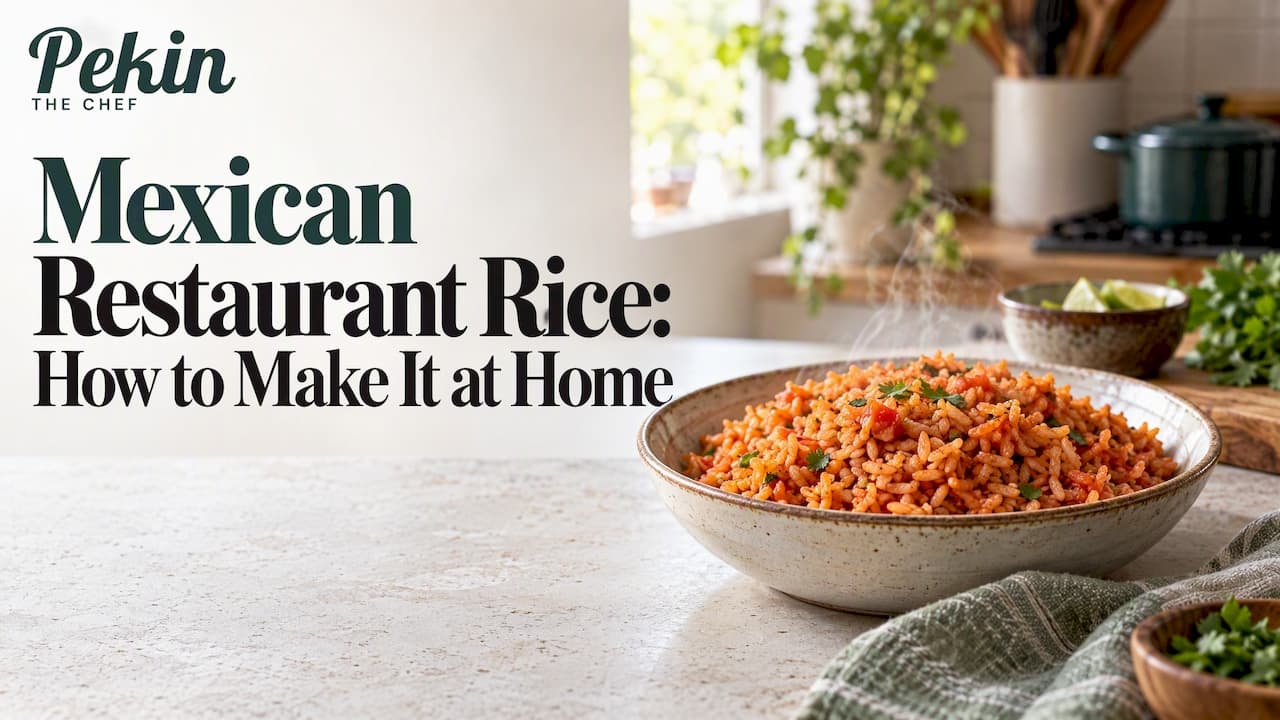
The rice that arrives beside your enchiladas is not a mystery, and it is not a packet of seasoning. It is long-grain rice, rinsed and dried, toasted in oil until pale gold, then simmered in a puréed base of tomato, onion, garlic and chicken stock, and left alone under a lid. The restaurant secret is method, not a hidden ingredient, and every step below is one you can repeat in a home kitchen tonight.
TL;DR
- Restaurant-style Mexican rice (arroz rojo) is fluffy, separate grains simmered in a puréed tomato and chicken stock mixture, seasoned well but never heavy or greasy.
- Rinse and dry the rice, then toast it only until golden. Pushing it to dark brown turns the grains to crumbs and the pot to paste.
- Use about 1.5 parts liquid to 1 part rice, keep the lid on, and let the pot rest at least 10 minutes off the heat.
- A whole serrano or jalapeño, punctured and left in the pot, gives gentle warmth without taking over.
- "Spanish rice" on a US menu usually means this same dish, so the recipe below answers both searches.
Table of Contents
- What Makes Restaurant Mexican Rice Different
- The Ingredients, and Why Each One Is There
- Step by Step: Fluffy Restaurant-Style Rice
- Reading the Pot, Not the Clock
- Troubleshooting: Why Your Rice Isn't Like the Restaurant's
- Perspective: What We Have Learned From Restaurant Rice
- Making the Rice Your Own
- Storing and Reheating
- Find More Restaurant-Inspired Recipes
- FAQ
- Sources
What Makes Restaurant Mexican Rice Different
Taste a spoonful at a good taverna-style Mexican spot and you notice three things at once: a savory, tomato-warmed flavor, grains that sit apart rather than clump, and a faint background heat that you cannot quite place. Home attempts often miss on all three. The rice comes out pink instead of brick red, sticky instead of light, and flat instead of aromatic.
The gap is almost always technique. Home cooks tend to stir tomato sauce into plain boiled rice, which gives you wet, sweet rice with a red tint. Restaurants do the opposite: they build flavor in the fat first, then let the rice absorb a concentrated base. Cooks who study the dish describe the goal as balance rather than sheer intensity: the sharpness of raw onion and garlic blended into the base, set against the savory depth of chicken broth.
Mexican rice, Spanish rice, arroz rojo
You will see three names on menus and recipe cards. In many American restaurants, "Spanish rice" is the tomato-red side dish served with refried beans, and it is the same dish most cooks call Mexican rice. In Mexico, it is arroz rojo, red rice. Traditional Spanish rice dishes from Spain are a different thing, usually built on saffron and paprika, so if you were hoping for a paella cousin, this is not it. If you want the plate-side version from your favorite taqueria, you are in the right place.
The Ingredients, and Why Each One Is There
This makes about six side servings.
- 2 cups long-grain white rice. Long grain is the standard for restaurant-style rice because it stays separate. Some traditional home kitchens, particularly in Morelos, prefer medium grain for a meatier, creamier texture. Try it once you have mastered the basic pot.
- 2 ripe Roma tomatoes (about 1 pound total is also fine if you like a stronger tomato note), quartered. They give the color and the gentle acidity.
- A quarter of a white onion and 2 garlic cloves. Blended raw, they stay bright rather than mellow.
- About 3 cups chicken broth, divided. Part of it goes into the blender, the rest into the pot.
- A quarter cup neutral oil. Enough to coat and toast the grains properly.
- 1 teaspoon kosher salt, adjusted to your broth.
- 1 whole serrano or jalapeño. Left intact and punctured once or twice, it lends warmth without heat that overwhelms.
- Optional: a spoonful of chicken bouillon paste. Plenty of home cooks use bouillon or chicken base to reach that intense, savory restaurant flavor, and some traditional cooks in Sinaloa prefer it to homemade stock.
A note on chile
Fresh chile is the classic route. If you cook for a household that likes mildness but still wants a little glow, some cooks experiment with a seasoning blend instead, and a pepper and chili mix such as Estrella's pepper and chili dipmix is the sort of pantry item worth trying in a small test batch. Add it a little at a time, taste, and keep the salt in check.
Step by Step: Fluffy Restaurant-Style Rice
- Rinse the rice. Run it in a fine strainer under cold water, shaking, until the water runs mostly clear. Rinsing removes surface starch, the enemy of separate grains.
- Dry it. Shake the strainer well and let the rice sit for 10 to 15 minutes. Rinsing and drying before toasting is what helps keep the grains light rather than gummy.
- Blend the base. Combine the tomatoes, onion, garlic and 1 cup of the broth until completely smooth. Add more broth until you have 3 cups of liquid in total, then pour it into a measuring cup.
- Toast the rice. Heat the oil in a wide, heavy pot over medium heat. Add the dried rice and stir often until the grains turn pale gold and smell nutty, usually several minutes. Stop there. Pushing the rice to a dark brown causes it to crumble into a paste of crumbs.
- Add the base. Pour in the blended liquid carefully, since it will sputter. Stir in the salt and the whole chile, give it one good stir to level the rice, and bring to a boil.
- Cover and simmer. Drop the heat to low, cover tightly, and cook without lifting the lid. The ideal ratio is roughly 1.5 parts liquid to 1 part rice, and because the tomato base is thick, check the arithmetic if your blend is heavy on pulp. Expect around 12 to 18 minutes of simmering.
- Rest. Turn off the heat and leave the pot covered for at least 10 minutes. The steam redistributes and the texture evens out from top to bottom.
- Fluff and serve. Remove the chile, fluff with a fork, and taste for salt.
A word on the ratio: this recipe uses 3 cups of liquid for 2 cups of rice, which is the 1.5 to 1 relationship. Your pot, burner and lid all change how much steam escapes, so the first batch is also a calibration. Write down what you did and adjust by a few tablespoons next time.
Reading the Pot, Not the Clock
Timers are a guide. The pot itself tells you more. When the rice is done, the steam escaping from the lid noticeably decreases and the kitchen fills with the concentrated aroma of cooked rice. A toasted or slightly burnt smell means you have gone too far, although the top layer may still be worth saving.

The resting stage matters just as much. It is also the moment when a savory crust, known as pegao, can form on the bottom if your pot and heat are right. Some people chase it, others scrape it away. Both are fair.
Troubleshooting: Why Your Rice Isn't Like the Restaurant's
| Problem | Likely cause | Fix |
|---|---|---|
| Gummy, pasty rice | Unrinsed rice, too much liquid, or stirring during the simmer | Rinse and dry thoroughly, measure the liquid, keep the lid on |
| Crumbly, broken grains | Rice toasted past golden | Pull it from the heat when it is pale gold and nutty |
| Bland and pale | Under-seasoned broth, too little tomato | Add bouillon paste, taste the blend before cooking, salt at the end |
| Hard center | Too little liquid or heat too low | Add a few tablespoons of hot broth, cover, and steam 5 more minutes |
| Mellow, flat base | Onion and garlic browned before blending | Blend them raw for a brighter edge |
| Burnt bottom, raw top | Heat too high or thin pot | Use a heavy pot and the lowest flame once covered |
Most of these trace back to the same lesson from cooks who study the dish: fluffiness comes from method, not secret ingredients, chiefly rinsing and managing the steam.
Perspective: What We Have Learned From Restaurant Rice
At Pek in the Chef, we collect recipes inspired by real restaurant dishes, and we read the feedback home cooks leave with them. Rice is one of the quiet tests of that whole idea. People rarely write in about the headline entrée. They write in about the side that tasted different from the restaurant's, and it is nearly always the rice.
Our view is simple. Copying a restaurant dish is less about finding a rare ingredient and more about copying the restaurant's habits: the toast, the rest, the patience to leave the lid alone. A restaurant cook makes the same pot hundreds of times, so the timing lives in their hands. A home cook has to put it in words, which is why we like recipes that tell you what to look, smell and listen for, and why community comments matter. When three cooks say the rice needed a few more minutes in their pot, that tells you more than any single tester could.
So make the base recipe once, exactly as written. Then change one thing at a time: medium grain, a spoonful of bouillon, a different chile. You will taste the difference, and the notes you take become your own house version.
— Rhys
Making the Rice Your Own
Once the technique feels natural, the base is a canvas.
- Richer flavor: replace some of the broth with a spoonful of chicken base for a savory, restaurant-deep finish.
- Creamier texture: try medium-grain rice, keeping the rinse and the gentle toast.
- More heat: puncture the chile more times, or use two, tasting as you go.
- Vegetables: a handful of diced carrot and peas is common in diner-style versions. Add them with the liquid.
- Herbs: a little chopped cilantro stirred in after the rest, which keeps it fresh.
What to serve alongside
Red rice loves company that is saucy, smoky or bright. A few places to start from our collection:
- 440 Main's Mariachi Beef, where the rice soaks up every drop of sauce.
- 440 Main's Cholula Hot & Sweet Chicken Burrito, if you want to stuff the rice inside the tortilla.
- 167 Raw Oyster Bar's Ceviche, for a cool, citrusy plate next to warm rice.
Set the rice on the table with refried beans, warm tortillas and a lime wedge, and the meal feels complete.
Storing and Reheating
Cool leftover rice quickly, spread in a shallow container, and refrigerate within an hour or two. Reheat with a splash of water in a covered pan or in the microwave under a damp paper towel, then fluff. Good rice reheats well because the grains were separate to begin with. If it was gummy the first time, it will be worse the second.
Find More Restaurant-Inspired Recipes
If this pot of rice sparked an appetite for the plates it usually sits beside, browse the full collection at Pek in the Chef. You can search by restaurant, dish, cuisine or prep time, and read what other home cooks thought before you turn on the stove. A sturdy heavy-bottomed pot with a tight lid is the one tool that helps this recipe most, so it is worth looking for one the next time you shop for kitchenware.
FAQ
How does Mexican restaurant rice taste?
It tastes savory and tomato-warm, with a gentle aroma of toasted rice and a faint heat from a chile cooked whole in the pot. It should be well seasoned and rich without being heavy or greasy. The grains are tender and separate rather than sticky.
Is Spanish rice the same as Mexican rice?
On most American menus, yes: the red rice served beside beans and enchiladas is called either name. It is a different dish from rice dishes made in Spain, which commonly rely on saffron. If you search for restaurant-style Spanish rice in the US, the recipe above is what you are looking for.
Why is my Mexican rice mushy?
The usual culprits are unrinsed rice, too much liquid, and lifting the lid or stirring while it simmers. Rinse until the water is mostly clear, let the rice dry, and keep the ratio near 1.5 parts liquid to 1 part rice. Let it rest covered for at least 10 minutes before fluffing.
Can I use bouillon instead of homemade stock?
Yes. Many home cooks use bouillon powder or chicken base to get the savory depth of restaurant rice, and it is a common shortcut. Taste before adding extra salt, since bouillon is often salty.
Can I make it without the chile?
Yes. Leave out the whole pepper for a completely mild pot. You will lose a little background warmth, but the tomato, onion and garlic base still carries the flavor.