
The best Kewpie mayo substitute is plain, full-fat American mayonnaise, nudged toward Japanese style with a little rice vinegar, a pinch of sugar and a touch of something savory for umami. It takes about two minutes, it works in almost every recipe, and it keeps the creamy, tangy, faintly sweet character that makes Kewpie so beloved. At Pekin the Chef, where home cooks recreate restaurant dishes with community feedback on each recipe, this is the swap we reach for first, and the rest of this guide shows how to tune it for katsu, deviled eggs, sushi bowls and more.
TL;DR
- Regular mayo works in any Kewpie recipe, but it will taste flatter and less tangy, so correct it with rice vinegar, sugar and a savory boost.
- A starting ratio: 1/2 cup mayo, 1 teaspoon rice vinegar, 1/4 teaspoon sugar, a small pinch of MSG or a few drops of dashi or soy sauce.
- Kewpie is made with egg yolks only, which gives it a richer color and body, so look for a yolk-forward, full-fat mayo or add a little extra yolk-style richness.
- Aioli and Miracle Whip can work in a pinch, but each needs a different adjustment.
- Soy sauce matters when you build umami-rich sauces: choose a Japanese-style shoyu for dipping and drizzling, and a good all-purpose bottle for stir-fries.
Table of Contents
- What makes Kewpie taste like Kewpie
- Kewpie vs regular mayo: the differences you can taste
- The two-minute fix: turn regular mayo into Japanese-style mayo
- Which substitute for which dish
- Other swaps and how to adjust them
- Quick comparison of substitutes
- Soy sauce: the other half of the flavor
- Common mistakes to avoid
- Perspective
- Where to go next
- FAQ
- Sources
What makes Kewpie taste like Kewpie
Before you can imitate something, it helps to know what you are chasing. Kewpie is not simply mayonnaise with a Japanese label. Its maker says it is made with only egg yolks, not whole eggs, and that the oil is refined into extremely fine droplets, which is where that almost custardy smoothness comes from. The vinegar is also distinctive: the company describes a mayonnaise-specific vinegar developed from apple juice and malt, rather than the sharp white distilled vinegar many American brands lean on.
The US-made bottle in the familiar squeeze container adds more layers. The ingredient list on the Kewpie USA shop page includes soybean oil, egg yolks, rice vinegar, white balsamic vinegar, cider vinegar, sugar, mustard flour and monosodium glutamate. In other words, you are tasting four things at once:
- Yolk richness, a deeper, more golden, more luxurious body.
- Rounded acidity, from a blend of vinegars rather than one harsh note.
- A hint of sweetness, small but important.
- Umami, the savory depth that makes the sauce taste almost like it has been simmered.
Every good substitute is a way of putting those four things back into whatever mayo is in your fridge.
Kewpie vs regular mayo: the differences you can taste
Put a spoonful of each side by side and the gap is obvious. Standard American mayonnaise is typically thicker and more neutral, with a pale color and a clean, sharp tang. Kewpie is silkier, yellower, sweeter at the edges and noticeably savory. On a sandwich, you might never notice. Drizzled over okonomiyaki, folded into a potato salad or piped across a sushi roll, you absolutely will.
The practical upshot: regular mayo is a perfectly acceptable stand-in, and Kewpie's own kitchen says as much. In its Japanese deviled eggs recipe, regular mayonnaise is an acceptable swap, though Kewpie gives a richer, tangier result. That is the honest framing for every substitute below: you can get close, and a few small adjustments close the rest of the distance.
| Quality | Kewpie | Typical American mayo |
|---|---|---|
| Egg | Yolks only | Often whole eggs |
| Texture | Very smooth, custardy | Thicker, more spreadable |
| Acidity | Blend of vinegars, rounded | Often a single sharper vinegar note |
| Sweetness | Subtle | Minimal |
| Umami | Pronounced | Mild |
The two-minute fix: turn regular mayo into Japanese-style mayo
This is the answer most home cooks need, and it is the one that works across the widest range of dishes.
For about 1/2 cup:
- 1/2 cup full-fat mayonnaise (avoid light or reduced-fat versions, which are thinner and taste watery)
- 1 teaspoon rice vinegar (unseasoned, not the sweetened sushi kind)
- 1/4 teaspoon sugar
- A small pinch of MSG, or 1/4 teaspoon of dashi powder, or a few drops of soy sauce
- Optional: 1 teaspoon of egg yolk, whisked in, for extra richness (use pasteurized yolk if you are serving anyone vulnerable to foodborne illness, such as young children, pregnant guests or older adults)
Whisk everything together, taste, and adjust a tiny bit at a time. Then let it sit for ten minutes. The sugar dissolves, the vinegar mellows, and the flavor knits together in a way it will not if you taste it immediately.
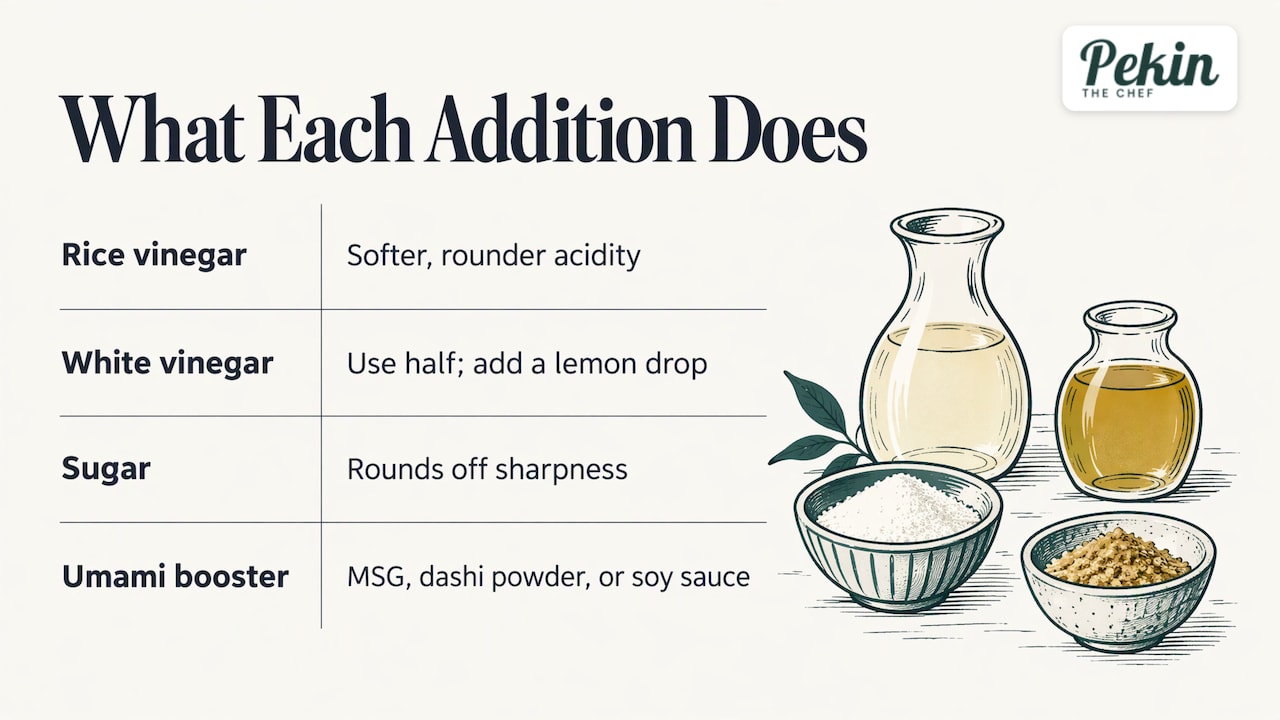
Why each addition matters
Rice vinegar brings the softer, rounder acidity. If all you have is white vinegar, use half as much and add a drop of lemon juice, which approximates that gentler tang.
Sugar is not about making the mayo sweet. It rounds off sharpness, the way a pinch does in a tomato sauce.
The umami booster is the step people skip, and it is the one that most changes the result. MSG is the most direct route, since it is in the real thing. If you would rather not use it, dashi powder or a few drops of soy sauce move the sauce in the same savory direction.
A note on texture
If your mayo is too thick to drizzle, thin it with a teaspoon of water or a little extra rice vinegar. Kewpie flows easily from its bottle, and a loosened mayo gets closer to that ribbon of sauce over a hot bowl of rice.
Which substitute for which dish
Not every recipe asks the same thing of the mayo. Here is how to match the swap to what is on the plate.
Katsu, tonkatsu and fried chicken
A tangy, savory mayo next to something crisp and fried does a lot of work. The fixed-up regular mayo above is ideal. Spoon it alongside Aloha Kitchen's katsu or Ajimi's chicken katsu, or stir in a little more soy sauce and a squeeze of lemon to make a quick dipping sauce.
Deviled eggs and egg salad
Here the yolk richness is the whole point. Use the full-fat mayo, add the extra yolk if you like, and a tiny pinch of sugar. For a restaurant-style version, 440 Main's deviled eggs are a good model, and the same mayo adjustments apply.
Sushi bowls, poke and tuna
Spicy mayo is forgiving. Stir a little sriracha into your fixed-up mayo, add a few drops of toasted sesame oil, and you have the creamy drizzle that tops a poke bowl. It is the finishing touch on something like 167 Raw Oyster Bar's tuna tataki, where a thin line of sauce contrasts with the clean flavor of the fish.
Potato salad, coleslaw and sandwiches
These are the easiest cases. Japanese potato salad and fruit-and-egg sandwiches lean on the sweetness and body of Kewpie, so use the sugar and vinegar tweak. For a regular slaw, plain mayo with a splash of rice vinegar is plenty.
Okonomiyaki, takoyaki and street-food toppings
These rely on a zigzag of sauce across a hot surface. Keep the mayo thin enough to drizzle, and add the umami booster so it can stand up to savory brown sauce.
Other swaps and how to adjust them
Aioli
Traditional aioli is garlic emulsified with olive oil, while the aioli sold in jars and ordered in many American restaurants is usually mayonnaise with garlic and lemon. If you have the jar version, it substitutes well in savory dishes like katsu or fried seafood, since garlic plays nicely with soy and sesame. Skip it in sweet-leaning dishes, such as fruit sandwiches, where garlic would clash. If you want a milder result, thin it with rice vinegar and add a pinch of sugar.
Miracle Whip
Miracle Whip is a sweeter, tangier dressing-style spread, not a Japanese-style mayo. It can mimic Kewpie's sweetness, but it is usually lighter in body and lacks the rich yolk flavor. If you use it, skip the added sugar, keep the rice vinegar light, and lean on the umami booster to deepen it. It is best in potato salad and slaws, less suited to dishes where the sauce is the star.
Homemade mayo with egg yolks
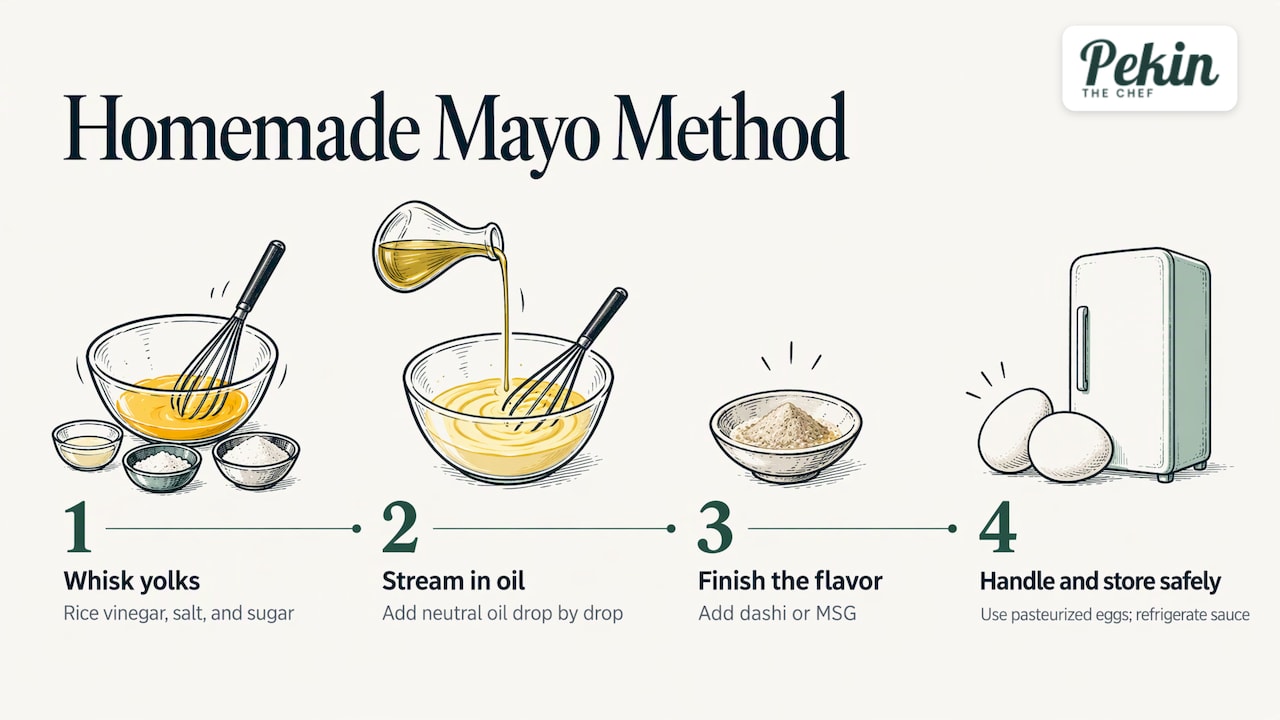
If you enjoy cooking from scratch, you can build a Kewpie-style mayo yourself: whisk egg yolks with rice vinegar, a pinch of salt and sugar, then slowly stream in a neutral oil until thick. The yolk-only base gives it that golden color. A small amount of dashi or MSG completes the picture. It takes patience, and the oil must go in a drop at a time to keep the emulsion from splitting. Because the yolks stay raw, use pasteurized eggs and keep the sauce refrigerated.
Greek yogurt and avocado-based spreads
These work when you want a lighter creamy element, though they taste different, tangier and fresher. Use them in cold salads and wraps, and add a little sesame oil and rice vinegar to nudge them toward Japanese flavors. If you are exploring cooking with different fats, there are useful ideas in this piece on seasoning oils for home cooks, which pairs well with lighter spreads.
Quick comparison of substitutes
| Substitute | Closeness to Kewpie | Best for | Adjustment |
|---|---|---|---|
| Full-fat mayo, fixed up | Closest | Almost everything | Rice vinegar, sugar, umami |
| Mayo plus extra yolk | Very close | Deviled eggs, sandwiches | Pasteurized yolk, whisked in |
| Jarred aioli | Moderate | Fried foods, seafood | Thin and sweeten lightly |
| Miracle Whip | Moderate | Potato salad, slaw | Skip sugar, add umami |
| Greek yogurt | Loose | Cold salads, wraps | Add sesame oil, vinegar, salt |
Soy sauce: the other half of the flavor
Many of the people looking for a Kewpie stand-in are also building a Japanese-inspired sauce or a stir-fry, so a word on soy sauce is worthwhile. Bottles are not interchangeable, and the style you pick changes the dish.
- All-purpose or Japanese-style shoyu is a dependable pantry staple. It is balanced and slightly sweet, and works in marinades, dipping sauces and as the umami drop in your mayo.
- Low-sodium soy sauce is useful when you are reducing a sauce or seasoning a dish in stages, because it lets you control salt more precisely.
- Light and dark Chinese-style soy sauces serve different jobs. Light is for seasoning, while dark is thicker and used largely for color and a touch of sweetness in braises and stir-fries.
For a stir-fry, reach for a good all-purpose or light soy sauce for seasoning, and add a splash of dark only if you want deeper color. When you want to season a sauce delicately, as in a Kewpie-style mayo, go slowly: a few drops is plenty. For the savory marinade behind a jammy egg, the soy-based approach in our ramen eggs recipe shows how much a well-chosen bottle matters. And if a recipe also calls for oyster sauce, these oyster sauce substitutes help you stay on track.
Common mistakes to avoid
- Using light mayo. Reduced-fat mayo is thinner and lacks the body that makes the sauce satisfying.
- Over-sweetening. A quarter teaspoon per half cup is a starting point. More turns the sauce into dressing.
- Skipping the rest time. Ten minutes lets the flavors marry.
- Using sweetened sushi vinegar. It already contains sugar and salt, so your balance will drift.
- Adding too much soy. It can thin and darken the mayo. Drops, not splashes.
Perspective
Every recipe we see from a restaurant kitchen has a story of small decisions behind it: one vinegar, one pinch of sugar, one sauce that makes people ask what is in it. Kewpie is a perfect example. It is a humble squeeze bottle, but it carries a whole philosophy of balance, richness against brightness, savory against sweet.
That is why we love when home cooks understand what a substitute is doing, rather than just following a swap. Once you know that the magic is yolk, gentle acidity, a little sugar and umami, you can rescue almost any dish with whatever is in your fridge. Our recipes are inspired by real restaurant dishes and shaped by feedback from other home cooks, so when a substitution works, it is because someone in the community has tried it at their own stove.
Start with the simple fix, taste as you go, and trust your palate. There has never been a better time to cook like the restaurants you love.
Rhys
Where to go next
If you enjoy the sauce side of cooking, explore our collection of copycat sauces from restaurant favorites, and browse the full Pekin the Chef recipe library, searchable by restaurant, dish or cuisine, with ratings and feedback from home cooks on every recipe. Each one shows how the mayo, soy and vinegar in your pantry can become the plate you remember from your favorite table.

FAQ
Can I use regular mayo instead of Kewpie?
Yes. Regular full-fat mayo works in nearly every recipe that calls for Kewpie. It will be a little less rich and less tangy, so stir in a teaspoon of rice vinegar, a pinch of sugar and a small savory boost like dashi powder, MSG or a few drops of soy sauce for every half cup.
What is the difference between Kewpie mayo and regular mayo?
Kewpie is made with egg yolks only and uses a specially developed vinegar, which gives it a richer, smoother and tangier profile. The US-made version also contains MSG, which adds savory depth. Regular mayo is usually thicker, paler and more neutral.
Is aioli a good Kewpie substitute?
Jarred or restaurant-style aioli, which is usually garlicky mayonnaise, works well in savory dishes like katsu and fried seafood. Avoid it in sweeter or more delicate dishes where garlic would dominate. Thin it with a little rice vinegar and add a pinch of sugar to bring it closer.
Is Miracle Whip a good substitute for Kewpie?
It can work in potato salad and slaws, since it is sweet and tangy. It is lighter and less yolk-rich, so skip added sugar, go easy on the vinegar and add an umami booster. For sauces where the mayo is the star, full-fat mayo is the better base.
Which soy sauce is best for stir-fry?
A good all-purpose or light soy sauce is the most dependable choice for seasoning a stir-fry. Add a small amount of dark soy sauce only if you want deeper color. Low-sodium is helpful if you want to control the salt as the sauce reduces.
Sources
- Mayonnaise | Products | kewpie
- KEWPIE Japanese Mayonnaise, With Egg Yolks + Umami Flavor
- KEWPIE Japanese Deviled Eggs Recipe