
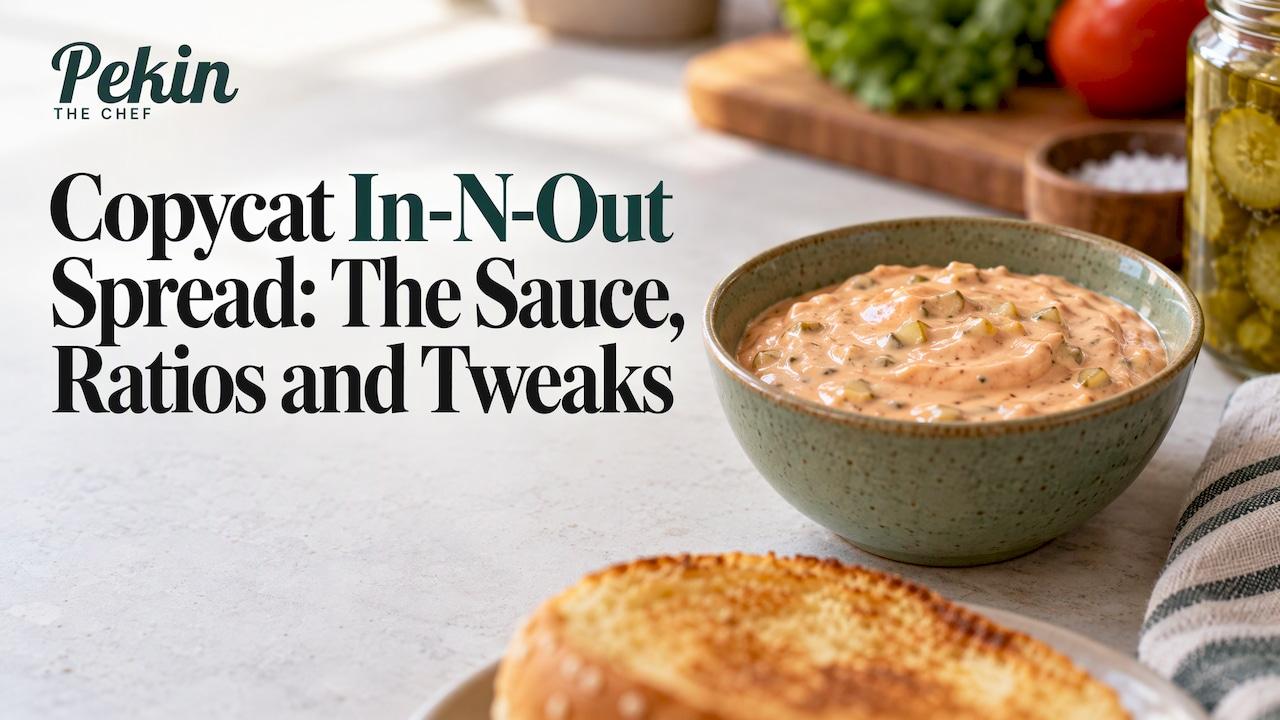
A copycat In-N-Out spread is a creamy, tangy Thousand Island-style sauce built on three pantry staples: mayonnaise, ketchup and sweet pickle relish, brightened with a splash of vinegar and a pinch of sugar. You can stir it together in five minutes, and it tastes best after a rest in the refrigerator. Below you will find the ratio, the method, the Big Mac sauce variation that so many people confuse with it, and how to keep a batch fresh.
TL;DR
- The spread is mostly mayonnaise, about a quarter ketchup, and a little less sweet pickle relish, with a splash of vinegar and a pinch of sugar.
- A good starting ratio is ½ cup mayonnaise, 3 tablespoons ketchup, 2 tablespoons sweet relish, 2 teaspoons vinegar and 1 teaspoon sugar.
- Big Mac-style sauce is a different animal: it adds yellow mustard, paprika, garlic and onion powder, and leans on a tangier, more savory profile.
- Chill the sauce for at least 30 minutes so the relish softens into the base and the flavors meld.
- Keep it covered in the refrigerator, and treat homemade mayonnaise made with raw eggs far more cautiously than jarred.
Table of Contents
- What is actually in the spread
- The ingredients, and why each one matters
- The copycat In-N-Out spread recipe
- Copycat Big Mac sauce: the cousin worth knowing
- Putting the spread to work
- Why resting the sauce changes everything
- Storing your homemade spread
- Common mistakes and how to fix them
- Beyond the sauce: what to build around it
- Our perspective
- Find your next restaurant favorite
- FAQ
- Sources
What is actually in the spread
In-N-Out's spread has a reputation for mystery, but the flavor profile is familiar. Chowhound reports that it is a Thousand Island-style sauce built on mayonnaise, ketchup and sweet pickle relish, and that the closest copies are mostly mayonnaise, around a quarter ketchup and a bit less relish, plus a splash of vinegar and a pinch of sugar. The same piece notes the spread has been the same since the chain opened in 1948.

That answers the question that comes up most often: yes, there is pickle in it, in the form of sweet relish. Those tiny green flecks give you sweetness, a little acidity and a soft crunch all at once. It is why the sauce reads as sweet and tangy rather than simply creamy.
Chef and YouTuber J. Kenji López-Alt reached the same conclusion when he recreated it. The Daily Meal describes his version as a Thousand Island base of ketchup, mayonnaise and sweet pickles, with a splash of vinegar and a pinch of sugar added to land as close to the West Coast chain's flavor as possible.
Notice what is missing. No mustard, no paprika, no garlic powder. That is the line between this sauce and the better-known Big Mac sauce, and it is the first thing to get right.
The ingredients, and why each one matters
A five-ingredient sauce leaves nowhere to hide, so the quality and type of each ingredient matters.
- Mayonnaise. This is the body of the sauce. Use a full-fat, plain jarred mayonnaise. Light versions turn watery once the ketchup and relish release their liquid.
- Ketchup. It brings color, sweetness and a touch of tomato acidity. Too much and the sauce turns pink and sugary, too little and it loses its warm blush. About a quarter of the mix is the sweet spot.
- Sweet pickle relish. This is the signature. Dill relish will give you a sharper, more savory sauce, so reach for sweet relish if you want the classic taste. Drain it lightly in a small sieve so it does not thin the sauce.
- Vinegar. A teaspoon or two of white or white wine vinegar sharpens everything and keeps the sauce from tasting heavy.
- Sugar. A pinch rounds the edges. Fine granulated sugar dissolves best, especially if you stir it into the ketchup and vinegar first.
If you are curious how the two big condiments balance each other, this look at ketchup and mayonnaise in a burger is a nice companion read on why the pairing works so well.
The copycat In-N-Out spread recipe
This is a starting ratio built on the proportions above, close to what the top-ranking copycat versions use. It makes about ¾ cup, enough for four to six burgers or a generous bowl of fries.
You will need:
- ½ cup mayonnaise
- 3 tablespoons ketchup
- 2 tablespoons sweet pickle relish, lightly drained
- 2 teaspoons white vinegar or white wine vinegar
- 1 teaspoon granulated sugar
Method:
- Dissolve the sugar. In a medium bowl, stir the sugar into the ketchup and vinegar until you no longer feel grains. This takes about 30 seconds and prevents a gritty finish.
- Add the mayonnaise. Fold it in with a spatula or whisk until the color is even and the sauce is smooth, with no streaks.
- Stir in the relish. Add it last so it stays distinct and does not get beaten down into the base.
- Rest it. Cover and refrigerate for at least 30 minutes, ideally an hour or longer. The relish releases flavor into the mayonnaise, and the sauce thickens slightly.
- Taste and adjust. Too sweet? Add another drop of vinegar. Too sharp? A pinch more sugar. Too thick for dipping? A teaspoon of the relish brine loosens it.
Texture and color cues
The finished spread should be pale salmon-pink, glossy and thick enough to hold a ridge when you drag a spoon through it. Visible flecks of relish are right. If it looks bright red, you have added too much ketchup. If it looks nearly white, add a spoonful more.
Quick ratio tweaks
| If you want | Change |
|---|---|
| A tangier sauce | Add ½ teaspoon more vinegar |
| A sweeter, more diner-style sauce | Add ½ teaspoon sugar or extra relish |
| A smoother spread | Mince the relish finely before stirring it in |
| A thicker sauce for burgers | Use a bit less ketchup and let it rest overnight |
Copycat Big Mac sauce: the cousin worth knowing
Many cooks searching for an In-N-Out-style sauce are actually after a Big Mac-style sauce, and the two are often lumped together because both are mayonnaise-based burger sauces. They taste different, though.
The Daily Meal's roundup of fast food sauces says Big Mac sauce is apparently a mix of mayonnaise, sweet pickle relish, yellow mustard, white vinegar, paprika, garlic powder and onion powder. No ketchup appears in that list, which is why the sauce comes out paler and more mustardy.
A Deseret News copycat from March 2024 gives workable amounts:
- ½ cup mayonnaise
- 2 tablespoons sweet pickle relish
- 1 tablespoon grated yellow onion with its juices
- 2 teaspoons yellow mustard
- ½ teaspoon each of white vinegar, paprika and onion powder
- ¼ teaspoon fine sea salt
- ¼ teaspoon garlic powder
Stir everything together and refrigerate it in an airtight container. The grated onion is the detail that gives it a savory, slightly sharp bite.
How the two sauces compare
| In-N-Out-style spread | Big Mac-style sauce | |
|---|---|---|
| Base | Mayonnaise and ketchup | Mayonnaise and yellow mustard |
| Pickle element | Sweet relish | Sweet relish |
| Seasoning | Vinegar and sugar | Paprika, garlic powder, onion powder |
| Color | Pale salmon-pink | Pale gold with an orange tint |
| Flavor | Sweet, creamy, gently tangy | Tangy, savory, mustardy |
If you want one jar that does both jobs, start with the spread and stir in a teaspoon of yellow mustard and a pinch of paprika. You will land somewhere in between, which is a perfectly good place to be.
Putting the spread to work
The sauce earns its reputation on a burger, but it is more versatile than that.
- On a burger. Spread it on both halves of a toasted bun, then add lettuce, tomato and a griddled patty. Toasting the bun creates a barrier that keeps the sauce from soaking through.
- As a dip. It is a natural partner for French fries, onion rings and chicken tenders.
- On sandwiches and wraps. Use it where you would normally reach for mayonnaise, from a turkey club to a grilled chicken wrap.
- As a salad dressing. Thin it with a splash of pickle brine or lemon juice and toss it with shredded iceberg and sliced pickles.
For something that pairs beautifully with a creamy, sweet sauce, bring in something crunchy and sharp on the side. A tangy pickle recipe from Aiyla Turkish Cuisine or the crisp, salty fried pickles from 12th Street Tavern are both lovely with it. The spread makes an excellent dip for the fried pickles.
A quick word on the order of toppings if you are building a full burger: sauce on the bottom bun, then the patty, cheese, and finally the lettuce and tomato on top. Keeping the wettest ingredients away from the bread keeps the bun intact until the last bite.

Why resting the sauce changes everything
The difference between a sauce eaten right after mixing and one that has rested for an hour is bigger than most people expect. Fresh relish tastes sharp and separate. After time in the refrigerator, its sweetness and acidity move into the mayonnaise, the sugar fully dissolves and the whole thing thickens a little.
We make the same point in our guide to smash burger sauce, which also rests for 30 minutes before it goes on a burger. Resting is the one step that almost every good restaurant-style sauce has in common, and it costs you nothing but patience.
Storing your homemade spread
Store the sauce in a clean, airtight container in the refrigerator, as the Big Mac copycat above directs. A glass jar with a tight lid works well because it does not hold onto smells from the fridge.
A few habits keep it fresh:
- Use a clean spoon every time, never one that has touched a burger or fries.
- Keep the container at the back of the refrigerator rather than in the door, where the temperature swings.
- Make a smaller batch if you only need it for one meal, and scale up for a party.
The mayonnaise you use matters most. Jarred, commercially made mayonnaise is the standard choice for these sauces. If you make your own mayonnaise with raw eggs, the timeline is much shorter: according to the USDA, as reported by Yahoo Lifestyle, homemade mayonnaise made with pasteurized eggs stays fresh for up to four days in the refrigerator, so make small batches and finish them quickly. Pregnant cooks, older adults, young children and anyone with a weakened immune system should use pasteurized eggs for any homemade mayonnaise, and should ask their doctor if they are unsure.
If the sauce smells off, develops an unusual color or shows any mold, discard it. Do not freeze it: mayonnaise-based sauces separate when thawed.
Common mistakes and how to fix them
- The sauce is too runny. Relish brine is the usual culprit. Drain the relish in a sieve and press lightly with a spoon. A tablespoon of extra mayonnaise will also bring it back.
- It tastes flat. Add vinegar a few drops at a time. Acidity is what makes a creamy sauce taste lively.
- It tastes like ketchup. You have gone past a quarter of the mix. Add mayonnaise until the balance returns.
- It tastes too sweet. Switch part of the sweet relish to dill relish, or add a little more vinegar.
- It is not like the restaurant's. Remember that the restaurant version is served on a fresh, hot burger with melted cheese and a toasted bun, which changes how a sauce reads. Judge your batch on the burger, not off the spoon.
Beyond the sauce: what to build around it
A great sauce deserves a great burger. If you want to keep exploring restaurant-style cooking at home, our classic burger recipe from 99 Restaurants is a straightforward place to begin, and Super Dave's Smash Burger from 4th Spot Kitchen & Bar shows how a seared, crisp-edged patty plays against a creamy sauce.
For a creative side that cuts through richness, a crunchy Haitian pikliz, a spicy pickled slaw, is a bright topping for burgers and fries and a good use for leftover cabbage.
When you are ready for more sauces from beloved restaurants, our copycat sauces collection gathers restaurant favorites you can make at home.
Our perspective
A sauce like this is a small lesson in how restaurant cooking works. Nothing about it is complicated, and yet the difference between a good batch and a great one comes down to proportion, a little acid and a short rest in the refrigerator.
That is what we care about at Pek in the Chef. Every recipe we curate is inspired by a real restaurant dish, and each comes with feedback from other home cooks, so you can see what worked in a real kitchen before you start. Sauces are the perfect example: dozens of people will tell you their version is the one, and community input is how you sort out which ratio, which tweak and which shortcut actually delivers.
Our collection is searchable by restaurant, dish and cuisine, with meal type and prep time to help you plan a weeknight dinner or a weekend cookout. Start with a sauce, and let it lead you to the burger, the fries and the next dish you did not know you wanted to cook.
Rhys
Find your next restaurant favorite
If a five-minute sauce has you wondering what else you can recreate at home, Pek in the Chef is a growing collection of recipes inspired by real restaurant dishes, each with ratings and comments from home cooks. Browse by cuisine, restaurant, meal type or prep time, and find meals and drinks you can make tonight.

Start on the Pek in the Chef home page or sign up for our journal for new recipes and ideas.
FAQ
What is in In-N-Out spread?
The spread is a Thousand Island-style sauce made from mayonnaise, ketchup and sweet pickle relish. Copycat versions usually add a splash of vinegar and a pinch of sugar. Most of the mix is mayonnaise, with about a quarter ketchup and slightly less relish.
Is there pickle in In-N-Out spread?
Yes, in the form of sweet pickle relish. It provides the small green flecks, a touch of sweetness and a mild tang. If you only have dill relish, expect a sharper, more savory sauce, and add a little extra sugar to compensate.
Is Big Mac sauce the same as In-N-Out spread?
No. Both are mayonnaise-based and use sweet relish, but Big Mac-style sauce adds yellow mustard, paprika, garlic powder and onion powder, and has no ketchup. The result is tangier and more savory, while the In-N-Out-style spread is sweeter and pinker.
How long does homemade burger sauce keep?
Keep it in a clean, airtight container in the refrigerator, and use a clean spoon each time. If your sauce uses homemade mayonnaise, the USDA guidance for pasteurized-egg mayonnaise is up to four days, so make small batches and use them quickly.
Why should I let the sauce rest before serving?
Resting for at least 30 minutes lets the relish soften and share its flavor with the mayonnaise, and lets the sugar fully dissolve. The sauce also thickens slightly, which gives you a creamier spread that clings to a burger.
Sources
- What's In The Sauce At In-N-Out And How To Capture The Flavor, Chowhound
- Here's What Your Favorite Fast Food Secret Sauces Are Really Made Of, The Daily Meal
- How to make sauces from Chick-fil-A, Raising Cane's at home, Deseret News
- How Long Homemade Mayonnaise Will Last In The Fridge, Yahoo Lifestyle
- Ketchup vs mayonnaise on a burger, Urban Burger & Bar
- Haitian Pikliz, VJ Cuisine