
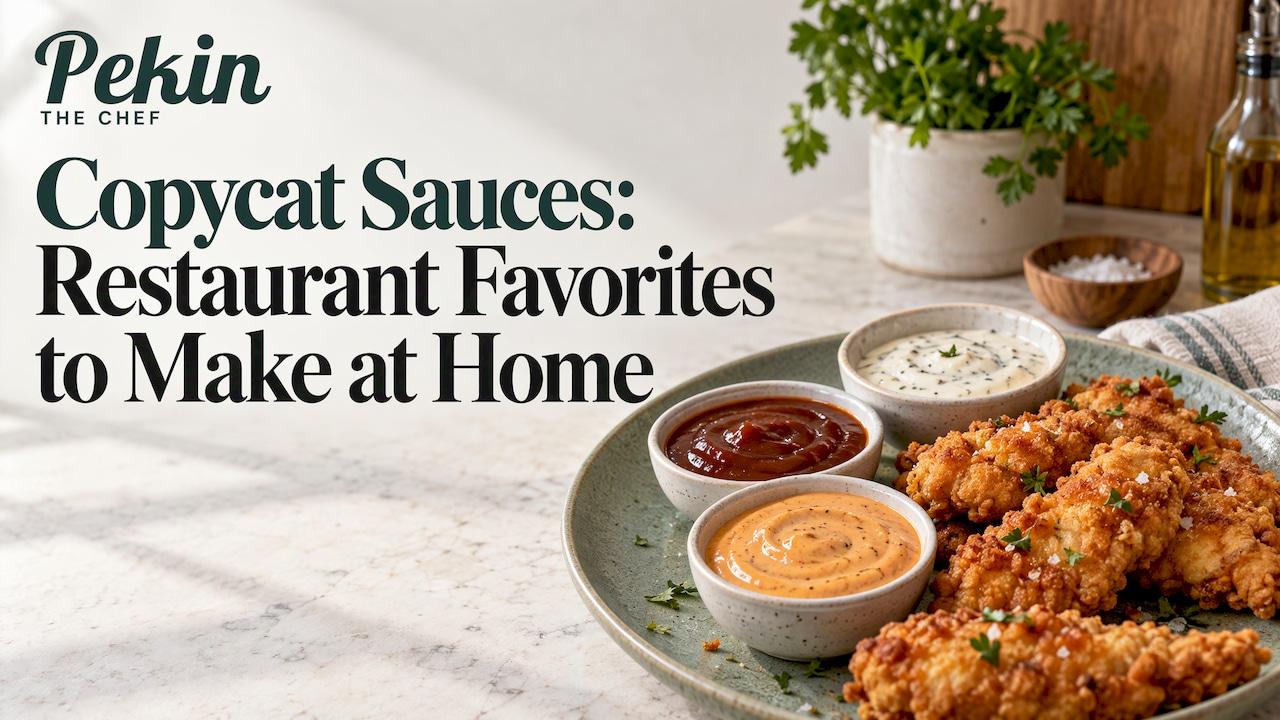
A great copycat sauce starts with a short list of pantry staples: mayonnaise, ketchup, mustard, honey, a little acid. Whisk them in the right ratio and rest the sauce in the fridge, and you get the dip you used to drive across town for. Below you will find the ratios, the flavor each sauce is built around, how to adjust it to your taste, what to serve it with and how long it keeps.
TL;DR
- Most famous restaurant sauces are simple emulsions: mayonnaise plus a sweet element, a tangy element and a savory element. Get the ratio right and you are most of the way there.
- Resting matters. Chilling for 30 minutes to a full day lets the flavors marry, and one test kitchen suggests as long as 8 to 24 hours for a Cane's-style sauce.
- To make any copycat lighter, sweeter, tangier or spicier, change one ingredient at a time and taste after a short rest.
- Mayonnaise-based sauces keep roughly 1 to 2 weeks in an airtight container in the fridge, and most do not freeze well.
Table of Contents
- Why copycat sauces are worth making
- The classics and what each one tastes like
- Tartar and cocktail sauce: the seafood pair
- How to make any creamy copycat sauce
- Lighter, sweeter, tangier or spicier: how to adjust
- What to serve with copycat sauces
- How long homemade sauces keep
- Our perspective
- Find your next restaurant-inspired recipe
- FAQ
- Sources
Why copycat sauces are worth making
The sauce is often the reason a dish is memorable. The fries are fine, the chicken tender is fine, but it is the creamy, tangy, faintly sweet dip that turns a meal into a craving. Restaurants guard those formulas, and some chains have never published theirs at all. That is exactly why home cooks have spent years testing, tasting and comparing until a version tastes right.
The good news is that the flavor logic is surprisingly consistent. Nearly every creamy fast-food sauce balances four things: fat (mayonnaise), sweetness (honey, sugar, ketchup or relish), tang (mustard, vinegar, lemon, pickles) and depth (Worcestershire, garlic, smoked flavor). Once you see that pattern, you can recreate dozens of sauces and fix them when they land off target.

At Pek in the Chef, we collect restaurant-inspired recipes and let home cooks rate and comment on them, so the sauces below reflect what people actually end up making and liking.
The classics and what each one tastes like
Before you pick a recipe, it helps to know the flavor you are chasing. Here is a quick map of the best-known restaurant sauces and the quantities behind them.
| Sauce | Flavor profile | Core ingredients |
|---|---|---|
| Chick-fil-A style | Creamy, honey-sweet, tangy, lightly smoky | Mayonnaise, honey, barbecue sauce, yellow mustard, lemon |
| In-N-Out style spread | Sweet, briny, creamy | Mayonnaise, ketchup, sweet pickle relish |
| Raising Cane's style | Peppery, garlicky, savory | Mayonnaise, ketchup, Worcestershire, garlic, black pepper |
| Big Mac style | Tangy, sweet, pickle-forward | Mayonnaise, dill pickle relish, vinegar, sugar |
| Yum Yum sauce | Tangy, sweet, a hint of heat | Steakhouse-style creamy base |
| Tartar sauce | Creamy, bright, briny | Mayonnaise, dill pickles, sweet relish, lemon |
| Cocktail sauce | Sharp, zesty, horseradish bite | Ketchup-style base, prepared horseradish |
| Tonkatsu sauce | Smoky, sweet, savory | Fruit-and-vegetable Japanese-style base |
Chick-fil-A style sauce
This is the most searched copycat of all, and for good reason: it is a five-ingredient wonder. The Kitchn's version uses 1/2 cup mayonnaise, 2 tablespoons plus 1 teaspoon honey, 2 tablespoons tomato-based barbecue sauce, 1 tablespoon prepared yellow mustard and the juice of half a medium lemon, for about 3/4 cup. You stir until smooth and serve at room temperature, or cover and chill for an hour if you like it cold.
Other cooks tilt the ratio toward more honey and a touch of ketchup, brown sugar and cider vinegar, which gives a rounder, sweeter sauce. If you want a deeper, smoky note, our own tested take on the Chick-fil-A sauce recipe explains why a hickory-smoke barbecue sauce gets closest.

In-N-Out style spread
The California burger spread is essentially a cousin of Thousand Island: mayonnaise, ketchup and sweet pickle relish, with the finished sauce described as sweeter and more briny than a plain burger sauce. Popular home versions add yellow mustard, white vinegar, a little sugar, salt and black pepper to sharpen it. Our smash burger sauce follows the same logic and benefits from a 30-minute rest before it meets a burger.
Raising Cane's style sauce
Cane's has never officially released its recipe, so every version is an educated reconstruction. Parade's copycat builds it from mayonnaise, ketchup, Worcestershire, garlic (powder or freshly grated), salt and pepper. The peppery, savory edge is what sets it apart from the sweeter honey-mustard family.
Big Mac style sauce
This one leans on pickle. The Daring Gourmet's recipe yields about 3/4 cup from 1/2 cup mayonnaise and 2 tablespoons dill pickle relish, plus 1 teaspoon each of white vinegar and granulated sugar, among other seasonings. The small amounts of vinegar and sugar do the balancing work, so measure them rather than eyeballing.
Yum Yum, tonkatsu and other steakhouse and Japanese-style sauces
If you have eaten at a teppanyaki steakhouse in the US, you know yum yum sauce: tangy, sweet, with a hint of heat, and good with steak, chicken, fish and shellfish. Tonkatsu sauce goes in a different direction. It is smoky, sweet and savory, and it finishes dishes such as okonomiyaki and takoyaki as well as fried pork katsu.
Tartar and cocktail sauce: the seafood pair
These two are less about copying a single chain and more about matching the classic restaurant versions.
Tartar sauce lives or dies on balance. A chef's version combines mayonnaise, dill pickles, sweet relish and fresh lemon juice, and the creamy tang offsets the crunch of fried shrimp. Chop the pickles finely and squeeze out excess brine so the sauce stays thick instead of loose.
Cocktail sauce gets its edge from horseradish. Food Network Kitchen's developers recommend prepared horseradish sauce rather than fresh grated, because the salt and vinegar in the jar give a smoother consistency, and they suggest chilling for at least 30 minutes so the flavors marry. If you want to see a restaurant plating of the classic, browse the jumbo shrimp cocktail from 8 East.
How to make any creamy copycat sauce
The method is nearly the same across the whole family, which is part of the appeal.
- Start with the base. Spoon the mayonnaise into a bowl first. It is the largest volume and sets the texture.
- Add the sweet and tangy elements. Honey, ketchup, relish, mustard and lemon go in next. Whisk until the color is even.
- Season last. Salt, pepper, garlic powder and Worcestershire are potent, so add them in small amounts.
- Taste on a fry or a chicken tender. A spoonful alone tastes different from the sauce on food, because fat and salt change how tang and sweetness read.
- Rest it. Cover and refrigerate. Thirty minutes is the minimum; for peppery, garlicky sauces, The Kitchn suggests resting 8 to 24 hours for full flavor.
- Re-taste before serving. Cold dulls sweetness slightly, so a pinch of sugar or honey sometimes helps.
For cooked sauces, such as a pan reduction or a glaze, Bon Appétit's test kitchen notes that a sauce needs surface area to reduce, so use a wide pan, stir occasionally, taste at the end and swirl in butter only after the sauce reaches the consistency you want, off the heat.
Lighter, sweeter, tangier or spicier: how to adjust
Here the sauce becomes yours. These are kitchen-tested habits of thumb rather than fixed rules, so change one thing at a time, stir, and taste after a few minutes.
Make it lighter
Replace part of the mayonnaise with plain Greek yogurt, starting with a quarter to a third of the volume, and add a squeeze of lemon to keep the tang from going flat. A lighter sauce will be slightly looser and tarter, so a small touch of honey often brings it back into balance. If you like the idea of fresh, bright sauces for grain and veggie bowls, these light bowl sauces show how fast a sauce can come together when you want texture and flavor without heaviness.
Make it sweeter
Honey gives a rounder sweetness than white sugar, and brown sugar adds a hint of molasses. Add a half teaspoon at a time. If it turns cloying, a few drops of vinegar or lemon bring it back.
Make it tangier
Lemon juice gives a fresh tang, white or cider vinegar a sharper one, and a spoonful of pickle brine adds tang with a little salt. Yellow mustard is another quiet source of sharpness, especially in honey-mustard style sauces.
Make it spicier
A pinch of cayenne, a few dashes of hot sauce or a spoonful of sriracha will add heat. Black pepper gives a different kind of warmth, the slow, savory kind that suits a Cane's-style sauce. Heat blooms as the sauce rests, so go lighter than you think and re-taste the next day.
Make it smokier or more savory
A smoky barbecue sauce, a pinch of smoked paprika or a dash of Worcestershire adds depth without adding sugar. Garlic works the same way: powder blends in smoothly, while fresh grated garlic is livelier but gets stronger as the sauce sits.
What to serve with copycat sauces
A sauce is only as good as what you dip into it. Some pairings worth trying:
- Cane's style: crispy baked chicken tenders, steak fries, sweet potato fries, stovetop burgers and fried chicken sandwiches, according to The Kitchn.
- Tartar sauce: fried fish, shrimp and crab cakes, or as a spread on a fish sandwich or a dip for fries and roasted potatoes, as Chef Dennis suggests.
- Cocktail sauce: cooked shrimp, raw oysters, crab cakes, pigs in a blanket, meatballs and fried mushrooms; Food Network Kitchen's developers also stir it into meatloaf or spoon it over a burger.
- Arby's style: fries, beef and anything salty; it can be spread on a sandwich, used as a fry dip, or served with a hamburger, a grilled chicken sandwich or fish sticks, according to Mashed.
- Benihana-style ginger sauce: hibachi steak, chicken, shrimp, salmon and pork chops, plus fried rice, roasted vegetables, egg rolls, potstickers and wontons, per Pip and Ebby.
Seafood sauces also shine beside restaurant-style raw and seared fish. Try one beside a salmon tataki or a pan-seared Gulf shrimp for a dinner-party moment.
How long homemade sauces keep
Homemade sauces have no commercial preservatives, so treat them like fresh mayonnaise-based dishes: refrigerate promptly in a clean airtight container or a glass jar, and use a clean spoon each time.
| Sauce | Fridge | Freezer |
|---|---|---|
| McDonald's-style sweet-and-sour | Up to 7 days, per Taste of Home | Not recommended |
| Arby's Horsey-style sauce | 7 to 10 days, per CopyKat Recipes | Not recommended, since mayonnaise-based sauces can separate when thawed |
| Taco Bell-style avocado ranch | Up to 2 weeks, per The Buttered Gnocchi | Does not stand up well to freezing |
| Arby's-style sauce | Up to 2 weeks, per Pip and Ebby | Up to 3 months in a freezer-safe container, according to that recipe |
The pattern is clear: when in doubt, plan on about a week in the fridge, which sits at the cautious end of every range above, and do not freeze creamy mayonnaise blends. The same Pip and Ebby recipe also says not to leave the sauce at room temperature for more than 2 hours, so when you serve it at a party, put out a small bowl and keep the rest in the fridge.
Our perspective
We built Pek in the Chef around one frustration: a recipe that claims to taste like your favorite restaurant, and then does not. With sauces that frustration is sharper than anywhere else, because the sauce is the part you remember.
What we have learned is that no single recipe is the final word. A Cane's-style sauce that one cook finds perfectly peppery, another wants with more garlic. That is why every recipe on our platform is meant to be read together with feedback from other home cooks, so you can see what worked, what they changed and how it tasted on the plate.
Our advice is to start with a well-vetted base, make it exactly once, then adjust it to your own table. Rest it, taste it on the food it is meant for, and write down the tweak that makes your family say it is better than the original. That is the recipe worth keeping.
Rhys
Find your next restaurant-inspired recipe
If sauces are your starting point, the rest of the restaurant menu is waiting. Pek in the Chef lets you search by restaurant, dish or cuisine, and filter by meal type and prep time, with ratings and feedback from other home cooks on each recipe.

Browse the full collection at Pek in the Chef, or start with a single restaurant, such as the dishes from 57 Ninety Restaurant.
FAQ
What makes a copycat sauce taste like the restaurant original?
Balance and rest time. Most restaurant sauces combine a creamy base with a sweet, a tangy and a savory element, and the flavors blend after chilling. Measure carefully, taste on the food you will serve it with, and let it sit at least 30 minutes before judging it.
How do I make a copycat sauce thicker or thinner?
For a creamy sauce, add more mayonnaise to thicken it, or a splash of lemon juice or pickle brine to thin it. Greek yogurt thickens but adds tang. For a cooked sauce, reduce it in a wide pan and add butter only after it reaches the consistency you want, off the heat.
Can I freeze homemade restaurant sauces?
Usually not. Several recipe developers say mayonnaise-based sauces can separate when thawed, so they are best kept in the fridge. One Arby's-style recipe does give a freezer time of up to 3 months, but for most creamy dips the safest plan is to make a small batch and use it within a week or two.
Which copycat sauce is easiest for a beginner?
A Chick-fil-A style sauce. It needs only five ingredients and one bowl, with no cooking at all. Stir, taste, rest it in the fridge and serve it with chicken tenders or fries.
Sources
- The Kitchn: Copycat Chick-fil-A Sauce
- The Kitchn: Cane's Sauce
- Platings and Pairings: In-N-Out Sauce
- Parade: Raising Cane's Sauce Copycat
- The Daring Gourmet: Big Mac Sauce
- Food Network: Yum Yum Sauce
- Pickled Plum: Asian Sauces
- Ask Chef Dennis: Tartar Sauce
- Food Network: Quick Cocktail Sauce
- Bon Appétit: How to Reduce a Sauce
- Mashed: Copycat Arby's Sauce
- Pip and Ebby: Ginger Sauce
- Taste of Home: McDonald's Sweet-and-Sour Sauce
- The Buttered Gnocchi: Avocado Ranch Sauce
- Pip and Ebby: Arby's Sauce
- CopyKat Recipes: Arby's Horsey Sauce
- Wild Foodz: Light Bowl Sauces