
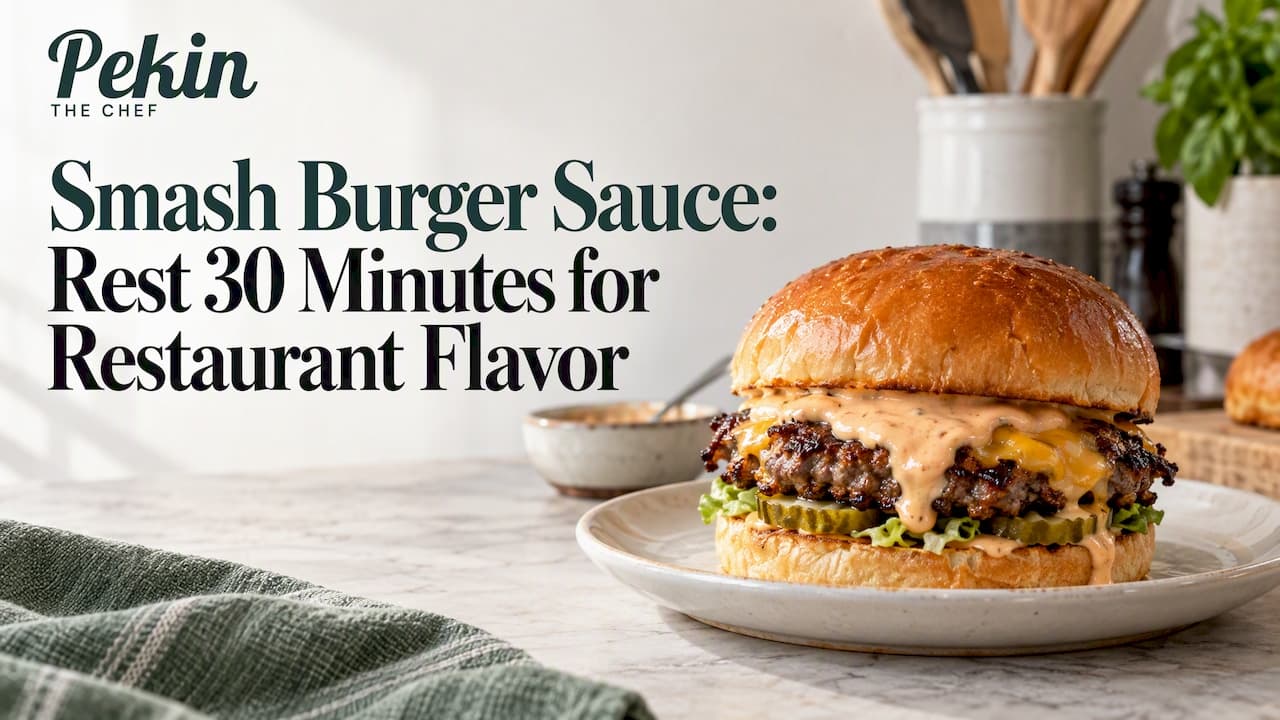
Smash burger sauce is a creamy, tangy condiment built from mayonnaise, ketchup, mustard, and pickle brine, whisked together into one bright, savory layer that mimics what you taste at your favorite burger counter. We spread a moderate amount of sauce per bun half, and the full recipe with exact measurements follows below so you can start mixing right away.
TL;DR:
- Choose full fat mayonnaise for a thicker texture; reduced fat versions work, but they produce a thinner sauce that may separate with acidic ingredients.
- Discard sauce after two hours at room temperature, or one hour above 90°F; refrigeration at or below 40°F preserves it for 3 to 5 days.
- Choose the lemon, chive, and dill variation for chicken, while the barbecue and Worcestershire version complements earthy vegetarian patties, especially black bean, mushroom, or lentil.
- Use vegan mayonnaise for a dairy free version; if pickle brine is unavailable, chopped dill pickles or relish work, but relish adds sweetness.
Table of Contents
- Classic smash burger sauce: ingredients and yield
- How to mix, rest, and apply smash burger sauce
- Tips for restaurant-quality texture and flavor
- Spicy, smoky, and herb variations to try
- Substitutions for pantry gaps and dietary needs
- How long smash burger sauce keeps safely
- Nutrition snapshot per tablespoon
- Where smash burger sauce comes from
- How this sauce compares to other burger sauces
- Best pairings for beef, chicken, and vegetarian burgers
- Why we trust this recipe
- Find more restaurant-inspired recipes with Pek in the Chef
- FAQ
- Sources
Classic smash burger sauce: ingredients and yield
A good smash burger sauce starts with four pantry staples and a short list of dry seasonings that round out the flavor. This batch makes a modest amount of sauce, enough to dress several burgers generously.
- ½ cup mayonnaise (full-fat gives the richest texture, though any smooth variety works)
- 2 tablespoons ketchup
- 1 tablespoon yellow mustard
- 1 tablespoon dill pickle brine (straight from the jar)
- ½ teaspoon garlic powder
- ½ teaspoon onion powder
- ¼ teaspoon smoked paprika
Reach for a mayonnaise that lists egg and oil near the top of its ingredient list rather than a whipped or "light" version, since those tend to thin out and separate once mixed with acidic ingredients. If you need more sauce for a crowd, double every measurement exactly, keeping the ratio intact rather than eyeballing the increase. Halving the batch works the same way: cut each amount evenly and you will still land on roughly two tablespoons per burger.
How to mix, rest, and apply smash burger sauce
Getting the texture and flavor right comes down to order of operations as much as the ingredients themselves.
- Combine the mayonnaise, ketchup, and mustard first in a small bowl, stirring until the color turns a uniform pale orange with no streaks.
- Add the pickle brine gradually, stirring between additions so the sauce doesn't thin unevenly.
- Sprinkle in the garlic powder, onion powder, and smoked paprika, then whisk for about thirty seconds until fully incorporated.
- Cover the bowl and refrigerate for at least thirty minutes, though chilling it longer lets the spices bloom and the flavors meld more fully, and some cooks prefer resting it overnight.
- Pull the sauce from the fridge just a few minutes before building your burgers so it isn't ice-cold against a hot patty.
- Spread about one tablespoon on the toasted bottom bun and a slightly thinner layer on the top bun, then assemble immediately.
The resting time matters more than most home cooks expect. A sauce mixed and served immediately tastes flat compared to one that has had even half an hour for the garlic and onion powders to soften and the acidity to settle into the fat.
Pro Tip: Set the sauce out on the counter for about five minutes before building your burger so it spreads evenly without chilling the patty.
Applying the sauce to warm, toasted buns rather than cold ones helps it melt slightly into the bread, which is part of what gives a smash burger its signature glossy bite.
Tips for restaurant-quality texture and flavor
The small details separate a sauce that tastes homemade from one that tastes like it came off a griddle at a burger counter.
- Mayonnaise is the backbone here because its fat compensates for how quickly a thin, smashed patty loses moisture on a hot griddle.
- Toast your buns cut-side down in a dry pan or under a broiler for thirty to sixty seconds. A dry, slightly crisp interior keeps the bun from turning soggy once the sauce and juices hit it.
- Serve the sauce cool but not refrigerator-cold. Letting it sit at room temperature for a few minutes before building smooths out the texture without compromising safety.
- Portion control keeps the sauce from overwhelming the beef. One tablespoon per bun face is enough to coat without pooling out the sides.
- Dry spices like garlic and onion powder need time to rehydrate in the mayonnaise base, which is why the minimum thirty-minute rest isn't optional if you want balanced flavor.
A sauce rushed straight from mixing bowl to bun often tastes gritty or one-note, with the mustard or ketchup dominating before the other flavors catch up.
Spicy, smoky, and herb variations to try
Once you've nailed the classic version, small additions let you steer the sauce toward a completely different burger experience.
- Spicy version: stir in 1 tablespoon hot sauce, ½ teaspoon chipotle powder, and 1 tablespoon minced pickled jalapeño. This works well on a double patty with pepper jack cheese.
- Smoky BBQ version: add 1 tablespoon barbecue sauce, 1 teaspoon Worcestershire sauce, and an extra ¼ teaspoon smoked paprika on top of the base recipe. It pairs naturally with bacon or caramelized onions.
- Herb and light version: replace the pickle brine with 1 tablespoon fresh lemon juice, then fold in 1 tablespoon minced chives and 1 teaspoon chopped dill. This brighter take suits a leaner patty or a chicken burger.
Each variation uses the same base recipe, so you only need to taste and adjust by the tablespoon rather than remixing from scratch. Start with the smaller amount listed, taste, and add more only if the flavor needs it.
Substitutions for pantry gaps and dietary needs
Running short on an ingredient or cooking for someone with dietary restrictions doesn't mean skipping the sauce entirely.
- Swap in vegan mayonnaise for a dairy-free version. The texture stays close to the original, though it can taste slightly tangier.
- Reduced-fat mayonnaise works too, but expect a thinner sauce since much of the richness in the original comes from that fat content.
- No pickle brine on hand? Finely chopped dill pickles or a spoonful of sweet relish both work, though relish adds more sweetness, so cut the ketchup slightly to compensate.
- Fresh minced garlic and onion can replace the powders at about one small clove and one tablespoon minced onion respectively, giving a sharper, more pungent flavor.
- Store-bought relish varies widely in sweetness and salt, so taste before adding the full tablespoon and adjust the mustard or brine to balance it.
How long smash burger sauce keeps safely
Because this sauce is mayonnaise-based, food-safety limits apply the same way they would to any egg-based condiment. Following USDA food-safety guidance, mayonnaise-based sauces should sit at room temperature no longer than two hours, and that window shrinks to just one hour when the ambient temperature is 90°F or higher.
Refrigerated and sealed in an airtight container at or below 40°F, this sauce stays safe to eat for 3 to 5 days, according to USDA food-safety guidance. That window gives you plenty of room to make a batch ahead for weekend cookouts without worrying about waste.

Store the sauce in a small glass jar or airtight container, and label it with the date you made it so you don't lose track. If the sauce develops an off smell, visible separation that won't stir back together, or any discoloration, discard it rather than taking a chance.
Nutrition snapshot per tablespoon
A single tablespoon of classic smash burger sauce lands in roughly the same range as a tablespoon of regular mayonnaise with a touch more sweetness from the ketchup, generally somewhere between 80 and 100 calories and 8 to 10 grams of fat, most of it from the mayonnaise base. These numbers shift depending on which brand of mayonnaise you use and how much ketchup or mustard you add during adjustments.
For portion planning, stick with the one tablespoon per bun face guideline, which keeps a typical burger's added sauce calories modest compared to the patty, cheese, and bun. If you want exact figures for a specific brand combination, running your exact ingredient list through a nutrition calculator or checking individual product labels will give you a more precise count than any general estimate can.
Where smash burger sauce comes from
Smash burger sauce traces its roots to the broader tradition of American burger-counter condiments, the tangy, mayonnaise-forward sauces that diners and drive-ins have spread on patties for decades. What makes the smash burger version distinct is its direct link to the smashing technique itself: pressing a thin patty hard against a screaming-hot griddle creates a deeply caramelized crust and a patty with very little internal moisture, which calls for a sauce rich enough to compensate.
As smash burgers gained popularity through regional diners and later spread through home kitchens and food media, the sauce built around that need: heavier on mayonnaise than a classic Thousand Island-style sauce, lighter on relish, and finished with pickle brine instead of chopped pickles for a cleaner, smoother tang. The result reads as a close cousin to fast-food special sauces, but tuned specifically for a thin, crisp-edged patty rather than a thick, juicy one.
Home cooks have since adapted the base recipe endlessly, swapping in hot sauce, barbecue sauce, or fresh herbs depending on the build, which is part of why so many versions circulate online today. The core identity, though, stays consistent: a short list of pantry staples whisked together and rested, built specifically to complement a smashed, griddled patty rather than a grilled one.
How this sauce compares to other burger sauces
Smash burger sauce shares its DNA with other classic burger condiments, but a few differences set it apart. Big Mac style sauces, for instance, typically rely on sweet pickle relish rather than brine, which gives them a chunkier texture and a more pronounced sweetness. Smash burger sauce swaps that relish for straight pickle brine, resulting in a smoother consistency and a sharper, cleaner tang that doesn't compete with a well-seared crust.
Classic Thousand Island dressing, often used as a burger sauce base in its own right, leans heavier on ketchup and sometimes includes hard-boiled egg or olives, giving it a denser, more complex profile. Smash burger sauce keeps things leaner by comparison, with mayonnaise doing most of the work and ketchup playing a supporting role rather than a starring one.
Fry sauce, a close relative popular in the Pacific Northwest and parts of the Midwest, usually sticks to just mayonnaise and ketchup without the mustard or dry spices that give smash burger sauce its deeper flavor. That extra layering of garlic powder, onion powder, and smoked paprika is what gives smash burger sauce its slightly savory, almost barbecue-adjacent edge, which is part of why it holds up so well against a well-caramelized patty.

Best pairings for beef, chicken, and vegetarian burgers
The classic version of this sauce was built with a thin, griddled beef patty in mind, and that remains its strongest pairing. The richness of the mayonnaise base balances the deep, caramelized crust that comes from pressing beef hard against a hot surface, while the pickle brine cuts through any greasiness.
For chicken burgers, the herb and light variation tends to work best. A leaner patty doesn't need as much fat-forward richness, and the brightness from lemon juice and fresh dill keeps the whole bite from feeling heavy.
Vegetarian patties, especially those built on black beans, mushrooms, or lentils, pair well with the smoky barbecue version. The deeper, slightly sweet notes from the barbecue sauce and Worcestershire help round out earthy, plant-based flavors that can otherwise taste one-note on their own.
Whichever patty you're working with, the sauce performs best when it's the only strong condiment on the burger. Pile on too many competing toppings and even a well-balanced sauce gets lost in the mix.
Why we trust this recipe
We built this recipe starting from the ratios and techniques that define a restaurant-style dish, then testing and refining based on feedback from home cooks. That back-and-forth is what separates a recipe that looks right on paper from one that actually works on your stovetop.
The classic mayonnaise, ketchup, mustard, and pickle brine ratio in this recipe mirrors what you'd find behind the counter at a dedicated burger spot, scaled down and simplified for a home kitchen. We lean on those restaurant proportions because they're what reliably produce a sauce rich enough to stand up to a thin, griddled patty without masking it.
— Rhys
Find more restaurant-inspired recipes with Pek in the Chef
We built Pek in the Chef around one idea: you shouldn't need a culinary degree to recreate the dishes you love from your favorite restaurants. Each recipe in the collection includes feedback from other home cooks, so you can see what worked, what to adjust, and what to expect before you start cooking.

If this sauce has you craving more restaurant-style condiments and sides to round out your next burger night, our recipe hub has plenty more worth trying. Browse our full collection of restaurant-inspired recipes and see what our community is cooking next.
FAQ
How do you make the ultimate burger sauce?
The ultimate burger sauce starts with mayonnaise as the base, then layers in ketchup, mustard, and pickle brine for tang, finished with garlic powder, onion powder, and smoked paprika. Chilling it for at least thirty minutes before serving, and up to overnight, lets those dry spices soften and the flavors come together fully.
What makes a smash burger sauce different from a classic burger sauce?
Smash burger sauce typically uses pickle brine instead of chopped pickles or relish, which gives it a smoother texture and a cleaner tang suited to a thin, griddled patty. It also tends to include dry spices like smoked paprika and garlic powder, giving it a slightly deeper, more savory profile than a basic ketchup-and-mayo mix.
What toppings go best with smash burgers?
Classic smash burger toppings include melted American or cheddar cheese, thinly sliced white onion, pickles, and shredded lettuce, all of which hold up well against a juicy, well-sauced patty. Toasting the bun first helps keep everything from turning soggy once the sauce and toppings are added.
How long does homemade burger sauce last in the fridge?
Stored in an airtight container at or below 40°F, homemade mayonnaise-based burger sauce stays safe for 3 to 5 days. Keep it tightly sealed and labeled with the date you made it so you can track freshness easily.
Can you make smash burger sauce ahead of time?
Yes, making it ahead actually improves the flavor since the dry spices need time to soften into the mayonnaise base. Most recipes recommend resting it at least thirty minutes, though overnight in the fridge gives even better results.