
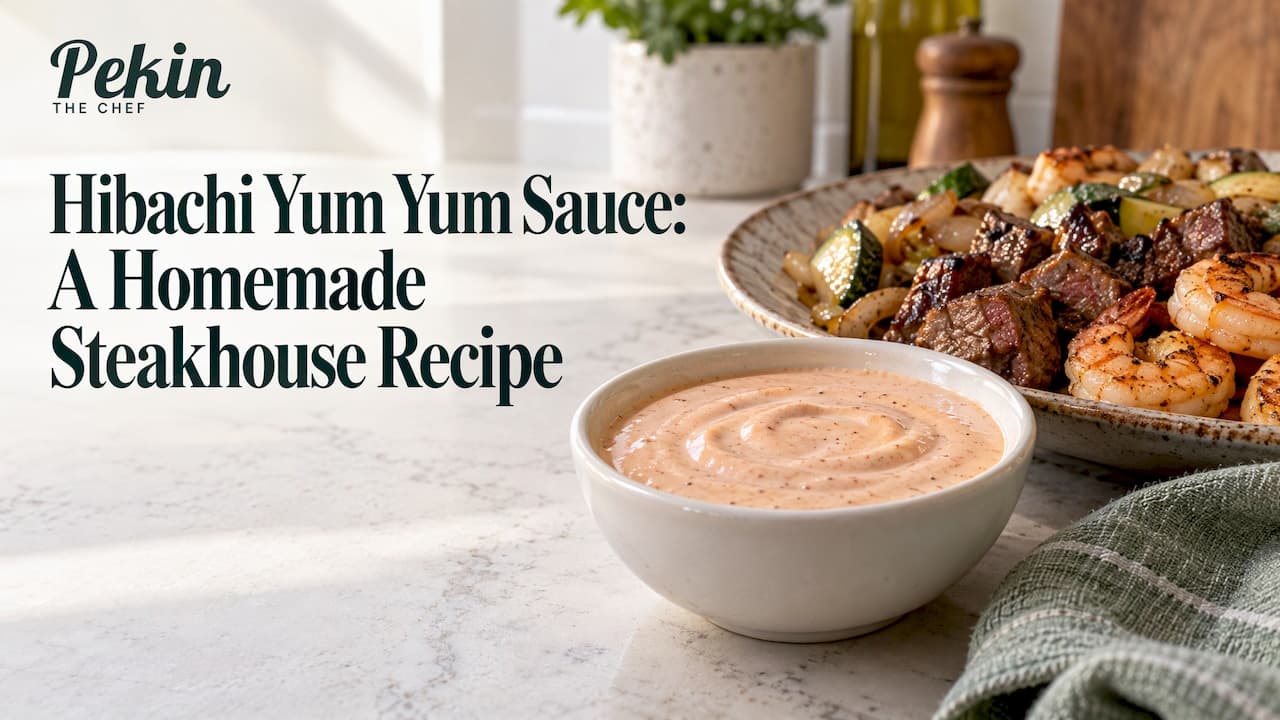
Hibachi yum yum sauce is the pale pink, creamy, gently sweet sauce that arrives beside a sizzling plate of fried rice and grilled chicken, and you can make a very good version in five minutes with mayonnaise, tomato paste, sugar, garlic powder, paprika, rice vinegar, butter and a splash of water. Stir, chill, and let it rest. That's the whole secret, and below you'll find exact amounts, ways to steer the flavor, safe storage, and what to serve it with.
TL;DR
- Base formula: mayonnaise, a little tomato paste or ketchup, sugar, garlic powder, paprika, rice vinegar and melted butter, loosened with water.
- Our home version makes about 1 cup and takes 5 minutes, plus at least 30 minutes in the fridge so the flavors meld.
- Keep it cold: mayonnaise-based sauces should not sit out for more than two hours, or one hour in heat above 90°F.
- It's wonderful on hibachi chicken, steak, shrimp, fried rice, vegetables, sushi rolls and burgers.
Table of Contents
- What hibachi yum yum sauce actually is
- The ingredients, and what each one does
- Homemade hibachi yum yum sauce, step by step
- Getting the texture right
- Adjusting the sauce: copycat, white sauce and flavor variations
- Serving ideas: what goes with yum yum sauce
- Storing yum yum sauce safely
- Why we love this sauce
- Cook more restaurant favorites
- FAQ
- Sources
What hibachi yum yum sauce actually is
Yum yum sauce is a creamy, tangy, slightly sweet condiment popular in American Japanese hibachi-style restaurants. According to a restaurant-supply guide, it is typically built on mayonnaise with tomato paste or ketchup, sugar and seasonings such as garlic powder and paprika, often with rice vinegar, soy sauce and water. You will also hear it called white sauce, pink sauce, yummy sauce or shrimp sauce. Despite that last nickname, there is no shrimp in it. It simply tends to land next to shrimp on the plate.
Its story is a very American one. NPR spoke with a culinary anthropologist and other experts who traced its roots to the meeting point of American and modern Japanese tastes for mayonnaise-based condiments, rather than to a traditional Japanese recipe. That's part of its charm: it's a steakhouse invention, born at the teppanyaki table, now at home in refrigerators across the country.
The flavor is easy to describe and hard to stop eating. Rich mayonnaise carries the body, tomato adds a faint blush and savory depth, sugar rounds the edges, rice vinegar brightens, and garlic and paprika give a warm, toasty finish.
The ingredients, and what each one does
Before the recipe, it helps to know why every spoonful is there. Once you understand the roles, you can adjust to your own taste with confidence.
| Ingredient | Role in the sauce | Easy swap |
|---|---|---|
| Mayonnaise | Creamy base and most of the flavor | Any full-fat mayo; a Japanese-style mayo for a richer, tangier edge |
| Tomato paste or ketchup | Color, savory sweetness | Paste gives a deeper tomato note; ketchup is sweeter and more forgiving |
| Sugar | Balances acidity | Honey, used sparingly |
| Rice vinegar | Brightness and tang | Lemon juice, a little at a time |
| Garlic powder | Warm, rounded savor | A tiny pinch of onion powder as well |
| Paprika | Color and gentle warmth | Smoked paprika for a campfire note |
| Melted butter | Steakhouse richness | Leave out for a lighter sauce |
| Water | Loosens it into a drizzle | Add a teaspoon at a time |
Homemade hibachi yum yum sauce, step by step
This is our take on the classic, written for a home kitchen and a single bowl. It makes about 1 cup, enough for four to six servings.
Ingredients
- 1 cup mayonnaise
- 3 tablespoons water, plus more to thin
- 1 tablespoon tomato paste (or 2 tablespoons ketchup)
- 1 tablespoon granulated sugar
- 1 teaspoon rice vinegar
- 1 teaspoon melted butter, slightly cooled
- ½ teaspoon garlic powder
- ½ teaspoon paprika
- A pinch of salt
Method
- Spoon the mayonnaise into a medium bowl.
- Add the tomato paste, sugar, garlic powder, paprika and salt. Whisk until the mixture is smooth and evenly pink, with no streaks of paste.
- Whisk in the rice vinegar and the cooled melted butter. Adding the butter slightly cooled keeps the sauce from turning greasy or splitting.
- Add the water one tablespoon at a time, whisking after each, until the sauce falls from the whisk in a thick ribbon.
- Taste. It should be creamy first, then sweet, then tangy. Adjust with a pinch of sugar, a drop of vinegar or a little more paprika.
- Cover and refrigerate for at least 30 minutes before serving.
The rest is not optional if you want a restaurant result. Sugar dissolves, garlic powder softens and the whole sauce tastes rounder and more settled. We make the same point about our smash burger sauce, which needs 30 minutes to rest, and it applies to nearly every mayo-based sauce.
Getting the texture right
Texture is where homemade sauces most often miss the mark. Restaurant yum yum sauce is pourable but not runny, and it clings to a piece of chicken without sliding off.
- Too thick? Add water, a teaspoon at a time. Water thins the sauce without changing the flavor much, which is why it appears in so many versions.
- Too thin? Whisk in a spoonful of mayonnaise, then correct the sugar and vinegar.
- Grainy? Sugar did not dissolve. Whisk longer, or stir the sugar into the water first and then add it to the mayonnaise.
- Greasy? The butter was too hot. Start again with a little cooler butter, or leave it out.
Adjusting the sauce: copycat, white sauce and flavor variations
No two hibachi grills make it identically, which is why searches for a copycat or a "white sauce" lead to such different recipes. Treat the base recipe as a starting point and steer from there.
Make it more like a steakhouse white sauce
If the sauce you remember is more beige than pink, cut the tomato paste to a teaspoon and add an extra pinch of garlic powder and a little more butter. The sauce should look creamy and pale, with a light blush. If you remember a deeper pink, go the other way: use ketchup instead of paste and push the paprika a notch.

Sweeter or tangier
Sweeter sauces lean on extra sugar or ketchup. Tangier ones lean on rice vinegar or a few drops of lemon juice. Change one thing at a time and taste after a minute of whisking, because sugar needs a moment to dissolve.
Add a little heat or umami
- A few drops of soy sauce add savory depth, which is common in some versions.
- A pinch of cayenne or a teaspoon of sriracha makes a spicy yum yum sauce.
- A teaspoon of toasted sesame oil adds a nutty aroma. Go gently, as it's potent.
- A little grated fresh garlic in place of the powder gives a sharper, livelier bite. Use it the same day, as the raw garlic keeps getting stronger.
Is Kewpie mayonnaise the same as yum yum sauce?
No. Kewpie is a Japanese-style mayonnaise, an ingredient. Yum yum sauce is a finished condiment built on mayonnaise with tomato, sugar, spices and more. That said, Kewpie makes a lovely base if you like a richer, tangier result: swap it in for the mayonnaise, then taste before adding any extra vinegar.

Serving ideas: what goes with yum yum sauce
At a hibachi table, yum yum sauce and a ginger or soy-based dipping sauce usually share the plate. The creamy one is for rich or mild foods, the sharp one for cutting through them. At home, the possibilities widen quickly.
- Hibachi chicken, steak and shrimp: Dip each bite, or drizzle over the plate.
- Fried rice and vegetables: Zucchini, mushrooms, onions and broccoli grilled in a hot pan with soy and butter are perfect for dunking. Our hibachi rice recipe with honey jerk shrimp and salmon shows how well a creamy sauce suits a rice base.
- Rice bowls: Try it over crispy chicken, as in this karaage rice bowl, or see how a restaurant builds a yum yum chicken bowl.
- Sushi rolls and tempura: Spoon it beside fried or baked rolls, or alongside crisp tempura.
- Burgers, wraps and fries: It behaves much like any creamy burger sauce.
- Salads and grain bowls: Thinned with a spoonful of water, it works as a dressing. For more ideas on keeping bowls light, these quick bowl sauce ideas are worth a look.
If you're serving it with grilled meat, it also helps to think about which sauce suits which cut. A creamy sauce loves lean chicken and shrimp, while richer steak often wants something sharper, and these steak sauce pairings walk through the logic.
Storing yum yum sauce safely
Because the sauce is built on mayonnaise, store it with care. Vinegar and lemon juice create an acidic environment that helps inhibit bacterial growth, but they don't make a sauce immune to time and temperature. Baylor College of Medicine's food safety guidance notes that mayonnaise-based foods should not be left out for more than two hours, or one hour above 90°F, which matters for a patio cookout.
A few habits keep your batch at its best:
- Store it in a clean, airtight jar or squeeze bottle in the refrigerator.
- Serve from a small bowl, and put the rest back in the fridge right away rather than leaving the jar on the table.
- Use a clean spoon every time. The same guidance warns that utensils can carry bacteria from other foods or surfaces into the mayonnaise.
- Use the sauce within a few days and discard it if it smells off, separates badly or has been left out too long. Anyone who is pregnant, elderly or immunocompromised should ask their doctor about mayonnaise-based foods.
The sauce may thicken in the fridge. Whisk in a spoonful of water to bring it back.
Why we love this sauce
Every restaurant sauce is a small act of memory. You take a bite at a sizzling table, and weeks later you can still taste that creamy, gently sweet, faintly smoky bite. That is exactly why we built our collection around restaurant dishes.
At Pek in the Chef, our recipes are inspired by real restaurant dishes, and we lean on feedback from home cooks to make each one more reliable. A sauce like this is the best test of that approach: the ingredient list is short, so small changes matter, and the experience of other cooks tells you whether to add a touch more vinegar or a little less sugar.
We'd encourage you to start with the base recipe, taste it after its rest, and adjust by a pinch at a time. That's how a copycat becomes your own house sauce.
Rhys
Cook more restaurant favorites
If this sauce makes you curious about how other kitchens build their signature flavors, we've gathered a growing library of dishes inspired by restaurants across the country, with feedback from home cooks on each one. You can search by restaurant, dish, cuisine, meal type or prep time, and for another sauce worth studying, try a restaurant's house sauce from a poke bowl spot.

Browse the full collection on the Pek in the Chef home page and find your next dish to pair with a bowl of yum yum sauce.
FAQ
What does yum yum sauce consist of?
Most versions combine mayonnaise, tomato paste or ketchup, sugar, garlic powder and paprika, with rice vinegar, melted butter and a little water. Some cooks add soy sauce or a spicy element. The proportions change from kitchen to kitchen, so season to your own taste.
What sauce is used when cooking hibachi chicken?
Hibachi cooks typically season chicken on the griddle with soy sauce, butter and garlic, then serve it with dipping sauces on the side. Yum yum sauce is the creamy one, usually paired with a ginger or soy-based sauce. At home, a hot skillet, butter, garlic and soy sauce give you the same savory base.
Is yum yum sauce the same as shrimp sauce?
Yes, it's just another name. The sauce is also called white sauce, pink sauce or yummy sauce, and it contains no shrimp. The name likely comes from its habit of appearing beside hibachi shrimp.
How long should I let the sauce rest?
Give it at least 30 minutes in the refrigerator before serving. The sugar dissolves and the garlic and paprika settle in, so the flavor tastes smoother and more complete. Taste again after resting and adjust the sugar or vinegar if needed.
Can I make it without butter?
Yes. The butter adds a steakhouse richness, but the sauce still works without it. Leave it out for a lighter version and add an extra pinch of garlic powder to keep the savory depth.
Sources
- What is Yum Yum Sauce? Ingredients, Uses & More
- Yum Yum Sauce: The Making Of An American Condiment (NPR)
- Summer food safety guide to mayonnaise and other backyard barbecue classics
- Four light bowl sauces
- Steak sauce pairings