
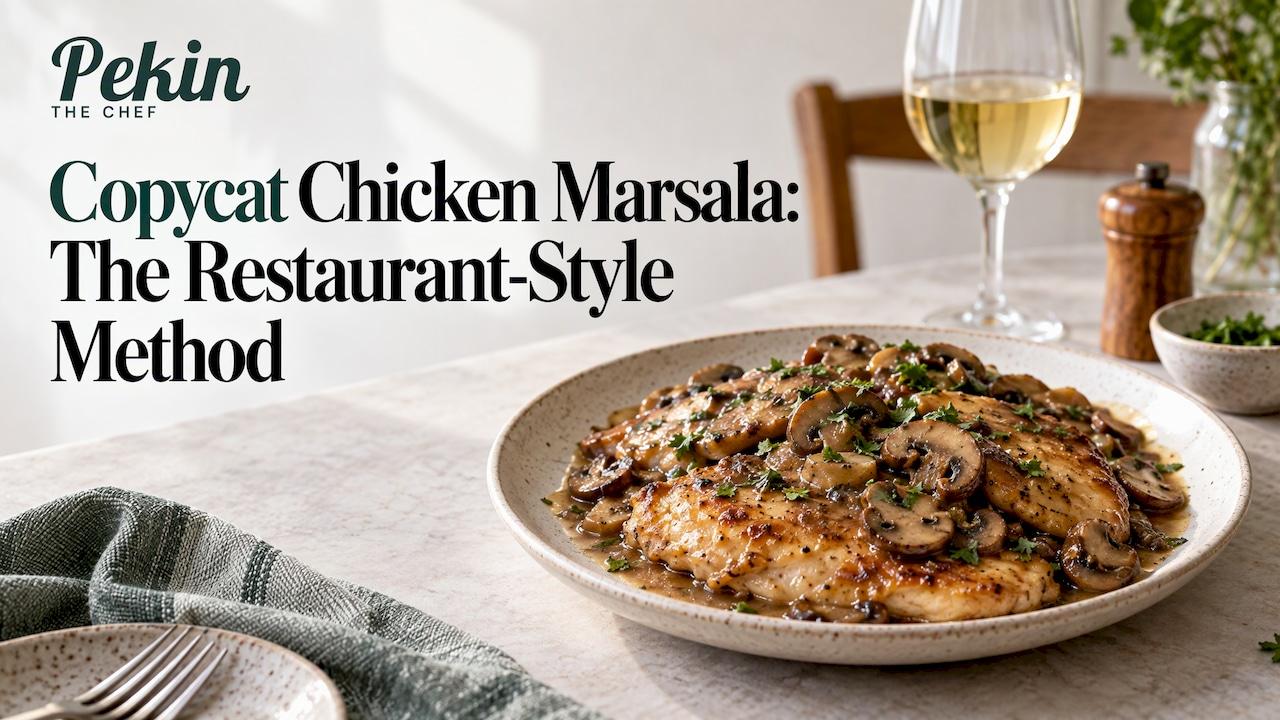
Copycat chicken Marsala comes down to three things: thin, evenly browned cutlets, a real bottle of Marsala from the wine aisle, and a sauce reduced until it turns glossy and syrupy before any butter goes in. Get those right and a weeknight skillet tastes like the plate you remember from an Italian-American dining room, with mushrooms browned deeply, a nutty, caramelized sweetness, and a velvety finish. The Carrabba's-style version many people search for follows the same logic, with a leaner, butter-finished sauce. Below you'll find the full method, the reasons behind each step, and fixes for the mistakes that most often flatten the dish.
TL;DR
- Pound the chicken to an even thickness of about 1/4 to 1/2 inch, dredge in flour, and sear it in batches so it browns instead of steams.
- Buy real Marsala from the wine aisle, not salted "cooking wine," and reduce it by half or more before adding stock.
- Finish the sauce off the heat with cold butter, whisked in a little at a time, for a glossy, unbroken texture.
- Chicken is safe at 165°F on an instant-read thermometer; pull the cutlets slightly early and let the simmer finish them.
- No Marsala? Dry Madeira or a dry sherry is the closest swap.
Table of Contents
- What makes chicken Marsala taste like a restaurant dish
- The ingredients, and why each one is there
- Step by step: copycat chicken Marsala
- The Carrabba's-style version: what changes
- Troubleshooting the sauce
- Substitutes for Marsala wine
- What to serve, and what to pour
- Storing and reheating
- Cook more restaurant favorites at home
- FAQ
- Sources
What makes chicken Marsala taste like a restaurant dish
Chicken Marsala is a study in restraint. There are only a handful of ingredients: chicken, flour, mushrooms, Marsala, stock and butter. Nothing hides behind a long spice list, so technique does all the work. A restaurant kitchen has two advantages the home cook can borrow: a very hot pan and a fast, confident reduction.
Marsala itself is a fortified wine from Sicily, named for the port town of Marsala, usually blended from local grapes such as Grillo, Catarratto and Inzolia, according to Difford's Guide. It comes in dry (secco) and sweet (dolce) styles. Dry Marsala gives a nuttier, tangier sauce; sweet Marsala gives a rounder, more caramel-like one. Most copycat recipes call for dry, and that is the safe place to start.
What you are really building is layered flavor. The browned bits left by the chicken, the caramelized edges of the mushrooms, the wine reduced to a syrup, and the butter swirled in at the end each add a different note. Skip one layer and the sauce tastes thin.

The ingredients, and why each one is there
This serves four.
- 1½ pounds boneless, skinless chicken breasts, sliced in half horizontally into four cutlets and pounded to an even 1/4 to 1/2 inch. Even thickness means even cooking.
- ½ cup all-purpose flour, seasoned with salt and black pepper, for dredging. The coating browns and later thickens the sauce slightly.
- 2 tablespoons olive oil and 2 tablespoons butter for searing. Oil tolerates the heat; butter adds flavor.
- 10 ounces cremini mushrooms, sliced. Cremini have more depth than white button mushrooms.
- 2 shallots, finely chopped, and 2 garlic cloves, minced.
- ¾ cup dry Marsala, the real bottle from the wine aisle.
- ¾ cup low-sodium chicken stock. Low sodium matters because the sauce will reduce and concentrate.
- 2 tablespoons cold butter, cubed, for finishing.
- Fresh thyme and chopped flat-leaf parsley.
- A squeeze of lemon juice or a splash of white wine vinegar to brighten the finish.
- Optional: ¼ cup heavy cream for a creamy version.
The Marsala to buy, and the one to avoid
The most common mistake is grabbing the bottle labeled "cooking Marsala" near the vinegar. Cooking wines are salted so they can be sold outside the liquor aisle, and because a reduction concentrates everything, that salt can leave the sauce harsh with no way to rescue it. Proper Marsala, which can be found for a few dollars more, keeps for months once opened, so a single bottle covers many dinners. Look for a bottle labeled Marsala secco or simply dry Marsala.
Step by step: copycat chicken Marsala
1. Prepare the cutlets
Pat the chicken dry. Wet chicken will not brown. Slice each breast in half horizontally, place the pieces between sheets of plastic wrap, and pound gently with a rolling pin or the flat side of a mallet until they are an even 1/4 to 1/2 inch thick. Season both sides with salt and pepper, then dredge in the seasoned flour and shake off the excess.
Where it goes wrong: thick ends and thin tails. Thin tails dry out while the thick end is still pink. Check the thickness by eye as you pound and fold any very thin tail under.
2. Sear in batches
Heat the oil and 1 tablespoon of the butter in a large skillet over medium-high heat until the butter foams. Cook two cutlets at a time for about 3 to 4 minutes per side until deep golden. Move them to a plate.
The bits stuck to the pan are not a mistake. They are the foundation of the sauce, so do not scrub or discard them.
Where it goes wrong: crowding the pan. Four cutlets at once drop the temperature, release moisture and give you pale, rubbery chicken.
3. Brown the mushrooms properly
Add the remaining butter and the mushrooms in a single layer. Leave them alone for a couple of minutes so the undersides caramelize, then stir and cook until browned, about 5 to 6 minutes in total. Add the shallots and garlic for the last minute, with a few thyme leaves.

Where it goes wrong: stirring constantly. Constant stirring keeps mushrooms steaming in their own liquid, and they turn gray and soggy rather than nutty and golden.
4. Deglaze and reduce the Marsala
Remove the pan from the heat for a moment, pour in the Marsala, then return it to high heat and scrape up all the browned bits with a wooden spoon. Let the wine bubble until it has reduced by at least half and looks glossy and syrupy.
This is the step that separates a restaurant sauce from a boozy one. Raw Marsala tastes thin and sharp, and under-reduced wine is hard to fix later; no amount of butter hides it. If you want to follow the Carrabba's-style approach, reduce even further: in a Carrabba's Italian Grill demonstration on FOX 2 Detroit, the chef reduces the wine by about 85% to a thick syrup before building the sauce.
5. Add stock and simmer
Pour in the stock and simmer for 5 to 8 minutes, until the sauce is thick enough to coat the back of a spoon. Drag a finger through the coating: the line should hold for a moment. If you are making the creamy version, stir in the cream only now, after the wine has cooked down, and simmer a few minutes more.
Where it goes wrong: adding stock before the wine has reduced. The sauce ends up thin and you spend ten minutes catching up.
6. Finish with cold butter
Take the pan off the heat. Whisk in the cold butter a cube at a time until the sauce turns glossy. Add a squeeze of lemon or a few drops of vinegar to balance the sweetness, then taste for salt.
Cold butter emulsifies into the sauce for a smooth finish. Hot, fast-melting butter can separate into a greasy slick. If the sauce ever tightens too much, loosen it with a splash of stock.
7. Return the chicken and serve
Slide the cutlets and their juices back in and spoon the sauce over them for 2 to 3 minutes over low heat, just long enough to warm through. Scatter with parsley and serve right away.
A fork-tender cutlet should be opaque throughout with clear juices. The USDA's food safety guidance says all poultry should be cooked to a safe minimum internal temperature of 165°F, measured with a food thermometer. A useful trick for thin cutlets is to pull them from the first sear while they are still slightly underdone, then let the simmer in the sauce bring them to 165°F so they stay tender.
The Carrabba's-style version: what changes
The restaurant-style version people look for under the Carrabba's name is lighter and more butter-driven than the creamy versions found online. It is built on a few moves you can borrow:
- A seasoned cutlet. The FOX 2 demonstration seasons the chicken with a grill seasoning before cooking, which adds a savory edge before the sauce ever enters the picture.
- Finely chopped onion and sliced button mushrooms in a smaller quantity, so the sauce is mostly wine and butter rather than mushroom-heavy.
- A hard reduction. The wine goes down to a thick syrup, the pan is cooled for a minute, and then butter is whisked in cube by cube over low heat.
If you prefer this style, follow the method above, use a smaller amount of mushrooms and no cream, and push the reduction further before the butter goes in. The result is a glossier, more concentrated sauce with a clean Marsala flavor.
Troubleshooting the sauce
| Problem | Likely cause | Fix |
|---|---|---|
| Sauce tastes sharp or boozy | Wine not reduced enough | Simmer longer until syrupy, then add stock |
| Sauce tastes harsh and salty | Salted cooking wine, or salty stock | Start over with real Marsala and low-sodium stock; a splash of unsalted stock can soften it slightly |
| Sauce is thin | Not reduced after the stock | Simmer until it coats a spoon |
| Sauce looks greasy or split | Butter added over high heat | Take off the heat, whisk in a spoonful of cold stock, then cold butter |
| Sauce too sweet | Sweet Marsala or no acid | Add lemon juice or white wine vinegar a few drops at a time |
| Chicken dry | Cutlets uneven or overcooked | Pound evenly; pull early and finish in the sauce |
One more trick for a restaurant-style body: a restaurant sauce gets its silky weight from the gelatin in homemade stock. Boxed stock has little, so some cooks bloom a small amount of unflavored gelatin in the stock before it goes into the pan to reproduce that texture at home.
Substitutes for Marsala wine
Marsala has a rich, caramel flavor with dried-fruit notes, and the best swaps share it:
- Dry Madeira or dry sherry: the closest savory substitutes, used one for one.
- Sweet cream sherry or ruby port: richer and sweeter, so reduce a little less and add a touch more lemon at the end.
- A dry white wine with a spoonful of brandy and a pinch of brown sugar: a workable stand-in when nothing else is on the shelf.
Skip tannic reds such as Cabernet or Chianti, which make the sauce tart, and dry vermouth, which can turn bitter as it reduces. For an alcohol-free version, a balsamic reduction with a little stock gives a caramelized tang, though it will taste different from the original.
What to serve, and what to pour
The sauce is rich and earthy, so starchy sides help: buttered egg noodles, creamy polenta, mashed potatoes, or a pile of garlicky green beans. For the glass, match the sauce rather than the main ingredient. This guide to pairing wine with pasta and sauce lays out the logic: think about the weight and flavor of the sauce first, and a medium-bodied white with some savory depth or a soft, low-tannin red works well with a mushroom-and-Marsala sauce.
If you want to keep exploring the same flavors, our site has a few restaurant dishes worth a look. Alessia's Pollo Marsala is a direct cousin of this dish, and the mushroom-forward recipes below use the same browning and deglazing instincts:
- 45 Bistro's Wild Mushroom Risotto
- 107 State's Pappardelle with Mushroom Ragu Bianco
- Acquerello's Ridged Pasta with Foie Gras, Black Truffle, and Marsala
- Alessia's Portobello Mushroom Ravioli
Storing and reheating
Chicken Marsala keeps well. Cool it promptly, store the chicken and sauce together in a covered container in the refrigerator, and eat within 3 to 4 days; the USDA says cooked chicken should be reheated to 165°F. Reheat gently in a skillet over low heat with a splash of stock, since the sauce will have tightened in the fridge.
Our take
We think a copycat recipe earns its place only when it explains the one move that makes the restaurant version taste the way it does. For chicken Marsala, that move is the reduction. Everything else, the pounding, the browning, the butter, supports it.
That is why we build Pek in the Chef around real restaurant dishes and the feedback of home cooks who have actually made them. A recipe that has been cooked in other kitchens and rated with honest notes is one you can trust on a Tuesday night, when there is no time for a second attempt. You can search by restaurant, dish, cuisine, meal type or prep time, and find your way from a classic like this one to the next dish worth learning.
Cook the sauce slowly, taste as you go, and let the wine tell you when it is ready: glossy, amber and unmistakably Marsala.
Rhys
Cook more restaurant favorites at home
Pek in the Chef curates recipes inspired by popular dishes from renowned restaurants, each with feedback from other home cooks, organized by cuisine, meal type and prep time. If this skillet dinner has you curious about how other kitchens handle a pan sauce, start with Alessia's Pollo Marsala or browse everything on our home page.

Some recipes link to kitchen tools and ingredients that make the cooking easier, so you can gather what you need in one place.
FAQ
What can I substitute for Marsala wine in chicken Marsala?
Dry Madeira or dry sherry is the closest match, used in the same amount. Sweet cream sherry and port also work because they reduce to a similar caramel richness. Avoid tannic reds and dry vermouth, which can taste tart or bitter once reduced.
Is there a difference between Marsala cooking wine and Marsala wine?
Yes. Cooking Marsala is salted so it can be sold outside the wine aisle, and that salt concentrates as the sauce reduces. Regular Marsala from the wine aisle gives a cleaner, more rounded flavor, and a bottle lasts for months after opening.
How do I make a quick Marsala sauce?
After searing the chicken, pour a splash of dry Marsala into the hot pan and scrape up the browned bits. Let it reduce by about half until glossy, then add mushrooms, a little stock and a knob of cold butter off the heat. It takes about ten minutes and coats the chicken well.
How do I know the chicken is cooked?
Use an instant-read thermometer: poultry is safe at 165°F, according to the USDA. The center should be opaque with clear juices. The sauce is ready when it coats the back of a spoon and a finger drawn through it leaves a line.
Sources
- USDA Food Safety and Inspection Service: Chicken from Farm to Table
- Difford's Guide: Marsala
- FOX 2 Detroit: Making chicken marsala with Carrabba's Italian Grill