
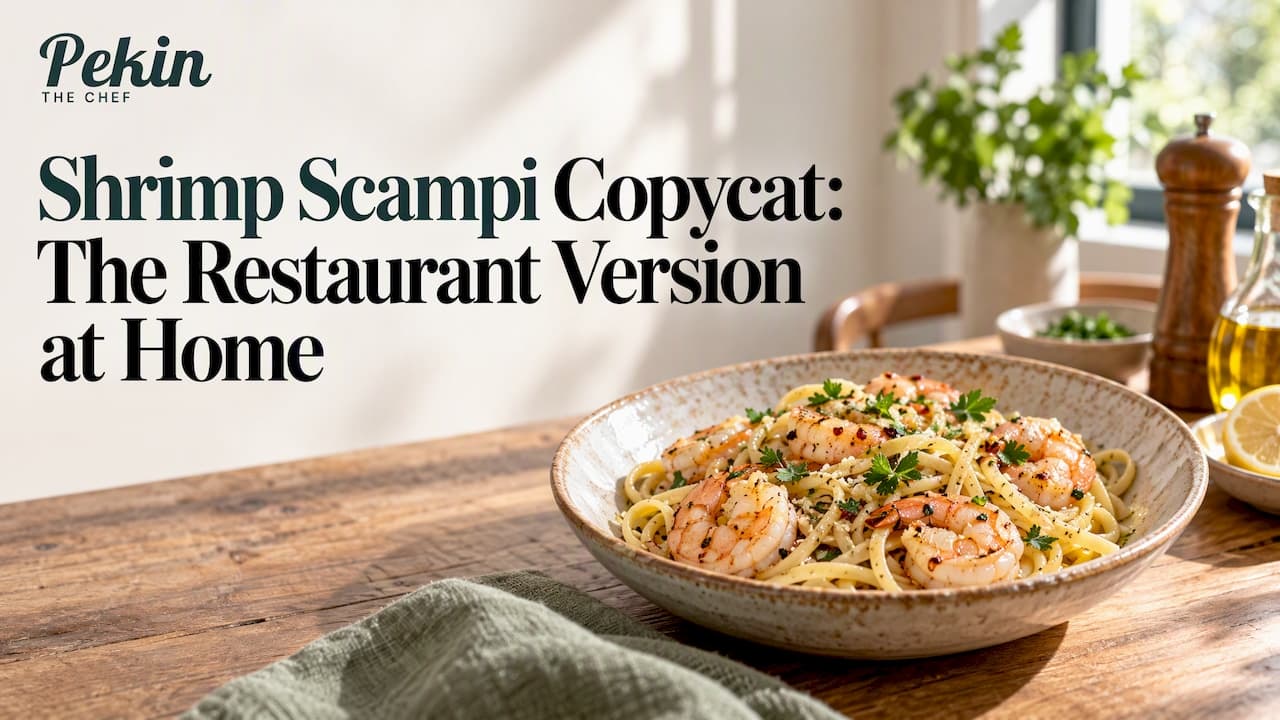
The shrimp scampi that makes you stop mid-bite at a good restaurant has a few things in common. The shrimp are snappy rather than rubbery, and the sauce is glossy and clings to every strand of pasta instead of pooling in the bowl. The garlic is sweet, the lemon sits in the background, and the whole thing arrives hot. All of it is within reach of a home kitchen, a 12-inch skillet and about 25 minutes. Below is our full copycat method, then the variations that let you steer toward the lighter chain-style plate or the butter-heavy Italian-American classic.
TL;DR
- Cook the shrimp briefly in two batches' worth of heat, then pull them out and build the sauce in the same pan so they never overcook.
- Finish with cold butter and a splash of starchy pasta water. That emulsion is what separates a restaurant sauce from a greasy one.
- Use dry white wine, fresh lemon and fresh garlic, and add the garlic late so it stays sweet.
- Shellfish is safe at 145°F (62.8°C), so take the pan off the heat the moment the shrimp turn opaque and check one with a thermometer.
- Want a different style? Swap in asparagus and tomatoes for a lighter plate, or add chili flakes for heat.
Table of Contents
- What makes restaurant shrimp scampi taste different
- Restaurant styles you are probably trying to match
- The ingredients, and why each one is there
- Step-by-step method
- Getting the shrimp perfectly cooked, and safely
- Variations for every kind of scampi craving
- Common mistakes and how to fix them
- Our perspective: why a copycat works best when someone else has tested it
- Explore more shrimp dishes from restaurant kitchens
- What to serve alongside
- FAQ
- Sources
What makes restaurant shrimp scampi taste different
The name itself is a small piece of kitchen history. Scampi is the plural of scampo, the Italian word for the langoustine, a small, slender lobster-like crustacean. When Italian cooks brought the dish to America, shrimp were the abundant, affordable stand-in, and "shrimp scampi" became an Italian-American staple in its own right. So when someone asks what scampi is, the honest answer is a technique: shellfish cooked quickly in garlic, butter or oil, wine and lemon.
That technique is simple, which is exactly why small decisions show up on the plate. Restaurants tend to get four things right that home versions miss:
- Heat management. A hot, wide pan sears the shrimp fast, then the cook drops the heat before the garlic goes in.
- Reduction. The wine is cooked down until the raw alcohol smell disappears and the flavor concentrates.
- Emulsion. Butter is whisked in off the boil, with a ladle of pasta water, so the sauce turns creamy without any cream.
- Seasoning at the end. Lemon juice, salt and parsley go in last, tasted and adjusted, because the sauce is fresh and bright only for a few minutes.
The sauce is the answer to "what is scampi sauce made of": butter, olive oil, garlic, white wine, lemon and parsley, with chili flakes as a common optional extra. Nothing more is needed.
Restaurant styles you are probably trying to match
Before you cook, decide which plate you remember. Scampi is not one dish on American menus, and the differences are worth knowing.
| Style | What defines it | Where you see it |
|---|---|---|
| Butter-forward classic | Garlic, butter, wine, lemon, tossed with linguine or spaghetti | Neighborhood Italian restaurants |
| Lighter vegetable version | Garlic sauce with asparagus, tomatoes and angel hair | Olive Garden's menu lists shrimp in garlic sauce with asparagus, tomatoes and angel hair at 490 calories |
| Seafood-chain garlic scampi | Shrimp in a signature garlic scampi sauce, served with a side | Red Lobster's listing shows 440 calories, with local pricing by location |
| Baked breadcrumb style | Shrimp baked under seasoned breadcrumbs in butter sauce | Old-school Italian restaurants, such as Campisi's, which has baked its scampi with Italian breadcrumbs |
| Capellini with tomatoes | Roma tomatoes and a garlic-lemon-butter sauce over thin pasta | Regional Italian restaurants, such as Giorgio's in New Hampshire |
Menu prices and calorie counts change and vary by location, so treat them as a snapshot. The point is the pattern: thin pasta, a garlic-forward sauce, and either a lean finish or a rich butter one. Our base recipe below lands in the classic camp, and the variations section shows you how to move toward the others.
The ingredients, and why each one is there
This serves four.
- 1 pound large shrimp (16 to 20 per pound), peeled and deveined. Large shrimp stay juicy through the sear. Tail on or off is a matter of looks, and restaurants usually leave them on for presentation.
- 12 ounces linguine or spaghetti. Angel hair also works and cooks faster, so time it carefully.
- 3 tablespoons unsalted butter, cold and cubed, plus 1 tablespoon for the pan. Unsalted lets you control the seasoning.
- 2 tablespoons olive oil. It raises the smoke point of the butter and adds a fruity edge.
- 5 cloves garlic, thinly sliced. Slices give you sweet, mellow garlic. Minced garlic burns faster.
- ½ cup dry white wine. Pinot grigio or sauvignon blanc are the usual choices. Pick one you would drink, and avoid anything labeled cooking wine, which is salted.
- 1 lemon. You need the zest and the juice.
- ¼ teaspoon red pepper flakes, or more to taste.
- ¼ cup chopped flat-leaf parsley.
- Kosher salt and black pepper.
- About 1 cup pasta water, saved before draining.
What to use if you skip the wine
Readers ask this constantly, and the answer is simple. Replace the wine with an equal amount of low-sodium chicken or seafood broth plus a teaspoon of lemon juice or white wine vinegar. You lose a little aromatic depth, but the acidity keeps the sauce lively. Add the broth, then reduce it by about half, exactly as you would the wine.
Step-by-step method
1. Prep everything first
Scampi cooks in minutes, so there is no time to chop mid-recipe. Slice the garlic, zest and juice the lemon, chop the parsley, cube the butter and set it on a plate in the fridge. Pat the shrimp very dry with paper towels, then season them with salt and pepper. Dry shrimp sear, wet shrimp steam.
2. Start the pasta
Bring a large pot of water to a boil and salt it generously. Cook the pasta about 1 minute short of the package time, because it will finish in the sauce. Before draining, scoop out a cup of the starchy water.
3. Sear the shrimp
Heat the olive oil and 1 tablespoon of butter in a 12-inch skillet over medium-high heat until the butter foams. Add the shrimp in a single layer, working in two batches if they touch. Cook about 1 to 1½ minutes per side, until they are just pink on the outside and curled into a loose "C." They will not be fully cooked yet, and that is the point. Move them to a plate.
4. Build the sauce
Lower the heat to medium. Add the sliced garlic and the red pepper flakes, and stir for 30 to 45 seconds, until fragrant and barely golden. Pour in the wine and scrape up the browned bits. Simmer for 2 to 3 minutes, until reduced by about half.
5. Emulsify
Turn the heat to low. Add the cold butter a few cubes at a time, swirling the pan until each addition melts before the next. Stir in half a cup of the pasta water. The sauce should turn glossy and slightly thickened, like thin cream.
6. Bring it together
Add the drained pasta and the shrimp, with any juices from the plate. Toss over low heat for about a minute, adding more pasta water a splash at a time until the sauce coats the noodles. Off the heat, add the lemon zest, most of the juice and the parsley. Taste, then adjust with salt, pepper or more lemon.
Serve immediately in warm bowls. Scampi does not wait.
Getting the shrimp perfectly cooked, and safely
Shrimp are unforgiving. A minute too long and they tighten into rubber. Color and shape are your first cues: opaque flesh, a pink-orange shell or tail, and a gentle C curl. A tight "O" shape means they have gone too far.

For safety, the USDA Food Safety and Inspection Service lists 145°F (62.8°C) as the safe minimum internal temperature for fish and shellfish. Because the shrimp finish cooking in the hot sauce, the practical approach is to sear them lightly, then check the thickest one with an instant-read thermometer when you return them to the pan. If one reads under 145°F, give the pan another minute over low heat. This matters most if you are cooking for young children, older adults, pregnant guests or anyone with a weakened immune system, who are more vulnerable to foodborne illness. Ask your doctor if you are unsure about seafood in your situation.
Frozen shrimp are fine
Most shrimp sold in American supermarkets has been frozen, so buying frozen is not a compromise. Thaw them in a bowl of cold water for 15 to 20 minutes, or overnight in the fridge, then dry them thoroughly. Never thaw at room temperature.
Variations for every kind of scampi craving
Lighter, vegetable-forward. Skip the extra butter, keep two tablespoons for the sauce, and add a handful of blanched asparagus pieces and halved cherry tomatoes with the shrimp. Swap in angel hair. This is the direction of the chain-restaurant plate with asparagus and tomatoes.
Extra garlicky. Double the garlic, but add half at the start and half with the wine. You get both mellow and sharp notes.
Spicy. Triple the chili flakes, or add a thinly sliced Calabrian chili. If you like heat with your shrimp and pasta, our Angry Shrimp Linguine from 3Eleven Kitchen and Cocktails is worth a look.
Without pasta. Spoon the shrimp and sauce over crusty bread, rice or cauliflower mash. A baguette to mop the pan is arguably the best way to serve it.

Broiled or baked style. Toss the shrimp in the garlic butter, top with seasoned breadcrumbs and broil for a few minutes until golden, a nod to the classic baked scampi found in old-school Italian restaurants.
Common mistakes and how to fix them
- Rubbery shrimp: you cooked them through in the first sear. Pull them early and finish in the sauce.
- Greasy, split sauce: the pan was too hot when the butter went in, or the butter was warm. Lower the heat, use cold butter, and whisk in pasta water.
- Bitter garlic: it browned too far. Add it to a pan that has cooled slightly, and move to the wine as soon as it smells fragrant.
- Flat flavor: you skipped the lemon at the end, or under-salted the pasta water. Both are fixable in seconds.
- Dry, clumpy pasta: you drained and let it sit. Toss it straight into the sauce, with pasta water on hand.
Our perspective: why a copycat works best when someone else has tested it
We built Pek in the Chef around one frustration: a recipe that promises "restaurant-quality" and delivers a bland, watery dinner. Scampi is the perfect test case because the ingredient list is short and the margin for error is thin. Two recipes with nearly identical ingredients can taste completely different, depending on when the garlic goes in, how far the wine reduces and whether the butter is cold.
That is why our recipes are inspired by real restaurant dishes and shaped by feedback from home cooks who have actually made them. A rating tells you whether the dish worked in an ordinary kitchen, and a comment tells you what to change if your stove runs hot or your shrimp are smaller. We would rather you read three honest comments than trust one confident headline.
Our advice on scampi is the same as on most restaurant dishes: copy the technique, not just the ingredients. Restaurants win through timing, heat and seasoning at the last second. Once you have those, you can borrow from any style, whether it is the asparagus-and-tomato plate, the baked breadcrumb version or the spicy one. The point is to cook the plate you crave, tonight, without the restaurant bill.
— Rhys
Explore more shrimp dishes from restaurant kitchens
If scampi has you in the mood for shellfish and pasta, our collection goes well beyond one recipe. You can search by restaurant, dish, cuisine or prep time, and read what other home cooks changed. A few places to start:
- Gamberoni alla Scampi from 224 Boston, the closest cousin to this recipe, in a restaurant version.
- Pan-seared Gulf Shrimp from 3Eleven Kitchen and Cocktails, for a simpler sear to serve over pasta or greens.
- Seafood Fettuccine from 11 Central, when you want more than shrimp in the bowl.
- Southern Shrimp and Grits from 131 MAIN, a very different, deeply comforting way to cook shrimp.
Browse the full collection on Pek in the Chef and save the ones you want to try next. Some recipes include links to kitchen tools and ingredients we like, which is how we keep the site running, and you are never obliged to use them.
What to serve alongside
Scampi is rich and bright, so the sides should be simple.
- A peppery arugula salad with lemon and olive oil.
- Roasted or steamed broccolini or asparagus.
- Crusty bread, warm, for the last of the sauce.
- A chilled glass of the same dry white wine you cooked with.
Leftovers
Shrimp scampi is best fresh, but you can refrigerate leftovers in a sealed container and reheat gently in a skillet with a splash of water or broth, just until warmed through. High heat or the microwave will toughen the shrimp. Reheat it only once, and when you do, check that it is steaming hot throughout.
FAQ
What is the sauce of shrimp scampi made of?
A classic scampi sauce is butter and olive oil, garlic, dry white wine, lemon juice and parsley, with red pepper flakes if you like some heat. The wine is reduced first, then cold butter is swirled in to make it glossy. Adding a little starchy pasta water helps it cling to the noodles.
What makes shrimp scampi taste better?
Three habits do most of the work: pat the shrimp dry so they sear, add the garlic only after the pan has cooled slightly, and finish with cold butter and fresh lemon off the heat. Salting the pasta water well also matters more than people expect. Taste the sauce once everything is combined, since the lemon and salt need a last adjustment.
What does Olive Garden put in its shrimp scampi?
The menu description lists shrimp sautéed in a garlic sauce, tossed with asparagus, tomatoes and angel hair, and calls it a lighter take on a classic. To get close at home, use the lighter variation above with angel hair, a smaller amount of butter, blanched asparagus and halved tomatoes.
What can I use instead of white wine in my shrimp scampi sauce?
Use equal parts low-sodium chicken or seafood broth with a teaspoon of lemon juice or white wine vinegar for each half cup. Reduce it by about half before adding the butter. The sauce will taste slightly less complex but still bright and savory.
Sources
- Safe Minimum Internal Temperature Chart, USDA Food Safety and Inspection Service
- Scampi, Wikipedia
- Shrimp Scampi, Olive Garden
- Garlic Shrimp Scampi, Red Lobster
- Menu, Campisi's Restaurants
- Shrimp Scampi, Giorgio's Ristorante & Bar