
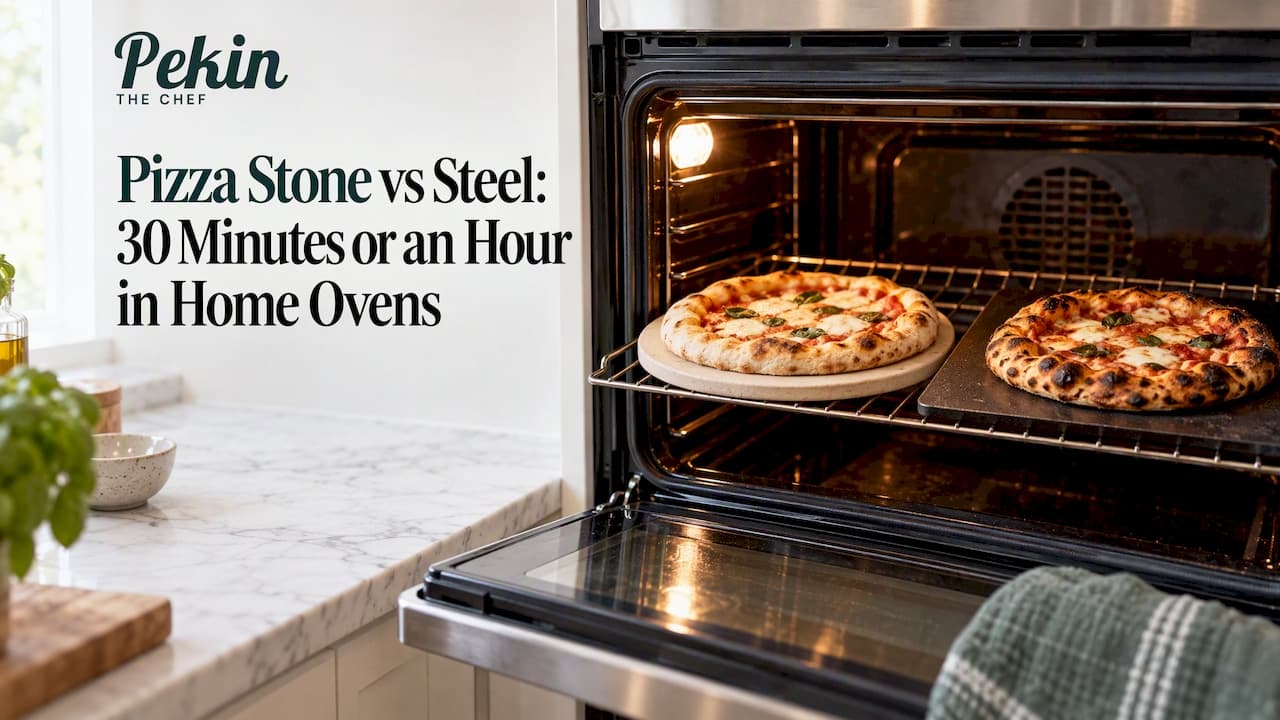
For most home pizza makers chasing fast, blistered, airy crusts, a baking steel wins the heat transfer battle outright. Steel moves heat into dough much faster than ceramic stone, which shortens bake time and builds the kind of charred, puffy crust associated with pizzeria ovens. A stone remains the smarter pick for bakers who split their time between pizza and bread, want a lighter tool, or prefer paying less upfront.
TL;DR:
- Preheat steel for about 30 minutes and stone for about an hour at maximum heat, on a rack in the oven’s upper third.
- Switching from stone to steel calls for a shorter bake; watch the crust closely because steel can quickly turn charred into burnt.
- Dry and lightly oil bare steel after washing to prevent rust; protect stone from sudden temperature changes, which can cause cracking.
- Porous ceramic stones draw moisture from dough, producing a drier, chewier bottom, while steel tends to preserve a more tender interior.
- Pizza stones commonly cost $30 to $80; steels one quarter inch thick start near $80, and thicker models can exceed $150.
Table of Contents
- Steel vs Stone at a Glance
- What Stones and Steels Are Made Of and Why That Matters
- How Heat Transfer Actually Shapes Your Crust
- What Published Bake Tests Actually Show
- Durability, Maintenance, and Everyday Tradeoffs
- Which Surface Fits Your Baking Style
- Is the Extra Cost of a Steel Worth It
- Bottom Line and a Quick Buying Checklist
- Our Take on Testing Pizza at Home
- Bring the Bake Test Home With Our Pizza Recipes
- FAQ
- Sources
Steel vs Stone at a Glance
Before digging into the science, here is the short version for anyone short on time.
Baking steel:
- Conducts heat quickly, producing crisper bottoms, bigger blisters, and more oven spring in a shorter bake.
- Needs roughly 30 minutes of preheat in most home ovens, depending on thickness.
- Weighs significantly more than stone and essentially never cracks, though it can rust if left wet.
Pizza stone:
- Heats and releases energy more slowly, giving steadier, gentler cooking that suits both pizza and loaf bread.
- Typically needs around an hour of preheat for full saturation in a home oven.
- Weighs less, costs less, and resists thermal shock reasonably well when it is cordierite or a composite material, though sudden temperature swings can still crack cheaper versions.
If your priority is a faster, more dramatic crust, skip ahead to how conductivity and effusivity shape the bake. If you bake bread as often as pizza, the durability and maintenance section below will matter more to your decision.
What Stones and Steels Are Made Of and Why That Matters
The material under your pizza determines almost everything about how it cooks, so it helps to know what you are actually working with.
Most pizza stones are made from cordierite or mullite, dense ceramic materials prized for resisting thermal shock. These materials are naturally porous, which means they pull a small amount of moisture out of the dough as it bakes. That porosity is part of why stone-baked crusts often come out slightly drier and chewier on the bottom compared to steel, a texture difference confirmed across independent bake tests. Composite stones like FibraMent are engineered specifically to resist the cracking that plagues cheaper cordierite versions, according to buying guide comparisons.
Baking steels are solid metal, usually cold-rolled or carbon steel, and come in a range of thicknesses from around a quarter inch up to three-eighths of an inch or more. Thicker steels hold more heat and recover faster between pizzas, but they also weigh considerably more and take longer to preheat than thin ones. Because steel is non-porous, it does not absorb moisture the way stone does, which is part of why it tends to produce a more tender interior alongside a crisp, charred exterior.
A few practical notes worth keeping in mind:
- Stones crack most often from thermal shock: placing a cold stone in a hot oven, or splashing cold liquid on a hot one, is the usual culprit.
- Steel requires almost no babying structurally, but it needs to be dried thoroughly and lightly oiled after washing to prevent rust, much like cast iron.
- Preheating gradually, rather than blasting a cold surface straight into a 500 degree oven, extends the life of either material.
How Heat Transfer Actually Shapes Your Crust
Three concepts explain nearly everything about the stone versus steel debate: conductivity, thermal mass, and thermal effusivity. Conductivity is simply how quickly a material moves heat through itself. Thermal mass is how much heat energy a material can store once it is hot. Effusivity combines both properties and describes how fast a material can deliver stored heat into something touching it, in this case, your dough. Of the three, effusivity is the one that matters most for crust development, because it governs how quickly the bottom of your pizza receives energy the moment it hits the surface.
Steel has dramatically higher effusivity than ceramic stone, which is the real reason it bakes pizza faster. The moment dough touches hot steel, a surge of energy moves into the bottom crust, triggering rapid steam production and bubble formation before the toppings have time to overcook the top. Reviewers at Serious Eats observed noticeably larger oven spring and bigger bubble structure on steel-baked pies compared to stone, attributing it directly to how quickly steel delivers energy into the dough. That speed also helps lock in interior moisture, since the crust sets before the inside has a chance to dry out.
Stone's lower effusivity means it releases heat more gradually. The bottom of the pizza still cooks thoroughly, but the process is calmer and slightly slower, which is exactly why stone performs so well for loaf breads that benefit from a longer, steadier bake rather than a quick blast. The tradeoff is a bottom crust that tends to come out a touch drier, since the dough spends more time in contact with a surface that is pulling moisture away as it cooks.
A few adjustments make the difference obvious the first time you switch surfaces:
- Preheat steel for about 30 minutes on the oven's highest setting, positioned on a rack in the upper third of the oven for better top heat alongside the bottom blast.
- Preheat stone for about an hour, since its lower conductivity means it needs more time to fully saturate with heat all the way through.
- When switching from stone to steel, shave a few minutes off your usual bake time and watch the crust rather than the clock, since steel can go from perfectly charred to burnt quickly.
- If a loaf of bread is scorching too fast on steel, slide a sheet pan or baking mat between the dough and the steel to soften the heat hitting the bottom.
What Published Bake Tests Actually Show
Marketing copy throws around dramatic claims about one surface being many times faster than the other, but those numbers usually simplify different thermal metrics into a single misleading figure. The more useful evidence comes from controlled, side-by-side bake tests that hold oven temperature and placement constant and change only the cooking surface.
Pro Tip: Run your own side-by-side test with two identical dough balls, same toppings, same oven rack position, and a timer, so you can see the texture difference for yourself rather than taking anyone's word for it.
Side-by-side comparisons consistently show that steel reduces bake time and increases blistering and oven spring compared to stone under matched oven conditions. That single result explains most of the enthusiasm around steel among home pizza makers chasing a pizzeria-style char.
The key variables that determine whether your own kitchen test will mirror published results are oven top temperature, surface thickness, preheat duration, and rack placement. A thin steel preheated for only 15 minutes will not perform the way a quarter-inch steel preheated for 30 minutes does, and a stone pulled from a cold start will bake nothing like one that has had a full hour to saturate. Reviewers at Bon Appétit note that thickness and preheat time matter as much as the material itself when comparing results across different kitchens.

To reproduce the kind of results you see in published tests, set your oven to its maximum temperature, place the surface on a rack positioned in the top third of the oven, and give it the full recommended preheat window before the dough ever touches it. Resist the urge to open the door repeatedly during preheat, since every opening resets some of the stored heat and extends how long you actually need to wait.
Durability, Maintenance, and Everyday Tradeoffs
Beyond the bake itself, how a surface holds up over months and years of use often tips the decision.
Steel is close to indestructible under normal home use. It will not crack from thermal shock, it tolerates being slid in and out of a hot oven without ceremony, and it delivers consistent results pizza after pizza for years. The one real maintenance task is drying it completely and applying a thin coat of oil after washing, since bare steel left wet will rust the same way a cast iron skillet does.
Stone asks for a gentler hand. A sudden drop in temperature, like setting a hot stone on a cold counter or dripping cold sauce onto it, can crack it, and once cracked it usually needs replacing. On the upside, stone is forgiving in other ways: it is lighter to lift, cheaper to replace if something does go wrong, and widely available at low prices.
- Leave either surface in the oven permanently if your oven size allows it, which saves you from repeatedly handling a hot, heavy object.
- Scrape off stuck cheese or dough with a metal bench scraper once the surface has cooled rather than scrubbing with soap, since both materials perform best when they are seasoned rather than stripped clean.
- Store stone flat and away from the edge of a shelf, since the material chips if dropped, while steel tolerates being leaned or stacked with far less concern.
Which Surface Fits Your Baking Style
The right choice depends less on which surface is objectively better and more on what you actually bake and how often.
- If you mainly want fast, high-heat Neapolitan or New York-style pies with dramatic char, a steel is the clear match for your goals.
- If you split your oven time between pizza and loaf bread, a stone's gentler, steadier heat release suits both jobs without compromise.
- If you live in a small kitchen or rental and need to move your cooking surface in and out of storage, a lighter stone saves your back and your cabinet space.
- If you bake pizza only occasionally and want to keep costs down, a mid-range stone delivers excellent results without the investment a thick steel requires.
- Before buying either, confirm your oven can fit the surface with enough clearance for the door to close and enough rack space to position it in the upper third for better top heat.
Is the Extra Cost of a Steel Worth It
Price is where the decision often gets practical. Pizza stones commonly start around $30 to $80, while quarter-inch baking steels typically start near $80, with thicker steels running $150 or more. That gap narrows the value calculation to how often you actually bake pizza and how much you care about crust texture.
Longevity favors steel outright: with basic drying and oiling, it lasts indefinitely and never cracks. Stone can last for years of regular use too, but it carries a real risk of cracking from a single careless moment with cold liquid or an uneven preheat.
For frequent pizza makers who prioritize a crisp, blistered crust, a steel functions as a long-term investment that pays for itself in better results over hundreds of bakes. Occasional bakers, or anyone who also wants a surface for bread, will get excellent results from a stone at a noticeably lower price.
Bottom Line and a Quick Buying Checklist
For most home pizza makers, a baking steel delivers the faster, crisper, more dramatic crust that justifies its higher price and extra weight, while a stone remains the smarter choice for mixed baking, tighter budgets, and lighter kitchens.
- Measure your oven's interior width and rack clearance before buying, since both surfaces need room to sit flat with the door closing fully.
- Choose thickness based on your own tradeoff between heat retention and weight: thicker steel recovers heat faster between pies but is harder to lift.
- Look for a handle or consider a stone with beveled edges if lifting a hot, heavy surface alone is a concern.
- Plan your maintenance routine before you buy: steel needs drying and oiling, while glazed stones need gentler cleaning than unglazed ones.
- Set a budget that reflects how often you expect to bake, since frequent use makes the higher cost of steel easier to justify.
Once you have picked a surface, try a recipe written specifically for it. The preheat time and bake time differences are significant enough that a recipe designed around stone will not translate directly to steel without small adjustments.
Our Take on Testing Pizza at Home
Our pizza recipes are primarily tested on baking steel, as it produces a fast, blistered crust similar to pizzeria-style results. That said, we keep stone-specific notes in our pizza recipes too, since plenty of our readers already own one and want reliable timing without buying new equipment.
Many recipes include feedback and ratings from home cooks who have tried them, providing preheat times and bake windows based on varied real oven experiences. If you try one of our pizza recipes on either surface, we invite you to leave your results and timing notes so the next person baking from your oven type has a clearer starting point.
— Rhys
Bring the Bake Test Home With Our Pizza Recipes
Once you know which surface fits your kitchen, the next step is a recipe built around it. Our pizza collection includes oven notes for both steel and stone, with preheat windows, rack positioning, and timing adjustments pulled from community feedback rather than guesswork.

Browse our community-vetted pizza recipes at Pek in the Chef and find a dough and bake method matched to whichever surface you already own or are about to buy. Each recipe comes with notes from other home cooks who have made it on their own ovens, so you can see what adjustments worked before you start preheating.
FAQ
Which is better for grilling pizza, pizza stone or steel?
Steel generally handles outdoor grill heat better since it tolerates higher, less even temperatures without the cracking risk that affects stone under rapid thermal swings. A thick steel also recovers heat faster between pies, which matters when a grill's temperature fluctuates during cooking.
Is it better to cook pizza on a stone or a pan?
A stone or steel outperforms a standard metal pan for pizza because both materials deliver faster, more even heat transfer that produces a crisper, more blistered crust. A pan traps steam against the dough and tends to produce a softer, less textured bottom crust by comparison.
What material is best for a pizza stone?
Cordierite is the most commonly recommended stone material because it resists thermal shock and holds up to repeated high-heat baking better than cheaper ceramics. Composite materials like FibraMent are engineered specifically for added durability against cracking.
Does a pizza stone really make a difference?
Yes, a stone noticeably improves crust texture compared to baking directly on a metal pan, since its steady heat release produces a firmer, more evenly browned bottom. It will not match the speed or blister pattern of a steel, but it still outperforms most standard bakeware for pizza.